
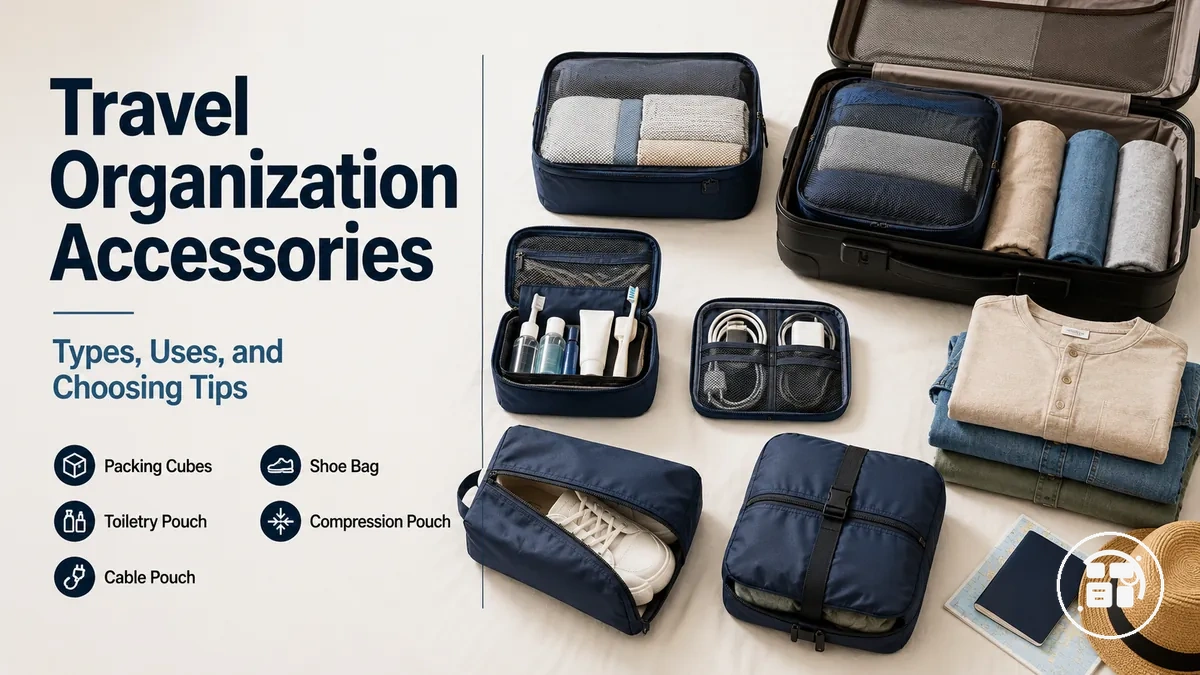
Travel Organization Accessories for Organized Packing and Trip Planning
Travel organization accessories are packing-focused items that help separate, contain, protect, or make belongings easier to access inside luggage. They include travel organizers such as packing cubes, pouches, storage bags, and other packing organizers used to group items by purpose or item type. Their role is to support organization within luggage and packing systems rather than serve as general travel convenience items. They provide the category framework for organized packing.
Users compare travel organization accessories before choosing because different organizer types support different packing needs. Packing cubes may help separate clothing, pouches can group smaller belongings, and storage bags may suit items that benefit from flexible containment. Selection often depends on criteria such as material, compartments, access requirements, available luggage space, and intended use. The most suitable option depends on matching these selection criteria to the travel situation.
Trip planning can influence which travel organizers are useful and how they are arranged inside luggage. Carry-on and checked luggage setups may create different space, access, and fit considerations, while trip length and item type can affect organization priorities. The usefulness of an organizer often depends on luggage size, packing style, and the belongings being carried. These conditions provide the basis for category-level evaluation before comparing individual product options.
Product examples can serve as supporting references after organizer purposes, limitations, and selection factors are understood. Their role is to support decision making rather than replace category evaluation within an affiliate decision-support context.
What Travel Organization Accessories Include
Travel organization accessories are items used to separate, protect, compress, or make belongings easier to access while packing. They support packing organization by grouping items according to purpose, item type, or storage need within luggage. The definition centers on packing function rather than general travel convenience.
Travel organization accessories include packing organizers whose primary role is separation, protection, compression, or access. Packing cubes, pouches, storage bags, and similar organizer bags belong to this category because they help manage belongings during packing and travel. A shoe bag may be included when it serves a packing function by isolating footwear from other items. This definition aligns with what travel organization accessories are.
What Travel Organization Accessories Include can be understood by grouping common organizer types according to their packing function. The image and list below clarify the main organizer categories commonly included in this definition.
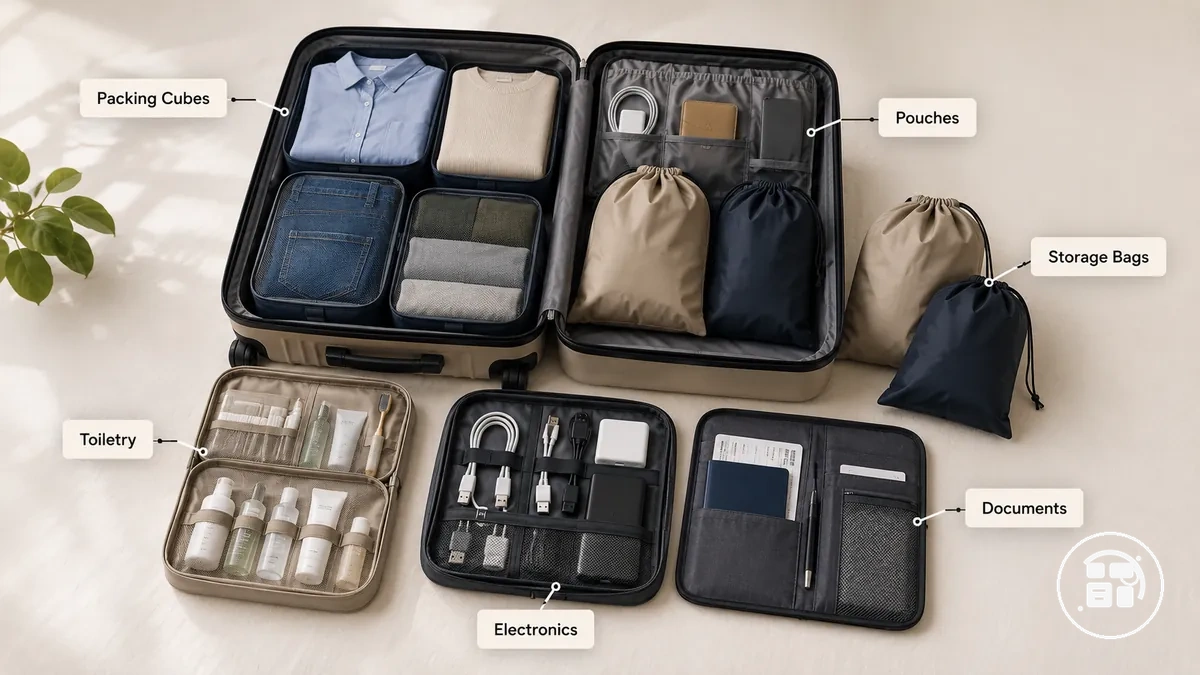
- Packing cubes — separate clothing and related belongings into organized sections within luggage.
- Pouches — group smaller belongings that benefit from containment and easier access.
- Storage bags — contain or separate items based on storage, protection, or compression needs.
- Toiletry organizer — keeps personal care items grouped by function and location.
- Electronics organizer — organizes cables, chargers, and small electronic items by item type.
- Document organizer — stores travel documents and related papers in a dedicated organizer.
Travel Organizers vs General Travel Accessories
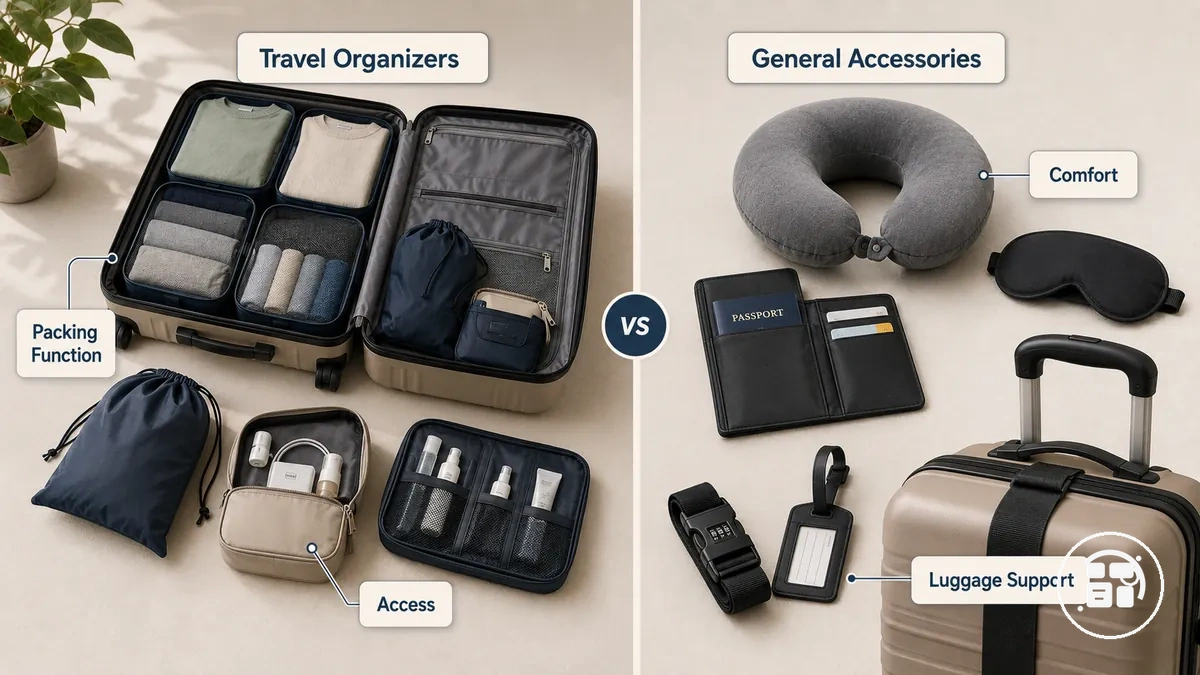
Travel organizers are a subset of general travel accessories focused on packing order, storage role, and access to belongings inside luggage. General travel accessories may support comfort, convenience, protection, or luggage support without directly organizing packed items. The distinction depends on packing function, storage role, and decision relevance.
Borderline items should be classified by function rather than appearance. A pouch belongs in this topic when it organizes belongings and improves access during packing, while the same item may fall outside the organizer category if it serves another primary purpose. Holders and protective cases can also shift categories depending on whether they support organization, protection, or general convenience. Travel Organizers vs General Travel Accessories is a function-based comparison, and the image and table below separate packing-focused items from broader travel accessories without treating every travel item as an organizer.
| Accessory type | Main purpose | Packing organization role | When it belongs in this topic |
|---|---|---|---|
| Travel organizers | Organization and access | Direct role in separating and managing belongings | When the item supports a packing function or storage role |
| Comfort accessories | Comfort during travel | Usually indirect or unrelated | Typically outside this topic unless organization is a primary function |
| Convenience accessories | Ease of use and accessibility | Depends on how the item is used | Included when the item helps organize, separate, or access belongings |
| Luggage support items | Support luggage handling or protection | May have a limited organizational role | Relevant when the item contributes to packing structure or storage management |
Main Types of Travel Organization Accessories
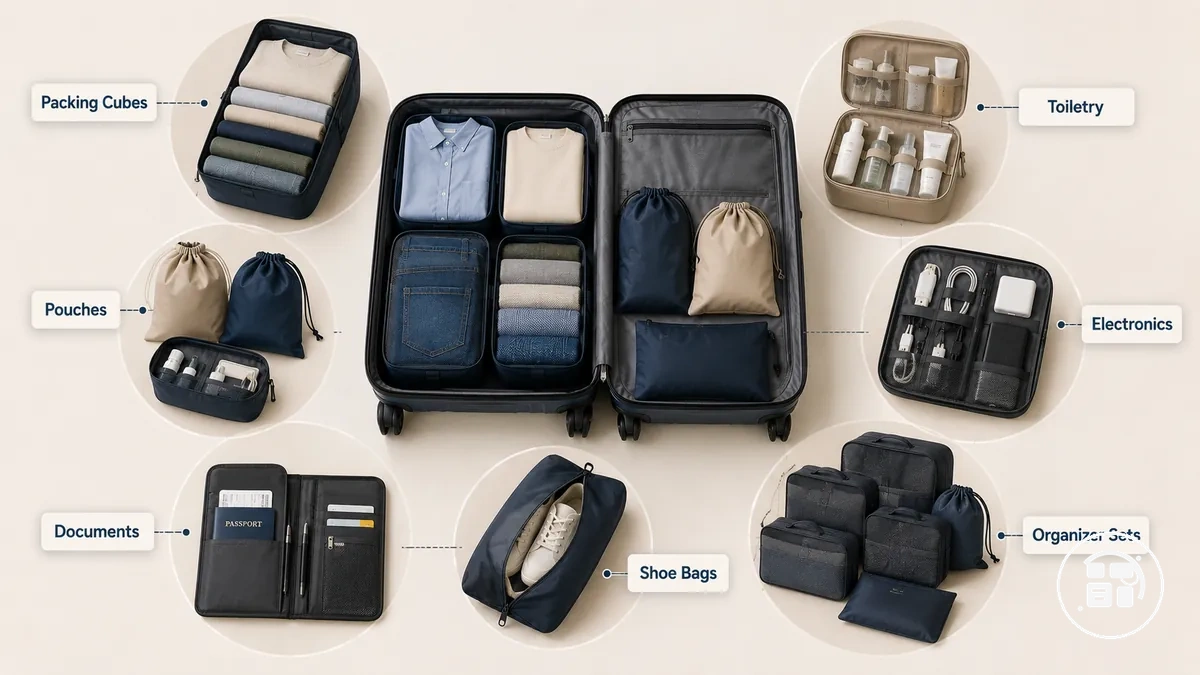
Main Types of Travel Organization Accessories are grouped by the belongings they hold and the packing problems they help address. Different organizer types connect a specific item category with a useful attribute and a potential packing outcome. This provides a category-level view of the available organization solutions before evaluating individual options.
Travel organization accessories include broad families such as packing cubes, pouches, storage bags, toiletry organizers, electronics organizers, document organizers, shoe bags, and organizer sets. Each category supports a different packing need, whether that involves separation, containment, retrieval, access, or item grouping. The usefulness of a type depends on the belongings being packed and the organizational challenge being addressed. The table below organizes these categories by belongings handled, attributes, and packing outcomes before moving into more specific type coverage.
| Organizer type | Belongings handled | Useful attribute | Packing outcome |
|---|---|---|---|
| Packing cubes | Clothes and soft items | Separation or compression | More structured packing |
| Pouches and storage bags | Small belongings and mixed items | Containment and grouping | Easier access and organization |
| Toiletry organizers | Personal care items | Containment and access | Simplified item retrieval |
| Electronics organizers | Cables and small devices | Tangle prevention and organization | Reduced item mixing |
| Document organizers | Passports and papers | Dedicated storage | Simplified retrieval |
| Shoe bags and organizer sets | Footwear or mixed categories | Isolation or coordinated organization | More controlled packing arrangement |
For deeper coverage of individual categories, see types of travel organization accessories.
Packing Cubes, Packing Pouches, and Storage Bags
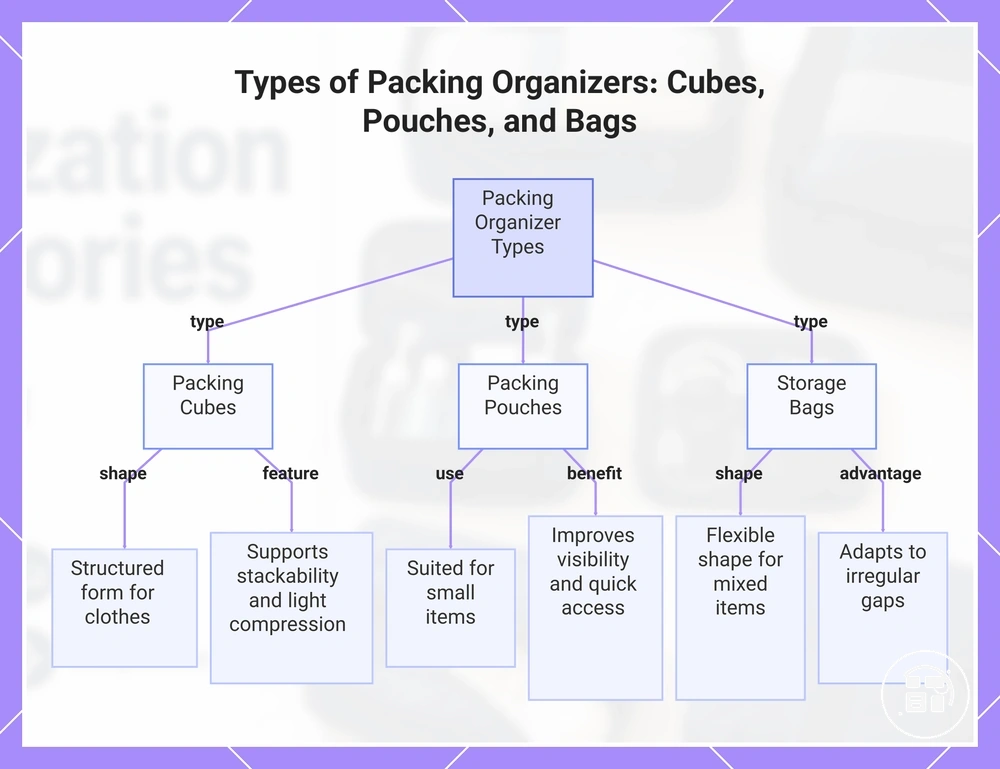
Packing cubes, packing pouches, and storage bags differ in shape, visibility, and how they organize belongings inside luggage. Packing cubes usually provide a structured form for clothes, packing pouches are often suited to small items that benefit from visibility and quick access, and storage bags typically offer a more flexible shape for mixed packing needs. Their shared role is to organize belongings while addressing different packing situations.
Fit and flexibility can influence how these soft organizers use available luggage space. Packing cubes may support stackability and, in some cases, light compression, while storage bags can adapt to irregular gaps or changing packing loads. Packing pouches often work well when small items need to stay grouped and easy to locate. The most suitable choice depends on the belongings being packed and the intended packing arrangement.
- Packing cubes — commonly used for clothes; the structured shape may help with organization, separation, and controlled stacking.
- Packing pouches — suited to small items; they can improve visibility and support quick access to grouped belongings.
- Storage bags — useful for flexible storage; they may help separate laundry, footwear, or mixed items.
- Compression-focused organizers — may reduce bulk in certain packing loads when compression is a priority.
- Flexible organizer bags — can adapt more easily to luggage depth and changing luggage space requirements.
This chart compares three common packing organizer types—cubes, pouches, and storage bags—by their shape, use, and key features.
Toiletry, Tech, Document, and Jewelry Organizers
Belongings that need containment or quick retrieval often benefit from specialized organizers designed around item type and access needs. A toiletry organizer may help keep liquids and cosmetics separated, a tech organizer can group cables and chargers, a document organizer may keep a passport and papers together, and a jewelry organizer can use compartments to separate small valuables. Specialization by item group is the main reason these organizers differ.
Overlap between categories can occur when compartments, padding, or layout support more than one type of belonging. An electronics organizer with multiple sections may also hold small valuables, while a document pouch may accommodate travel papers and related accessories. The most suitable organizer depends on the item group, access frequency, and how the compartment layout supports containment or retrieval.
- Toiletry organizer — suited to liquids, cosmetics, and personal care items; containment-focused compartments may help keep related items grouped and easier to manage.
- Tech organizer — designed for cables and chargers; dedicated sections can help reduce tangles and improve visibility.
- Document organizer — used for a passport and papers; grouped storage may support quicker retrieval when documents are needed.
- Jewelry organizer — intended for small valuables; separate compartments can help reduce contact between items during packing.
- Multi-purpose organizers — may accommodate different belongings when compartment size and layout support multiple item categories.
- Boundary note — protection and containment outcomes depend on material, closure quality, and compartment design.
Organizer Sets and Separate Organizer Pieces
Organizer sets usually suit predictable packing patterns, while separate pieces are often better for customization. Organizer sets can provide broader coverage through matching sizes and coordinated components, whereas separate pieces allow individual organizers to be selected for specific trip needs. The main decision depends on the balance between coverage and flexibility.
Organizer sets may offer set value when the same packing categories are used across repeated trips, but duplicate pouches or unused pieces can create redundancy. Separate pieces can reduce redundancy because organizers are chosen individually, though missing pieces may require additional selection later. Cost, trip needs, and the likelihood of changing item mixes can all influence the decision. For a more detailed comparison, see travel organization accessory sets.
| Option | Best use case | Trade-off | Decision signal |
|---|---|---|---|
| Organizer sets | Repeated trips with similar packing routines and preference for matching sizes | May include duplicate pouches or pieces that are not regularly used | Coverage is more important than customization |
| Separate organizer pieces | Changing item mixes that benefit from customization | Coverage depends on which individual organizers are selected | Flexibility is more important than coordinated set value |
Packing Problems Travel Organizers Help Solve
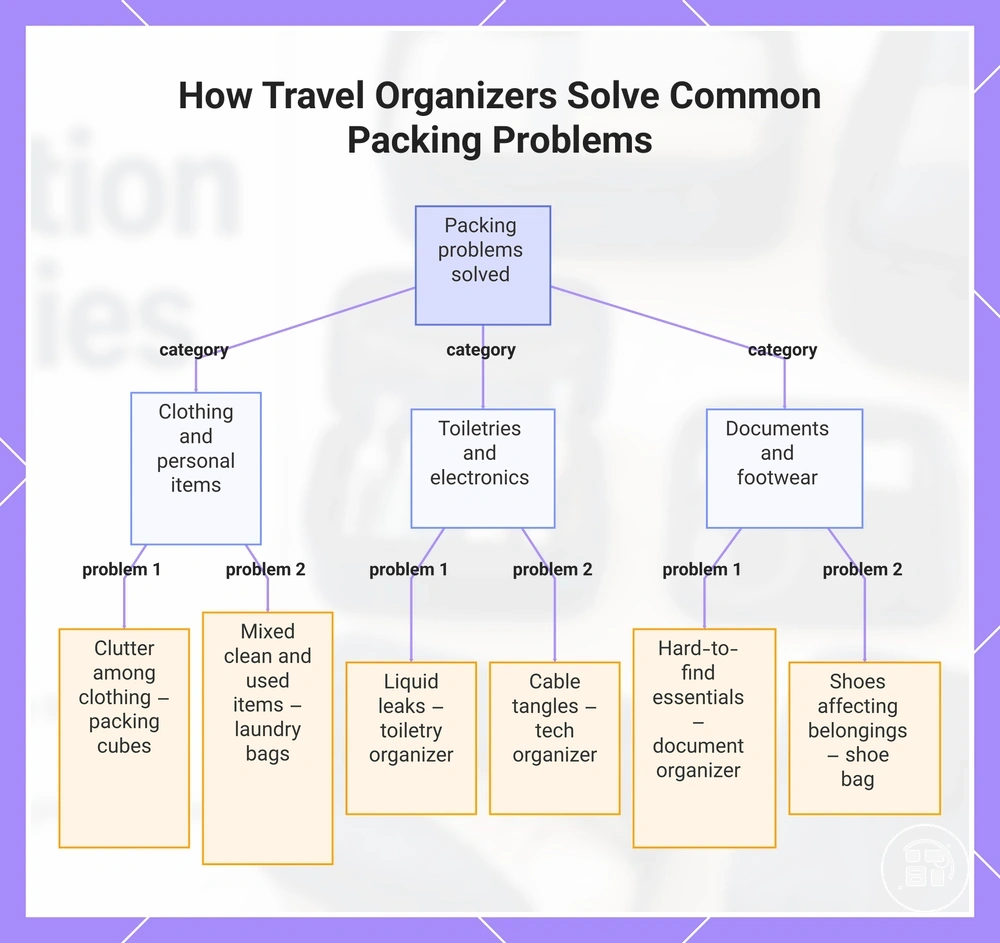
Packing problems such as clutter, mixed clean items and used items, liquid leaks, cable tangles, and hard-to-find essentials can often be reduced when organizer functions are matched to the problem. Travel organizers may improve packing organization through separation, containment, compression, protection, or access, depending on the item category and packing setup. They can help make belongings easier to manage, but outcomes still depend on what is packed and how items are arranged. The most useful approach is to match each problem to the organizer function designed to address it.
Travel organizers can help solve organization problems, but they do not replace reducing excess items or correcting an overloaded packing plan. Packing Problems Travel Organizers Help Solve are clearer when each issue is matched to a specific organizer function, but organizers should be viewed as tools for managing packing issues rather than as extra luggage capacity.
- Clutter with clothing — packing cubes support separation of clothing categories, which may make belongings easier to locate and manage.
- Clean items mixed with used items — laundry bags or similar organizers provide item separation that can help keep used items apart from clean items.
- Liquid leaks from toiletries — a toiletry organizer supports containment and may help limit the spread of leaks when liquids are stored together.
- Cable tangles and loose accessories — a tech organizer uses compartments and structured storage that can improve access to cables and chargers.
- Hard-to-find essentials on travel days — a document organizer can group documents and other essentials to support quicker retrieval.
- Shoes affecting other belongings — a shoe bag provides containment that may reduce direct contact between footwear and packed items.
- Mixed laundry and packed belongings — dedicated laundry storage helps maintain separation between used items and the rest of the packing load.
This chart shows how common packing problems are matched to specific travel organizer functions to improve organization.
Features That Affect Organizer Fit, Protection, and Access
Useful organizer features are the ones that improve fit, protection, access, or care for a specific packing use. Organizer features such as compartments, closures, mesh panels, waterproofing elements, padding, washability, and durability can influence how belongings are stored, protected, and retrieved inside luggage. The value of these organizer attributes depends on the item being packed and the condition being addressed. Features should be evaluated through their effect on fit, protection, access, and care needs rather than by feature presence alone.
Organizer features often involve trade-offs rather than universal advantages. Padding may improve protection for devices because it adds cushioning, but additional padding can also add bulk and reduce flexibility in limited luggage space. Mesh can improve visibility and breathability while providing less structure than enclosed designs, and waterproofing may improve containment for liquids without guaranteeing complete leak prevention. Features That Affect Organizer Fit, Protection, and Access are easier to evaluate when each attribute is connected to a specific condition and decision outcome.
| Feature | Attribute or condition | Effect | Decision cue |
|---|---|---|---|
| Compartments | Small items require separation | Can improve access by grouping related belongings | Useful when organization and retrieval matter more than open storage space |
| Closures | Items need containment during travel | May help keep belongings contained and easier to manage | Consider closure design when access frequency varies |
| Mesh | Visibility or breathability is important | Can improve item visibility and airflow | Suitable when visibility matters more than structure |
| Waterproofing | Liquids require additional containment | May help limit moisture spread in certain situations | Relevant for toiletries when containment is a priority |
| Padding | Devices or delicate items need protection | Can add cushioning and reduce direct contact | Additional protection may increase bulk |
| Handle design and foldability | Storage flexibility and portability are important | May affect carrying convenience and how easily an organizer adapts to available space | Consider when luggage space or handling needs vary |
| Washability | Toiletries, hygiene concerns, or frequent reuse are expected | May support easier cleaning after spills or repeated use | Relevant when organizers are exposed to toiletries or laundry |
| Weight and durability | Repeated travel use is expected | Can affect carrying comfort and long-term wear characteristics | Balance durability needs against added weight |
Size, Compartments, and Luggage Fit
Size, compartments, and luggage fit depend on organizer dimensions and the available luggage space. Length, width, depth, compartment layout, and item volume can affect placement, stackability, and daily access inside a suitcase. Before packing or choosing an organizer, verify how the organizer dimensions relate to the available luggage area and intended contents.
Carry-on luggage may provide less flexibility because limited space can make depth, compression, and stackability more important, while checked luggage often allows larger organizers and more placement options. For example, a deeper organizer may fit more comfortably in checked luggage but could limit stacking or access in a carry-on when packing depth is restricted. Luggage fit should be treated as conditional because it depends on luggage dimensions, compartment depth, and packing load.
Size, Compartments, and Luggage Fit can be checked through the following conditions before packing or buying:
- Length and width — affect whether the organizer can be placed efficiently within the available luggage area.
- Depth and packing volume — affect stackability, compression effectiveness, and access position inside the suitcase.
- Compartment count — affects separation of small items and how easily they can be retrieved during travel.
- Access position — affects how quickly frequently used belongings can be reached without moving other packed items.
- Stackability — affects placement efficiency, especially when carry-on luggage provides limited space.
- Compartment layout — affects organization and retrieval when different item categories need to remain separated.
Materials, Zippers, Washability, and Protection
Materials, zippers, washability, and protection should match the item risk and reuse pattern. Materials such as nylon, polyester, mesh, and fabrics with a waterproof coating can affect containment, cleanability, and resistance to everyday wear, while zippers, seams, and structure influence how an organizer handles repeated use. The value of these construction signals depends on what the organizer carries and how often it is reused, creating trade-offs between weight, protection, visibility, and care needs.
Protection and portability often require balance. For example, mesh can improve visibility and breathability but may provide less structure than padded designs, while padding can help protect electronics or delicate items by adding cushioning and separation at the cost of additional bulk. Construction details such as zippers, seams, and fabric choice may support longer reuse when they are suited to the contents and travel conditions, but outcomes depend on use frequency and packing load.
Materials, Zippers, Washability, and Protection can be evaluated through the following construction signals and practical trade-offs:
- Nylon and polyester — commonly used organizer fabrics that may support repeated reuse and easier cleaning, depending on fabric weight and construction.
- Mesh panels — can improve visibility and breathability, but may provide lower protection and less structure than enclosed fabric panels.
- Waterproof coating — may help with liquid containment in certain situations, though performance depends on construction and care conditions.
- Padding and structure — can add cushioning and separation for electronics or delicate items, while increased structure may reduce packing flexibility.
- Zippers and seams — affect how closures and construction handle repeated opening, closing, and packing cycles.
- Washability — may support hygiene and reuse when organizers are used for toiletries, laundry, or items exposed to spills.
How to Choose Travel Organization Accessories
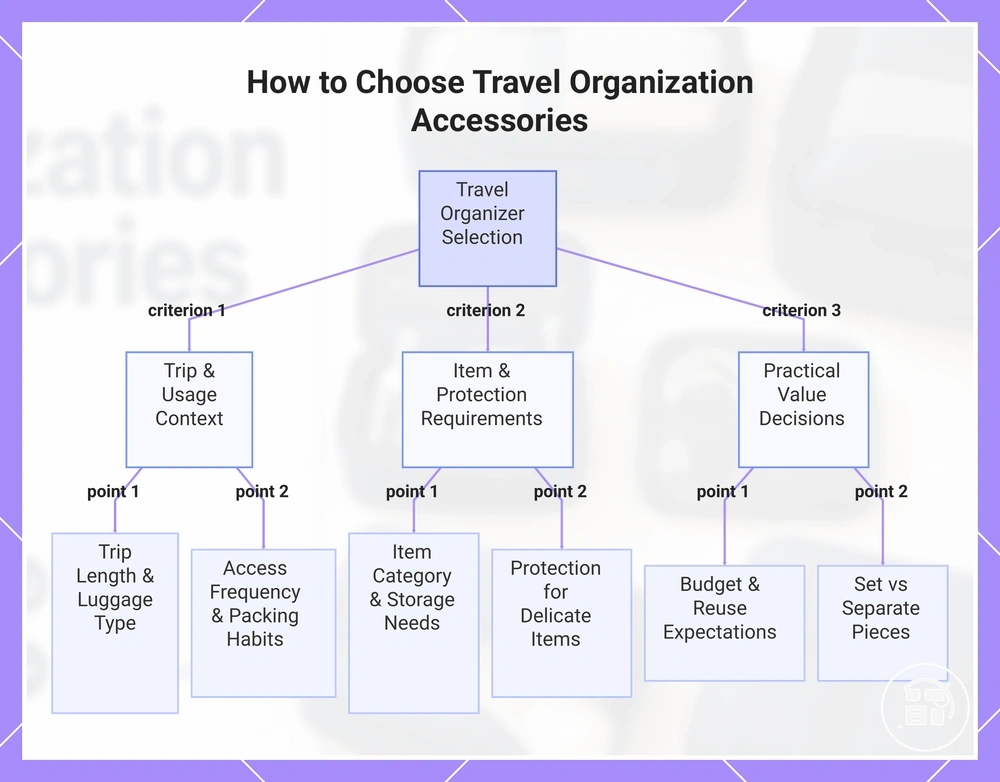
Choosing travel organization accessories depends on trip context, belongings, luggage type, and packing habits. The right organizer may vary because item categories, protection needs, available space, and access frequency differ between travelers and trips. Selection criteria should focus on matching organizer functions to actual travel needs rather than searching for a universal solution. A practical selection frame is to compare conditions, constraints, and intended outcomes before selecting an organizer type.
Different criteria may carry different weight depending on travel needs and packing style. Frequent access can make compartment layout and placement more important, while delicate belongings may increase the importance of protection needs. Budget, expected reuse, and whether an organizer set or separate pieces provide better value can also influence the decision. For a more detailed decision process, see how to choose travel organization accessories.
How to Choose Travel Organization Accessories becomes easier when the main selection criteria are organized by trip, belongings, fit, and value:
- Trip context and trip length — longer or more complex trips may benefit from broader organization coverage, while shorter trips may require fewer organizers.
- Belongings and item category — different organizer types may suit clothing, toiletries, electronics, documents, or valuables based on storage and access needs.
- Luggage type and luggage fit — carry-on and checked luggage create different space and placement conditions that can affect organizer selection.
- Packing habits and access frequency — frequently used items may benefit from compartment layouts that support easier retrieval.
- Protection needs — delicate belongings may justify added structure or padding when additional protection is needed.
- Budget and reuse expectations — comparing expected use against cost can help identify a practical value trade-off.
- Organizer set versus separate pieces — an organizer set may suit predictable packing routines, while individual pieces can provide more flexibility when travel needs change.
This chart shows the main selection criteria for choosing travel organization accessories, grouped by trip context, item needs, and practical value.
Packing Style and Belonging Type
Different packing styles can change which organizer type is more suitable because the belongings carried, access needs, and storage priorities are not the same. Minimal packing, family packing, and business travel often require different levels of separation, containment, and retrieval. The most useful choice depends on how the packing style relates to the belonging type being carried.
One organizer may suit a specific traveler type but be less efficient for another because item type and packing habit affect organization needs. For example, a compact organizer may work well for a small set of essentials but provide limited separation when multiple belongings need to stay organized. Matching the organizer to both the belongings carried and the travel situation can help qualify the choice.
Packing Style and Belonging Type can be matched through the following packing behaviors and item groups:
- Minimal packing and essentials — a small pouch may suit essentials when quick access matters more than extensive separation, though storage capacity can be limited.
- Family packing and multiple items — organizers with separation sections or labels may help manage clothes, toiletries, and shared belongings when many item groups travel together.
- Business travel with documents and devices — document and device organizers may suit situations where quick access to papers, chargers, and electronics is important.
- Toiletries and liquids — containment-focused organizers may help keep toiletries grouped because washability and separation can be useful when carrying liquids.
- Clothes and shoes — clothes may benefit from cubes that support separation or compression, while shoes may require dedicated containment because they often need isolation from other belongings.
- Small valuables and compact items — smaller organizers may suit valuables that need dedicated storage, although visibility and access can depend on compartment layout.
Carry-On, Checked Luggage, and Trip Length
Carry-On, Checked Luggage, and Trip Length compatibility changes with luggage mode, available space, and travel duration. A carry-on may favor a compact organizer when limited space and quick access matter, while checked luggage can allow larger organizers when compartment depth and packing flexibility are available. Compatibility should be verified against suitcase size, compartment depth, and the expected packing load before packing or buying.
Carry-on limits can make organizer dimensions and access patterns more important, while checked luggage often provides greater flexibility for separation and storage. A short trip may require less item separation, whereas a long trip can benefit from additional organization for clothing, laundry, or travel essentials. For a deeper review of conditions that affect organizer selection, see luggage fit and packing constraints.
Carry-On, Checked Luggage, and Trip Length can be checked through the following compatibility conditions:
- Carry-on and limited space — verify whether a compact organizer supports access without occupying excessive room inside cabin luggage.
- Checked luggage and compartment depth — check whether a larger organizer suits the available depth and packing arrangement of the checked bag.
- Suitcase size and placement — compare organizer dimensions with the usable luggage area to qualify placement and packing efficiency.
- Short trip and item volume — verify whether the organizer matches the belongings carried without creating unnecessary bulk.
- Long trip and separation needs — check whether additional organization is useful when clothes, laundry, or multiple item categories need separation.
- International travel and document access — verify whether documents can remain grouped and accessible when document access may be needed during travel.
Budget, Durability, and Set Value
Budget, Durability, and Set Value depend on reuse frequency, construction needs, and how well an organizer matches the intended packing use. Frequent reuse can make material quality, zipper strength, and seam construction more important, while occasional use may place less emphasis on long-term wear characteristics. A stronger cost-value decision usually comes from matching construction quality to expected use rather than focusing on budget alone.
Set value depends on whether the included organizers are likely to be used together. An organizer set may provide broader coverage when multiple item categories require separation, but duplicate pieces can increase overbuying risk when only a few organizers are needed. Protection need can also influence value because padding, waterproofing features, or added structure may increase cost-value trade-offs without benefiting every packing situation. When reuse frequency is high, fewer durable pieces may offer better long-term value than a larger set with components that remain unused.
Budget, Durability, and Set Value are easier to evaluate when comparing value signals rather than prices.
| Value factor | When it matters | Risk if ignored | Decision cue |
|---|---|---|---|
| Reuse frequency | Organizers are used regularly | Replacement risk may increase if construction does not match usage | Frequent use can make stronger construction more important |
| Material quality, zipper strength, and seams | Repeated packing and unpacking is expected | Wear characteristics may become more noticeable over time | Compare durability needs with expected use |
| Set value | Multiple organizer types are needed | Duplicate pieces can increase overbuying risk | Check whether most pieces are likely to be used |
| Protection need | Delicate items require added separation or cushioning | Unnecessary features may add cost without improving usefulness | Choose added protection only when the item type requires it |
| Budget option versus durable pieces | Long-term reuse is uncertain | Focusing only on quantity may reduce overall usefulness | Fewer durable pieces may be preferable when they match actual packing needs |
Essential Travel Organizers Worth Prioritizing
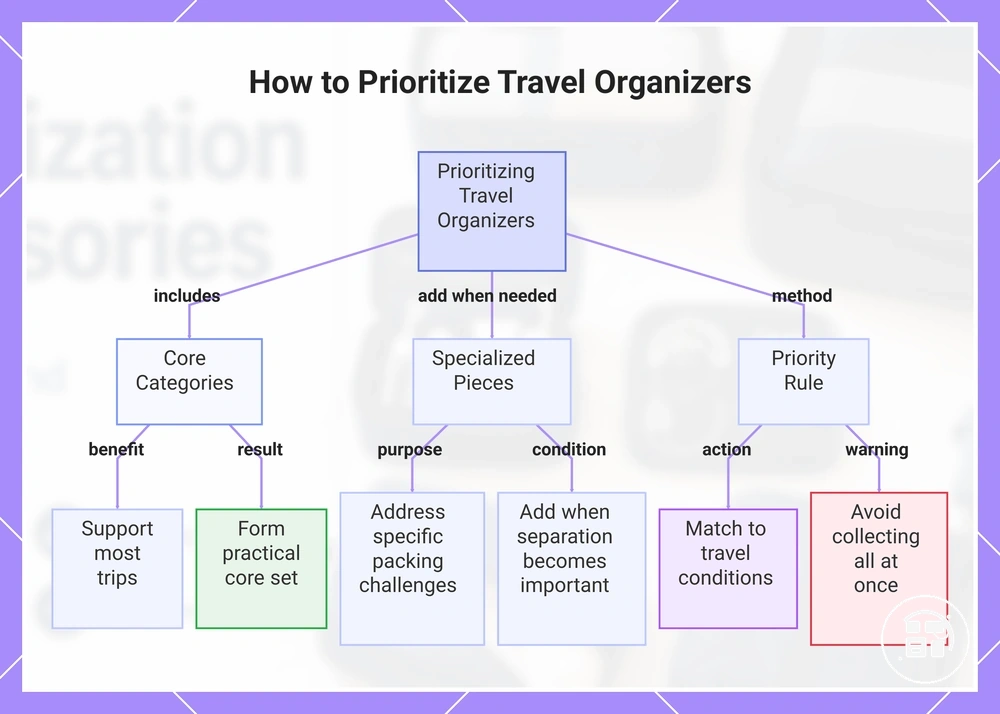
Essential travel organizers worth prioritizing depend on belongings, luggage type, and travel frequency. Travelers who regularly carry clothes, toiletries, documents, and electronics may benefit from organizing those categories before considering specialized pieces. Different trips can create different organization needs, so category priority often changes with packing habits and access requirements. Prioritize categories according to frequency of use, separation needs, and packing context.
First-priority organizers usually support the belongings used across most trips. Clothes organizers can help separate clothing categories, while toiletry organizers may improve containment for personal care items. Document and electronics organizers can support access when travel essentials need to remain grouped and easy to locate. These categories often form a practical core set before expanding to additional organization needs.
Specialized pieces become more relevant when packing requirements extend beyond the core categories. Shoes, laundry, and small accessories may benefit from dedicated organization when separation, hygiene, or retrieval becomes more important. These categories often address specific packing challenges rather than general organization needs. Consider specialized pieces when recurring travel conditions create a clear need for additional separation or access.
Category priorities are easier to evaluate when they are matched to actual travel conditions rather than collected all at once. If organizer selection still requires qualification, the buying checklist for travel organizers can help identify which categories deserve attention first. The grouped checklist below reflects common category priorities based on belongings and travel frequency.
- 1. Clothes organizers — useful when clothing categories need separation; upgrade when packing volume increases.
- 2. Toiletry organizers — useful when liquids and personal care items require containment; upgrade when organization needs become more complex.
- 3. Document organizers — useful when travel papers need quick access; upgrade when document volume increases.
- 4. Electronics organizers — useful when cables and devices need grouping; upgrade when accessory count grows.
- 5. Shoe organizers — useful when footwear needs separation from other belongings; add when shoe storage becomes a recurring concern.
- 6. Laundry organizers — useful when clean and used items need separation; add when trip duration increases.
- 7. Small accessory organizers — useful for compact valuables and miscellaneous items; add when retrieval becomes difficult.
Category-level priorities can help avoid overbuying while still covering common packing needs. A core set focused on clothes, toiletries, documents, and electronics may support many travel situations, while shoes, laundry, and small accessories often function as specialized pieces added when specific needs appear.
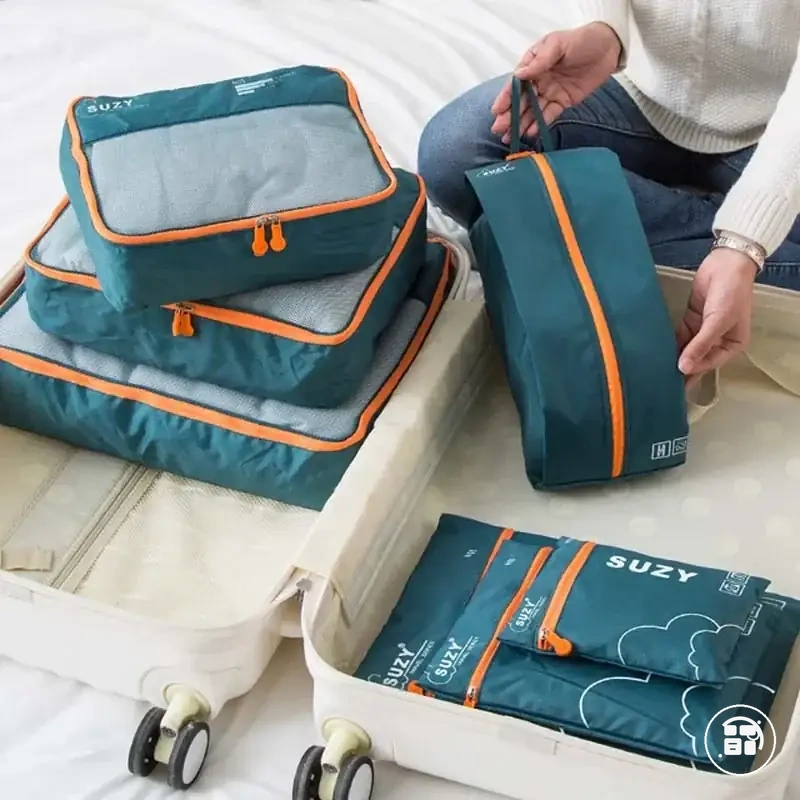
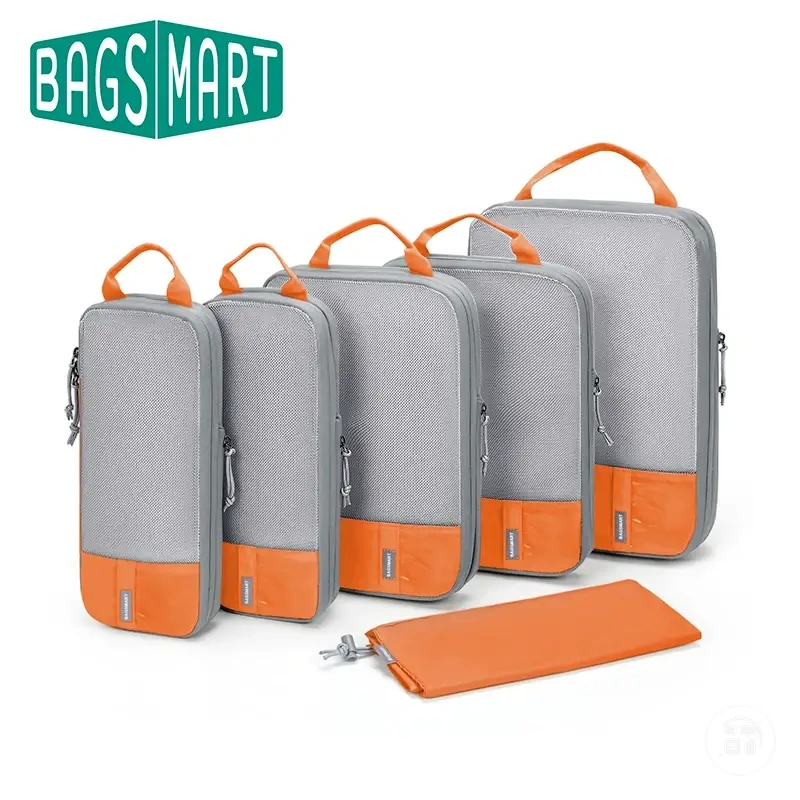
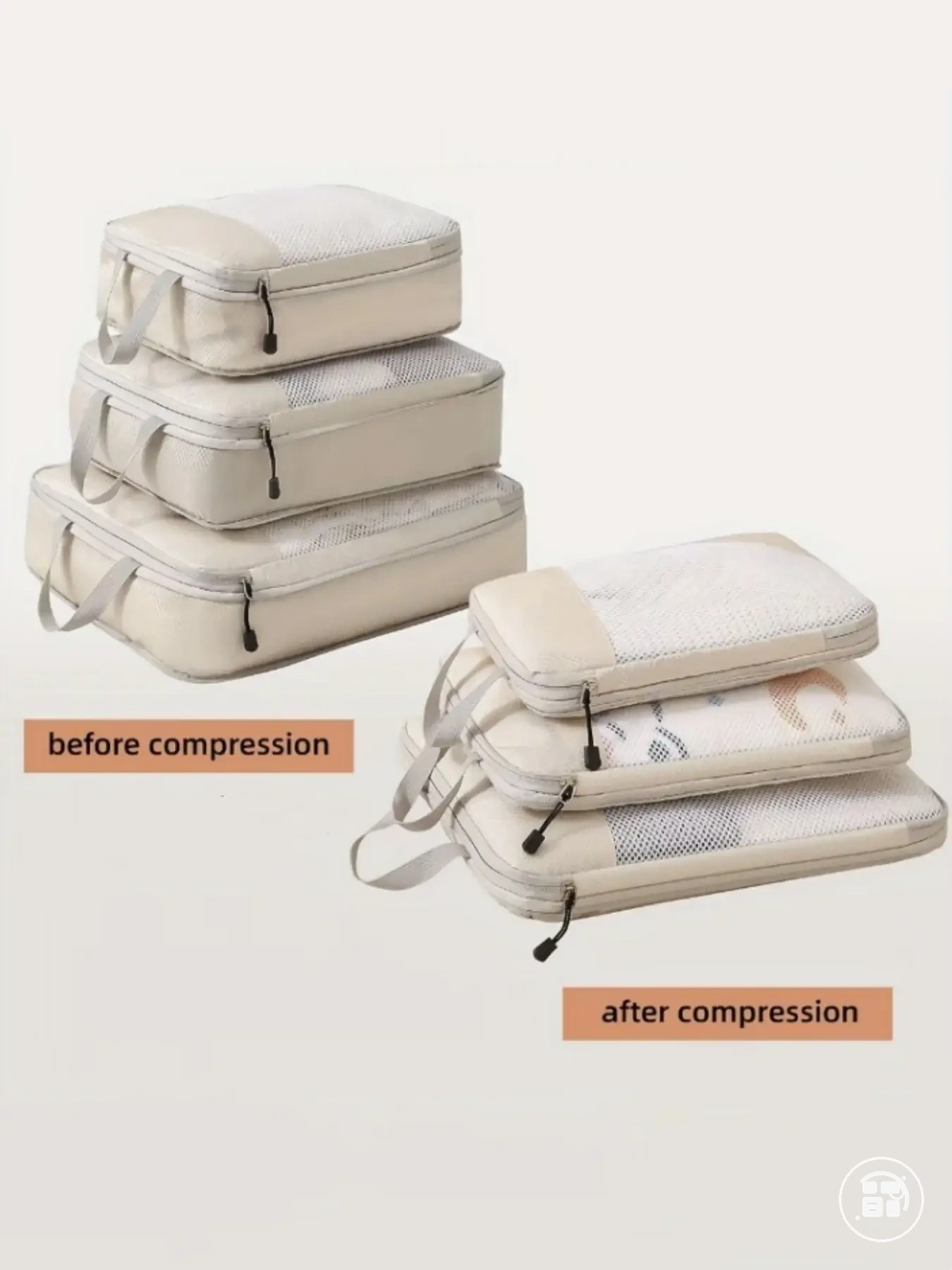
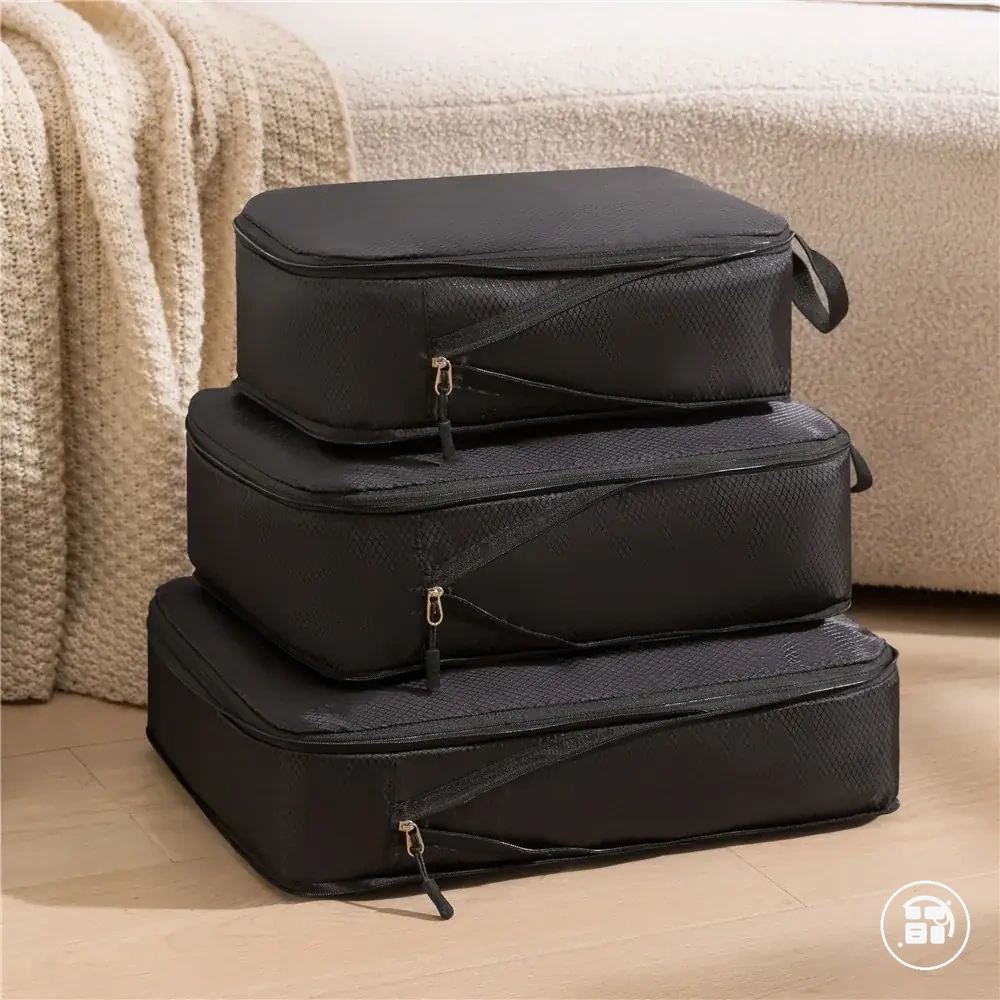
Here are product examples that may make comparison easier. Before buying, always review the compatibility criteria, essential features, and product details.
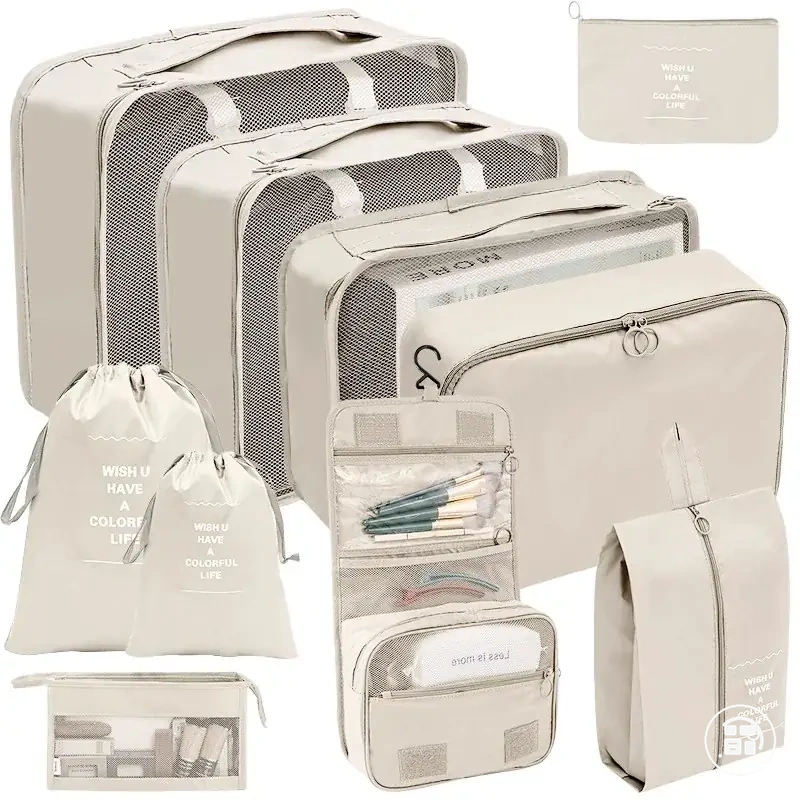
This chart shows how to prioritize travel organizers based on travel conditions, dividing them into core categories and specialized pieces.
Using Travel Organizers Without Overpacking
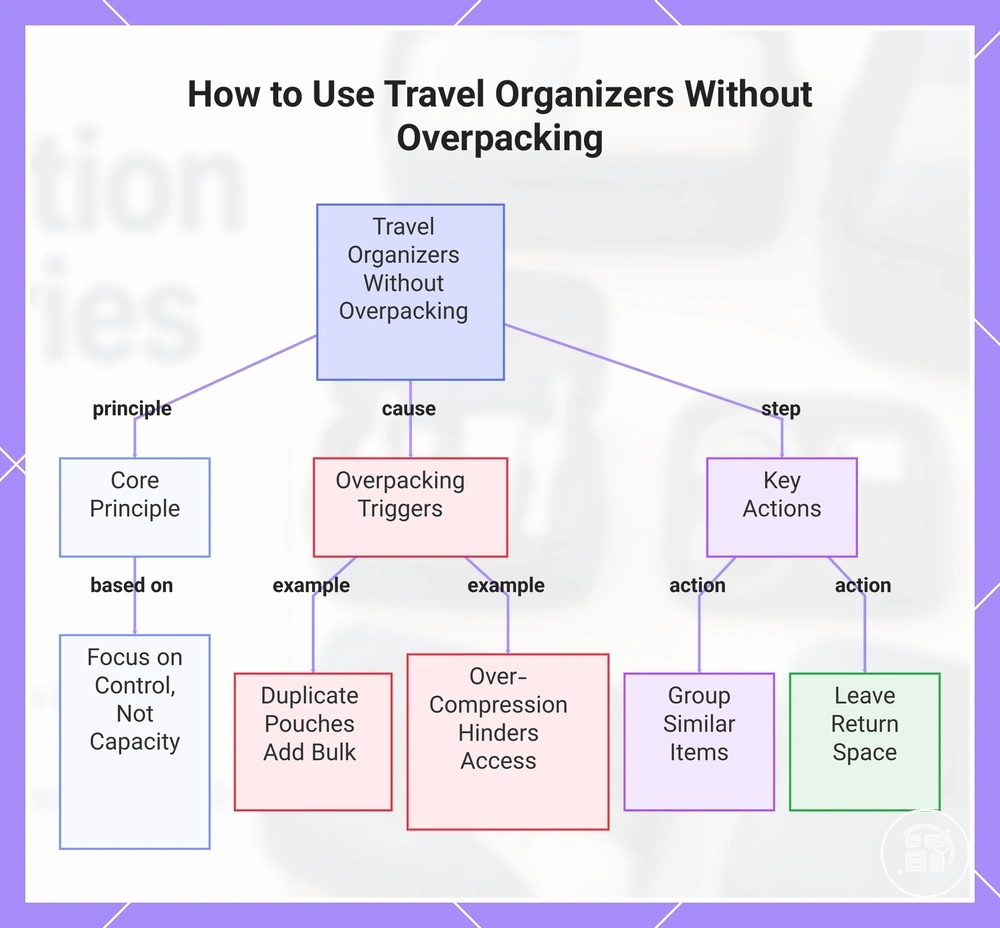
Using travel organizers starts with item reduction, grouping, and placement rather than adding more pouches. Organizers can help keep similar items together, separate clean items from used items, and improve access to essentials when suitcase space is already planned carefully. Overpacking can still occur when organizers are used to justify carrying extra belongings instead of organizing existing ones. Treat organizer use as a packing system with clear limits.
Overpacking risk often increases when duplicate pouches, excessive compression, or organizers that do not fit the suitcase create extra bulk. Compression may help in certain situations, but over-compression can reduce access and make packed items harder to manage. A suitcase also benefits from return space for laundry, repacked belongings, or items collected during the trip. Leave a practical space buffer instead of filling every available compartment.
Using Travel Organizers Without Overpacking is easier when organizer use focuses on control rather than capacity. The following actions can help keep organizers from adding unnecessary bulk:
- Group similar items — place related belongings together, but avoid creating extra pouches for very small item groups.
- Separate clean items and used items — use a laundry bag or dedicated organizer for separation, but keep the system simple to avoid extra bulk.
- Keep essentials accessible — place documents or frequently used items near the top layer, but limit this group to true essentials.
- Avoid duplicate pouches — remove organizers that serve the same purpose because duplicate pouches can create fit problems and unnecessary volume.
- Use compression carefully — compress soft items only when access remains practical, because over-compression can reduce flexibility inside the suitcase.
- Leave return space — reserve room for laundry, repacked belongings, or return items rather than filling the suitcase completely before departure.
This chart outlines the core principle, common overpacking triggers, and key actions to keep travel organizers from adding unnecessary bulk.
Common Travel Organization Mistakes and Fit Problems
When packing fit issues appear, common travel organization mistakes usually come from a wrong size, wrong type, poor material match, or too many pieces. Oversized cubes, weak zippers, unclear pouches, and compression misuse can affect access, protection, or suitcase fit when they do not match the packing situation. Most organizer problems are easier to diagnose by checking size, type, material, and quantity before assuming the organizer is unsuitable. This diagnostic frame helps identify likely causes and practical checks.
Fit problems often begin with a wrong size rather than a problem with the organizer itself. Oversized cubes may create wasted space or reduce placement flexibility when suitcase dimensions and organizer dimensions do not align. Compression misuse can also create fit problems if compressed items become difficult to stack or retrieve. Check whether the organizer supports the available suitcase space before adding more pieces.
Access and containment problems may occur when the wrong type of organizer is used for the belongings being carried. Unclear pouches can slow retrieval, while poor toiletry containment may increase the chance of liquids affecting nearby items when separation is limited. Inaccessible essentials can also result from placement choices rather than organizer quality alone. For a deeper diagnostic review, see common travel organization mistakes.
| Mistake | Likely cause | Check | What it means |
|---|---|---|---|
| Oversized cubes | Wrong size | Compare organizer dimensions with suitcase space | May create wasted space or placement limits |
| Weak zippers | Poor material match or construction | Review zipper and seam condition during use | May indicate a durability risk during repeated packing |
| Unclear pouches | Wrong type for access needs | Check how quickly items can be identified | May reduce retrieval efficiency |
| Poor toiletry containment | Organizer not suited to liquids | Review how liquids are grouped and separated | May increase containment concerns |
| Inaccessible essentials | Poor placement | Check whether frequently used items are easy to reach | May create access delays during travel |
| Duplicate sets or too many pieces | Quantity mismatch | Remove organizers with overlapping functions | May add clutter and contribute to overpacking |
| Compression misuse | Excessive compression | Check whether compressed items remain accessible | May create bulk or packing fit problems |
A minor inconvenience usually affects convenience, while a real fit or protection problem affects placement, access, or containment. For example, a pouch that takes longer to open may be inconvenient, but an organizer that prevents comfortable suitcase closure or limits access to essentials is a clearer fit concern. Use condition-based checks before replacing, removing, or adding organizers.