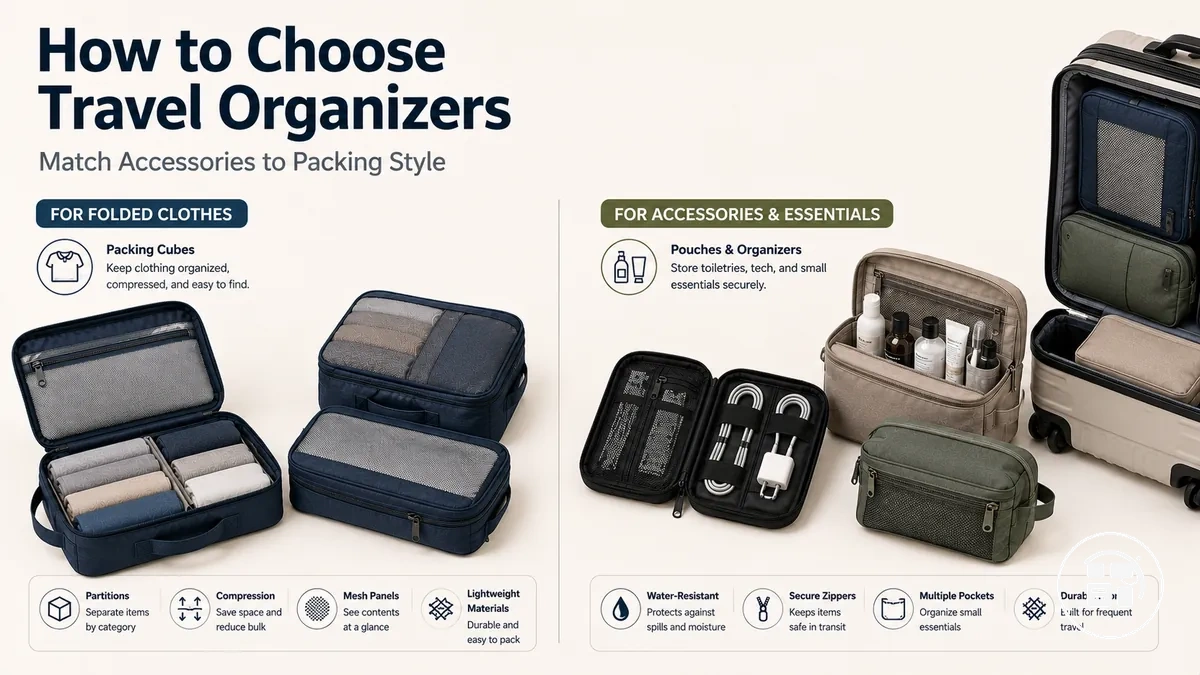
Travel Organization Accessories Selection Guide
Travel organization accessories depend on packing needs, luggage constraints, access habits, quality signals, and value. The right choice is not the largest organizer set or the most visible packing pouch; it depends on what the traveler packs, how often items need access, and how the organizer fits inside the bag.
A carry-on may need compact travel organizers that protect usable space, while checked luggage may allow larger pouches or cubes. Daily items often need compartments, visibility, and easier access, while packed-away items may need simpler storage. This connects item separation, luggage fit, and access habits.
The common mistake is treating travel organizers as separate accessories instead of one packing system. A useful organizer choice should match the item type, fit the available space, use suitable material, and have a zipper or closure that supports repeated handling. This makes the selection decision a packing decision first, not a product-listing decision.
- Choose by item type when clothes, toiletries, documents, tech, or small accessories need different separation.
- Check luggage fit before assuming an organizer set may work inside a carry-on, backpack, or suitcase.
- Match access frequency to compartments, visibility, and placement inside the bag.
- Review material and zipper quality when durability, cleaning, or safe use may matter.
- Compare organizer count against value, redundancy, and unused-piece risk.
Travel organization accessories as a packing decision
Travel organization accessories are a packing decision because their usefulness depends on the packing problem they are intended to solve inside luggage. Organizer purpose should guide selection before appearance, quantity, or set size. Packing problem, item type, and access need are the first decision filters.
Travel organization accessories as a packing decision become clearer when organizer purpose is matched to item separation and luggage space. The image below shows how different organizer types can support different categories of belongings while balancing storage needs and access frequency.
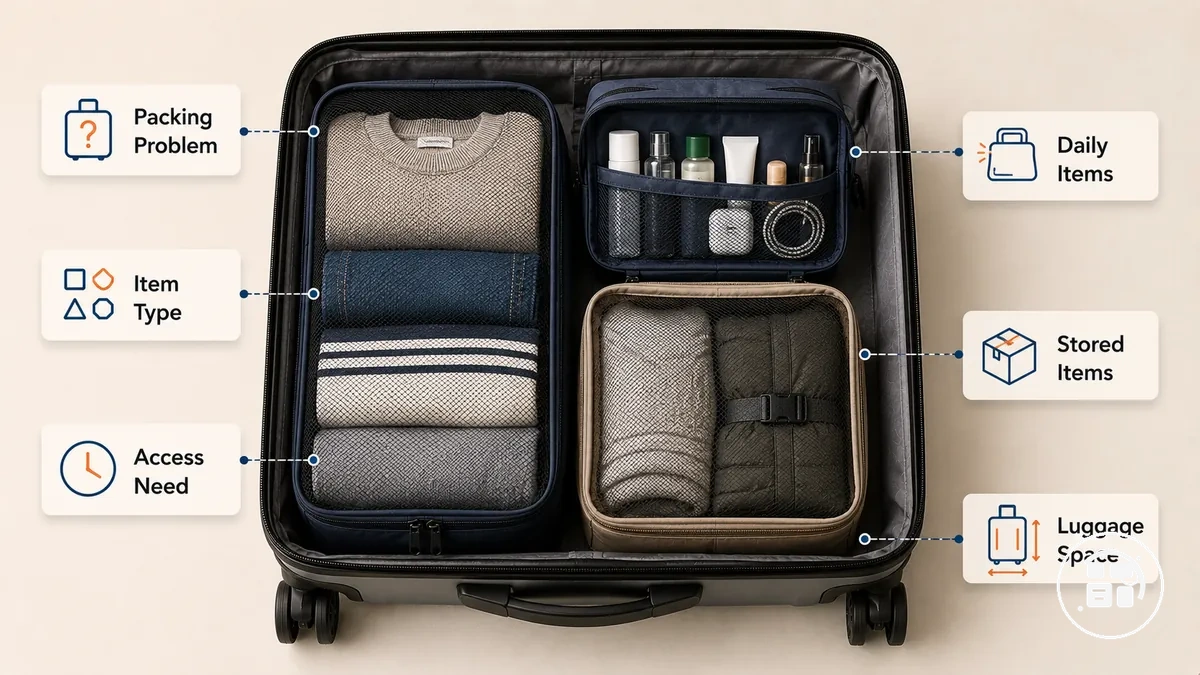
A packing organizer that suits daily items may not be the most suitable choice for items that remain stored during most of a trip. Access frequency, luggage space, organizer size, and fit constraints can influence packing friction and overall convenience. As explained in the travel organization accessories hub, this topic focuses on selection logic rather than general packing advice. Set size, appearance, or quantity alone are weak signals because they do not show whether an organizer matches the intended packing problem.
Match organizer types to what you need to separate
Organizer types should be matched to the belongings that need separation, protection, or faster access during travel. The item group is a useful starting filter because different belongings often create different storage needs and packing outcomes. The item group should lead the organizer choice.
When belongings become difficult to organize, protect, or retrieve, matching the separation need to the organizer format can reduce packing friction. Match organizer types to what you need to separate by connecting item groups with the packing outcome you want. The table below organizes item groups by separation need and packing outcome.
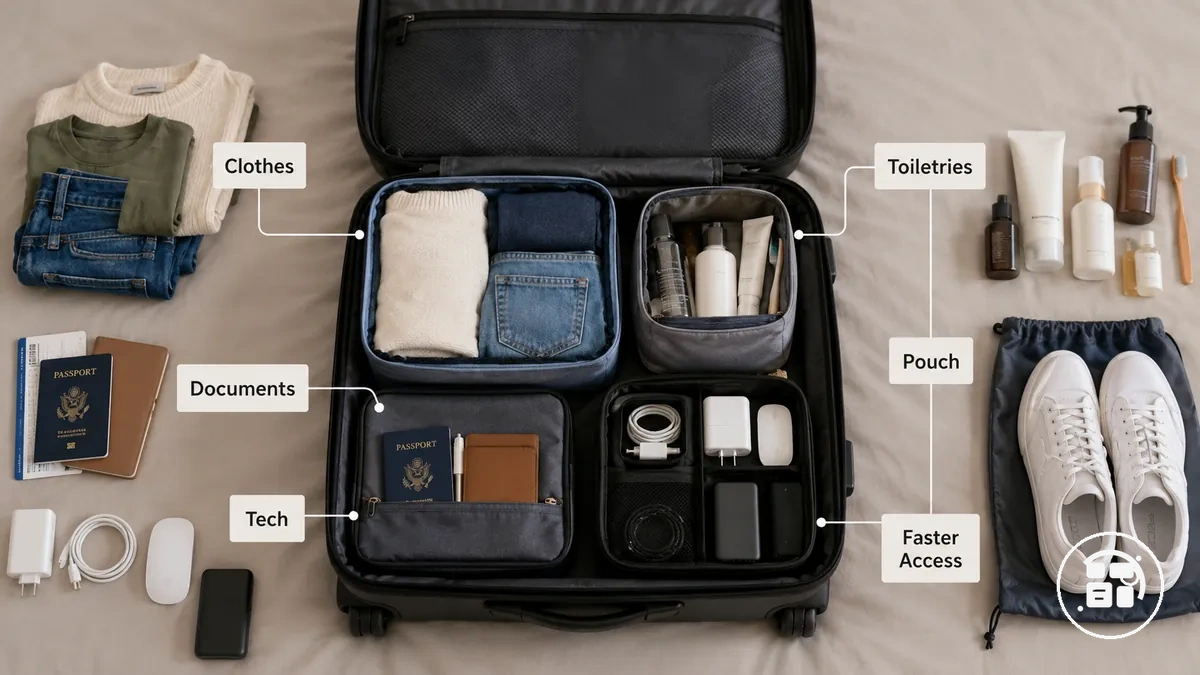
| Item group | Separation need | Organizer format | Packing benefit or risk |
|---|---|---|---|
| Clothes | Group similar garments | Packing cube | Can improve organization and reduce mixing |
| Toiletries | Manage leak risk | Pouch | May help contain spills and separate liquids |
| Documents | Visibility and access | Travel pouch | Can make important items easier to locate |
| Tech | Cable and device separation | Packing organizer with compartments | May reduce tangling and misplaced accessories |
| Shoes | Separate from clean belongings | Storage pouch | Can limit contact with other packed items |
| Small accessories | Prevent loss | Small pouch | May improve visibility of frequently used items |
If a traveler carries both toiletries and electronics, more than one organizer format may be appropriate because the separation needs differ. For broader selection logic based on storage challenges, see choose by packing problem. Avoid buying organizer pieces that do not solve a specific separation need.
Clothes, toiletries, documents, and tech as organizer categories
Clothes, toiletries, documents, and tech as organizer categories require different organizer choices because protection, visibility, spill risk, and access frequency are not the same for each item group. These category differences help narrow the selection decision without turning it into a full packing guide. Clothes, toiletries, documents, and tech as organizer categories serve as local criteria for choosing organizers.
Clothes, toiletries, documents, and tech as organizer categories become easier to evaluate when each category is linked to its primary organizer requirement. The image below clarifies how item categories create different organizer needs.
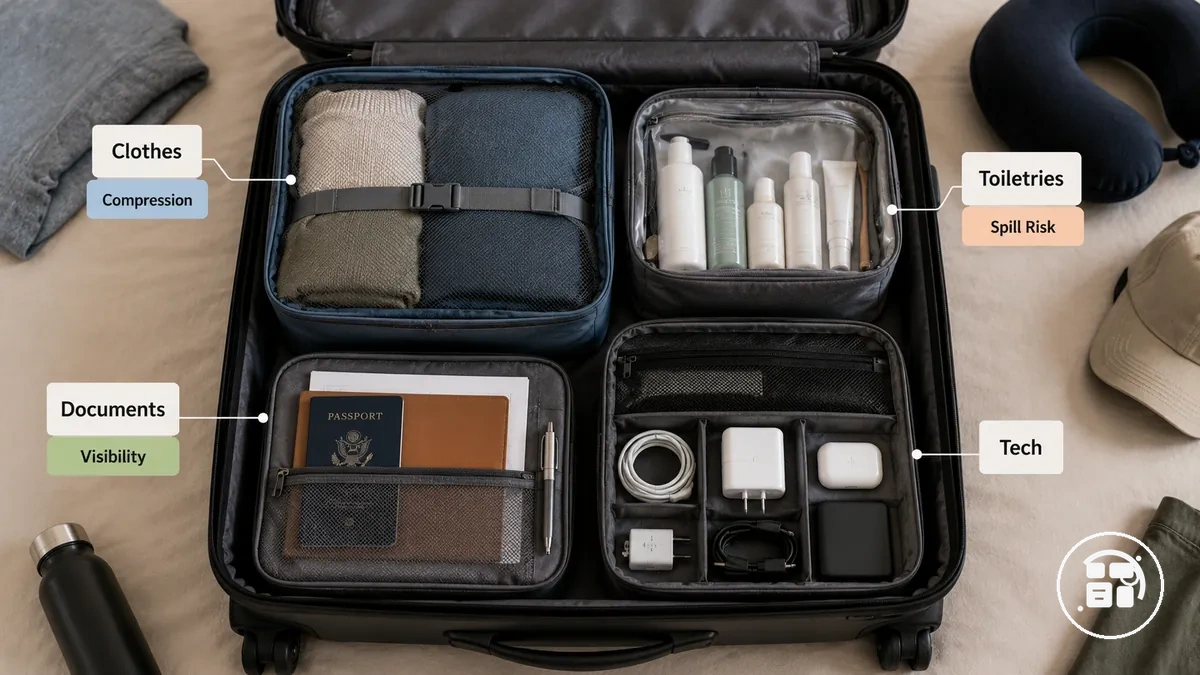
- Clothes: Compression and volume management may support the use of a packing cube when clothing occupies significant luggage space.
- Toiletries: Leak resistance is an important attribute, so a pouch may help manage spill risk and separation.
- Documents: Visibility and access frequency often support flat storage that keeps travel documents easier to find.
- Tech: Padding, cable organization, and compartment separation may help organize electronics and devices.
- Tech and documents: When both protection and quick access matter, organizer suitability may depend on usage frequency and luggage layout.
Daily-access items versus packed-away items
Daily-access items versus packed-away items should be organized according to access frequency, visibility needs, and luggage placement. Daily-access items often benefit from quicker retrieval, while packed-away items can prioritize storage efficiency and deeper placement. This distinction separates access-first needs from storage-first needs.
When an item is used throughout the trip, access-first organization may reduce handling time. When an item is rarely needed, storage-first organization may support deeper storage and help avoid over-separating belongings into extra pouches that create friction or waste space.
| Access-first items | Storage-first items |
|---|---|
|
|
Choose organizers that fit your luggage format
Luggage format depends on dimensions, compartment layout, organizer size, and organizer shape. A carry-on, checked suitcase, or backpack may accommodate the same organizer differently because usable space and interior design vary. Fit risk is lower when organizer size and shape align with available packing space, but compatibility depends on usable interior space and organizer shape.
An organizer may appear suitable until compartment layout or packed volume limits placement options. Checking how organizer size and organizer shape interact with the luggage format can help reduce fit risk and improve packing efficiency. Choose organizers that fit your luggage format by using the checklist below to verify fit, placement, and usable space.
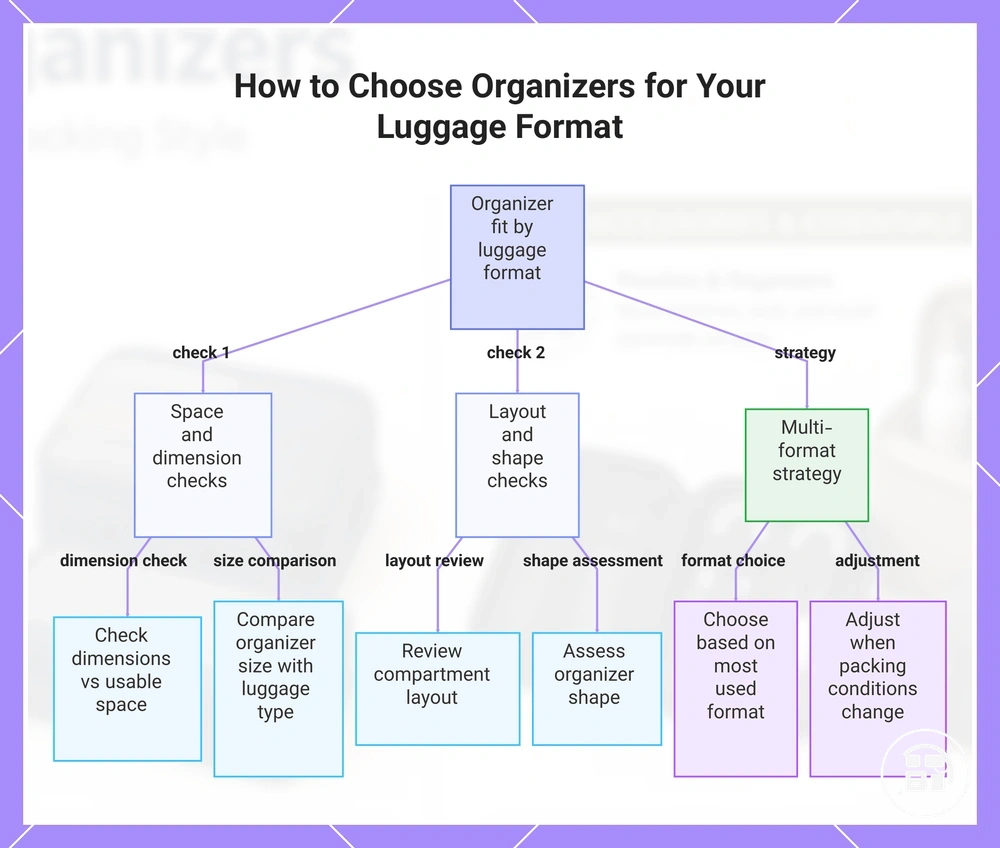
- Check dimensions against usable space; if an organizer is too large for the available area, fit risk may increase.
- Review compartment layout; when organizer shape matches the suitcase layout, placement may be easier.
- Compare organizer size with luggage type; larger organizers may suit some checked suitcase layouts when space allows.
- Assess organizer shape; narrow, rectangular, or flexible designs may fit differently across luggage formats.
- Consider backpack depth; a flexible pouch may adapt more easily when interior placement options are limited.
- Check access needs within a carry-on; organizer placement may affect visibility and retrieval when usable space is constrained.
When a traveler alternates between a backpack, carry-on, and checked suitcase, the same organizer setup may not provide the same result in every luggage format. Dimensions, compartment layout, and usable space remain the primary compatibility signals. Travelers who use more than one luggage type can choose for luggage fit based on the format used most often and adjust organizer selection when packing conditions change.
This chart shows the key checks and strategies to ensure organizer compatibility with carry-on, checked suitcase, and backpack luggage formats.
Carry-on space, suitcase layout, and bag depth
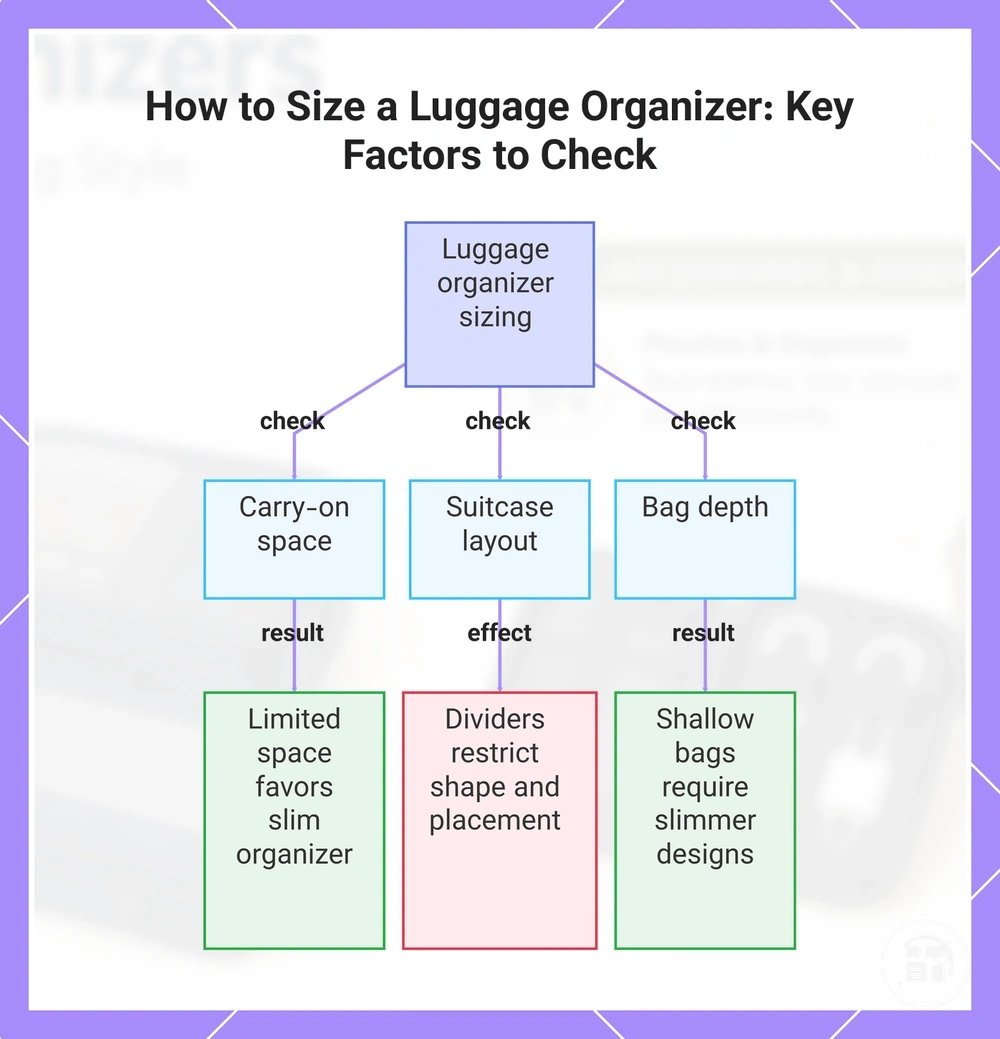
Carry-on space, suitcase layout, and bag depth affect organizer sizing because fit depends on both external luggage size and internal usable space. A larger organizer may still create fit risk when internal dividers reduce placement options or when bag depth is limited. Organizer sizing should be based on usable space rather than external luggage dimensions alone.
Carry-on space, suitcase layout, and bag depth can change how an organizer fits inside the bag. Use the checks below to verify local sizing conditions and identify whether a slimmer or bulkier organizer is appropriate.
- Check carry-on space against organizer sizing; limited usable space may favor a slim organizer and reduce fit risk.
- Review suitcase layout and internal dividers; divider placement may restrict organizer shape and placement.
- Assess bag depth before choosing a bulky organizer; shallow bags may require slimmer designs.
- Consider compression limits; compression may help with volume but still depends on available internal space.
- Check access position within the bag interior; organizer placement may affect visibility and retrieval.
- Compare hard-shell and soft-shell space behavior; usable space may vary based on interior structure and flexibility.
If an organizer is difficult to place despite matching the overall luggage size, suitcase layout, internal dividers, or bag depth may be limiting the available space. Shallow or divided bags may benefit from slimmer organizers because usable space can be more restrictive than external dimensions suggest.
This chart shows the three main factors to check when sizing a luggage organizer: carry-on space, suitcase layout, and bag depth.
Compact organizers and usable storage space
Compact organizers depend on practical capacity and access efficiency, not small size alone. A compact travel organizer may save usable storage space when organizer depth, fabric flexibility, and compression behavior support the items being packed. Compactness is useful only when practical capacity remains sufficient for everyday use.
Compact organizers can improve space efficiency, but only when usable volume is preserved. The comparison below shows the trade-off between compactness and practical capacity.
| Compact but useful | Compact but limiting |
|---|---|
|
|
A common myth is that smaller organizers automatically create more usable storage space. Compact organizers can reduce usable volume when a rigid design or too many compartments occupy space that could otherwise remain available for practical capacity and access.
Evaluate compartments, materials, zippers, and visibility
Evaluate compartments, materials, zippers, and visibility by focusing on how each feature affects everyday use rather than how it appears on a product page. Compartments influence organization, materials affect durability and maintenance, zippers affect access and closure usability, and visibility features affect how quickly items can be found. These features matter when they change durability, protection, access, or cleaning.
Two organizers may appear similar but perform differently because visible features create different packing outcomes. Evaluate compartments, materials, zippers, and visibility using the table below, which connects visible features to practical decision effects.
| Feature | Quality signal | Risky condition | Decision effect |
|---|---|---|---|
| Compartments | Divider layout that supports organization | Too many dividers that reduce usable space | May improve access and item separation |
| Material | Fabric that appears suitable for repeated handling and cleaning | Material that may wear quickly or be difficult to maintain | Can influence durability and maintenance needs |
| Zipper | Smooth closure with consistent operation | Closure that catches, strains, or feels weak | May affect usability and access over time |
| Mesh or visibility panel | Clear view of contents | Limited visibility that slows item retrieval | Supports faster access and organization |
| Waterproof lining | Protective lining for moisture-sensitive storage | No barrier between liquids and other belongings | May help with spill protection and cleaning |
| Padding | Cushioned structure around stored items | Minimal protection for sensitive belongings | Can improve protection when carrying electronics |
When toiletries are stored inside an organizer, a waterproof lining may matter more because spill protection and cleaning become more relevant. When electronics are carried, padding may provide additional protection depending on the item and fit. For deeper feature evaluation criteria, see important organizer features, where individual feature attributes can be assessed in more detail.
Decide between organizer sets and separate pieces
Organizer sets and separate pieces differ by coverage, flexibility, redundancy, and value within a packing system. Organizer sets may offer convenience when included pieces match several item groups, while separate pieces may work better when the traveler has targeted needs. The better choice depends on coverage needs and unused-piece risk.
A travel organizer set can look efficient, but included pieces may create waste when several pieces do not match the luggage format or item mix. Separate pieces can reduce redundancy when each pouch or organizer has a clear role. Decide between organizer sets and separate pieces using the comparison below, which weighs coverage, flexibility, redundancy, and value.
| Organizer set | Separate pieces |
|---|---|
| May provide broad coverage for clothes, toiletries, and smaller belongings in one coordinated purchase format. | May provide targeted coverage when only one item group needs better separation. |
| Included pieces can improve convenience when most pieces support the same packing system. | Individual pouches or separate organizers can improve flexibility when packing needs change. |
| Redundancy can increase if similar pieces overlap or remain unused. | Redundancy may be lower when each piece solves a specific storage or access problem. |
| Value depends on whether the full set fits the traveler’s luggage space and item groups. | Value depends on whether the selected pieces cover enough needs without creating gaps. |
| A set may be suitable when coverage and convenience matter more than fine-tuned selection. | Separate pieces may be suitable when fit, replacement, or targeted flexibility matters more. |
If a traveler wants one simple starting point for several item groups, an organizer set may be practical when most included pieces will be used. If the packing system already has clear gaps, separate pieces may be more suitable because they can target those needs without adding unused pieces.
Redundancy matters because unused pieces can reduce value and take space without improving the packing system.
Multi-piece sets for full luggage organization
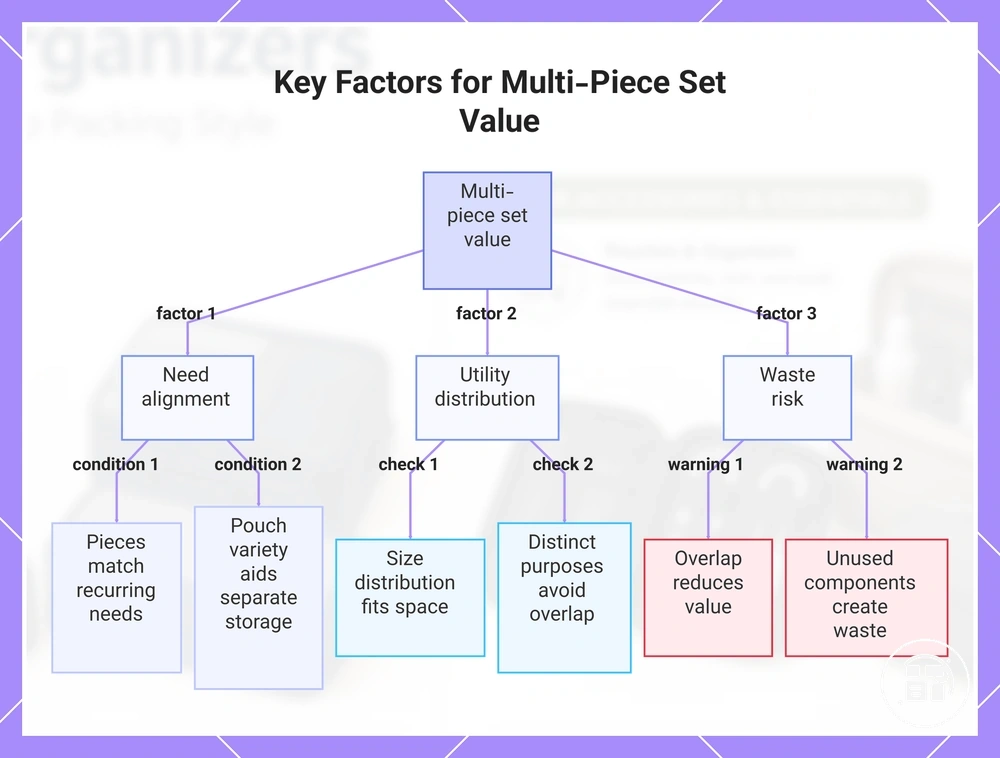
Multi-piece sets for full luggage organization depend on whether the included pieces match recurring packing needs. They can improve luggage coverage and convenience when most pieces have a clear role within the packing system. Multi-piece sets work best when most included pieces match recurring packing needs.
- Included pouch variety may be useful when different item groups require separate storage and organization.
- Size distribution can support luggage coverage when smaller and larger pieces fit the available packing space.
- Multi-piece sets may improve convenience when included pieces serve distinct purposes without unnecessary overlap.
- Overlap between pieces can reduce value when multiple organizers perform similar functions.
- Unused components may create waste when included pieces do not match recurring packing needs or packing habits.
When a traveler packs similar item groups on most trips, a multi-piece organizer or packing set may be easier to integrate into the same packing system. When many included pieces remain unused, the convenience of a travel accessory set may be reduced by the risk of unused components.
This chart shows the main factors that determine whether a multi-piece packing set adds value or leads to waste and reduced convenience.
Separate pouches for targeted packing needs
Separate pouches depend on whether targeted packing needs involve specific gaps that require a focused solution. They may be useful when a targeted item type, protection requirement, or storage issue needs attention without changing the rest of the packing system. Separate pouches work best for specific gaps.
When a packing setup lacks organization for a particular item group, a targeted organizer may address that need directly. Replacement flexibility can be an advantage, but selecting individual pieces may introduce inconsistent sizing risk.
- Separate pouches may be useful when a targeted item type needs dedicated storage and easier access.
- A single pouch may help meet a protection requirement for tech accessories or toiletries when extra separation is needed.
- Separate organizers can support replacement flexibility because one piece may be replaced without changing the rest of the setup.
- Separate pouches may improve space control when pouch size matches the available packing space.
- Inconsistent sizing can become a limitation when individual pouches do not fit together efficiently within the same luggage layout.
Prioritize value by use frequency and packing benefit
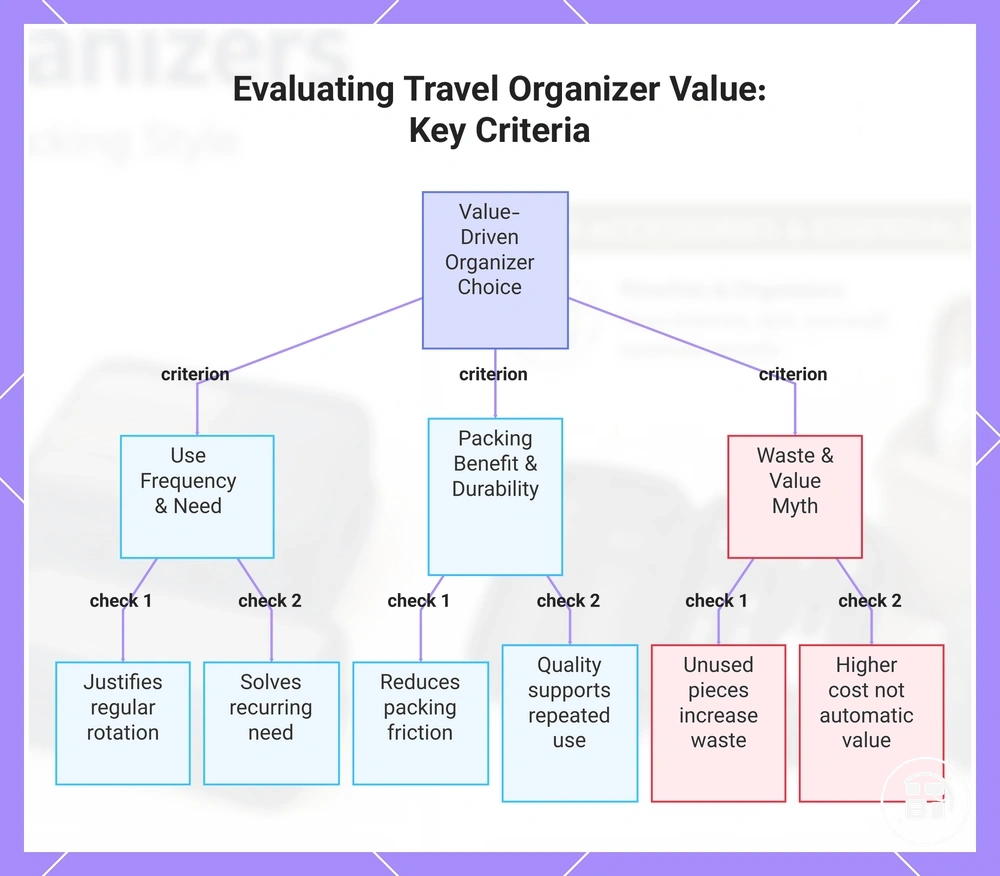
Value depends on how often an organizer is used and whether it delivers a meaningful packing benefit over time. An organizer choice may provide practical value when repeated use reduces packing friction and supports easier organization. Value is defined by repeated use and packing benefit rather than by the number of pieces included.
A larger organizer set or a feature-rich pouch can appear worthwhile until unused pieces or unnecessary features add waste. Organizer choice becomes easier when use frequency, durability, and practical benefit are evaluated together. Prioritize value by use frequency and packing benefit with the checklist below to verify whether an organizer's value is practical.
- Does use frequency justify keeping the organizer in regular rotation?
- Does the packing benefit reduce wasted time, clutter, or avoided packing friction?
- Does the quality level appear suitable for repeated use and expected conditions?
- Do the materials and zipper design support durability without assuming long-term performance?
- Would unused pieces increase waste rather than improve organization?
- Does the organizer choice solve a recurring packing need rather than a temporary one?
If a traveler uses the same organizer on most trips, long-term usefulness may become more important than the initial cost. A durable organizer with an acceptable quality level may provide more practical value when it continues to solve the same packing problem. The outcome depends on use frequency, condition, and the packing benefit provided.
A common myth is that more pieces or a higher cost automatically create more value. In practice, organizer choice depends on the relationship between use frequency, durability, avoided packing friction, and practical usefulness. For a broader comparison of cost and value tradeoffs, avoid exact price assumptions and premium-certainty claims.
Choose the organizer only after the value criteria show repeated use, practical benefit, and limited waste. Product examples should be treated as options to compare against these criteria, not as direct merchant promises.
Here are product examples that may make comparison easier. Before buying, always review the compatibility criteria, essential features, and product details.
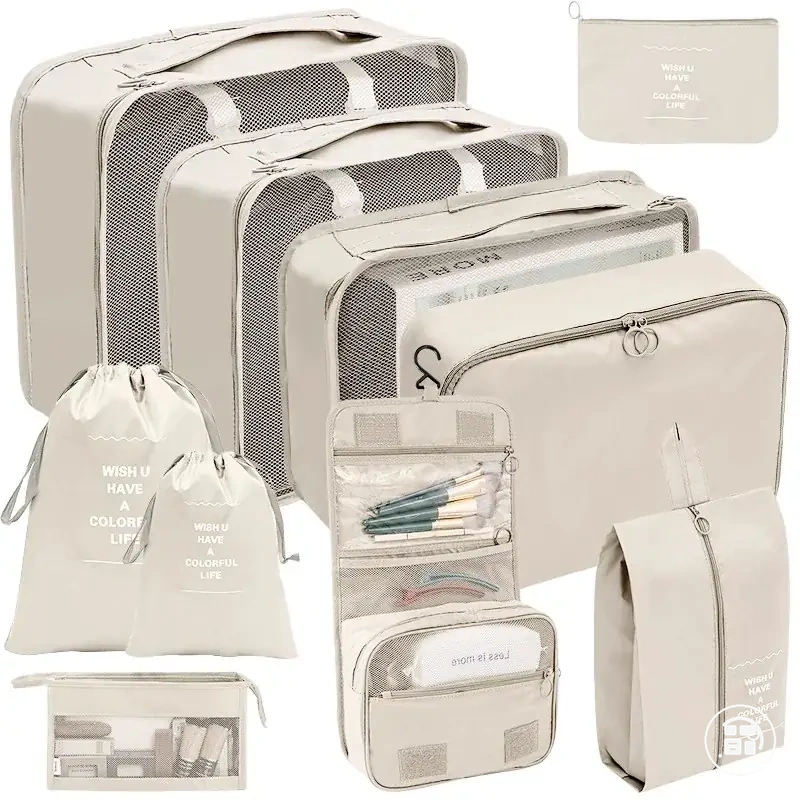
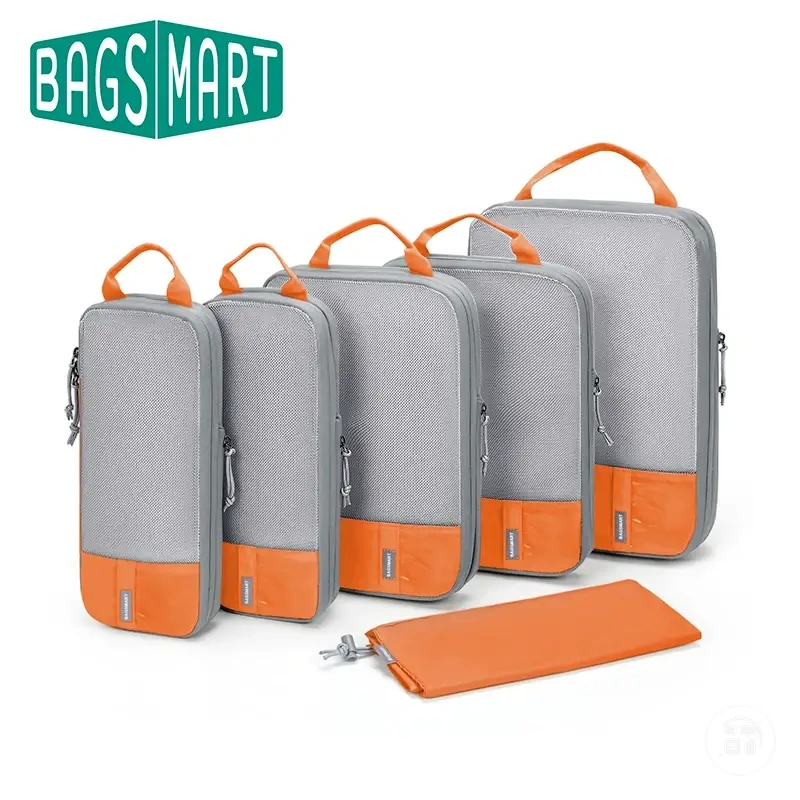
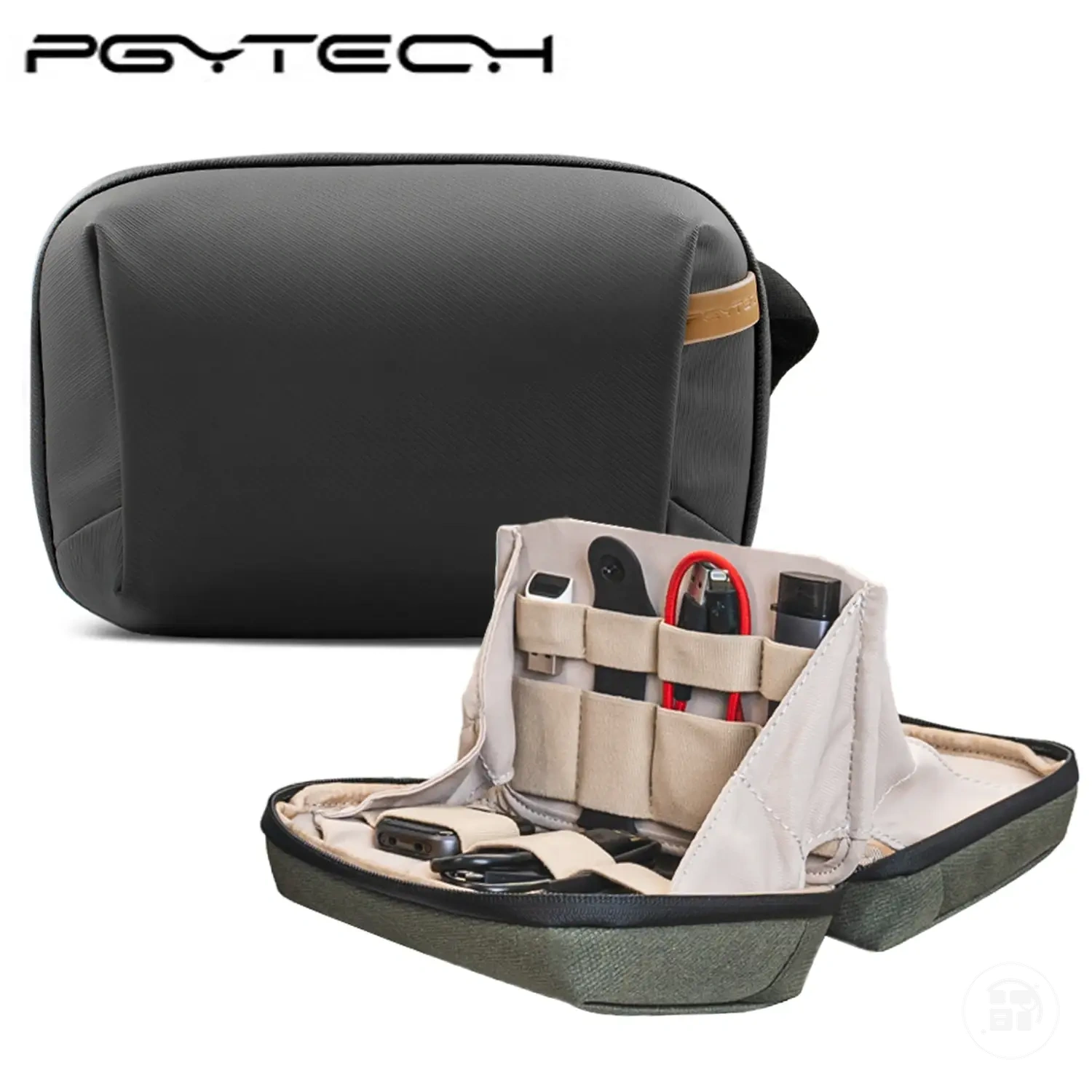
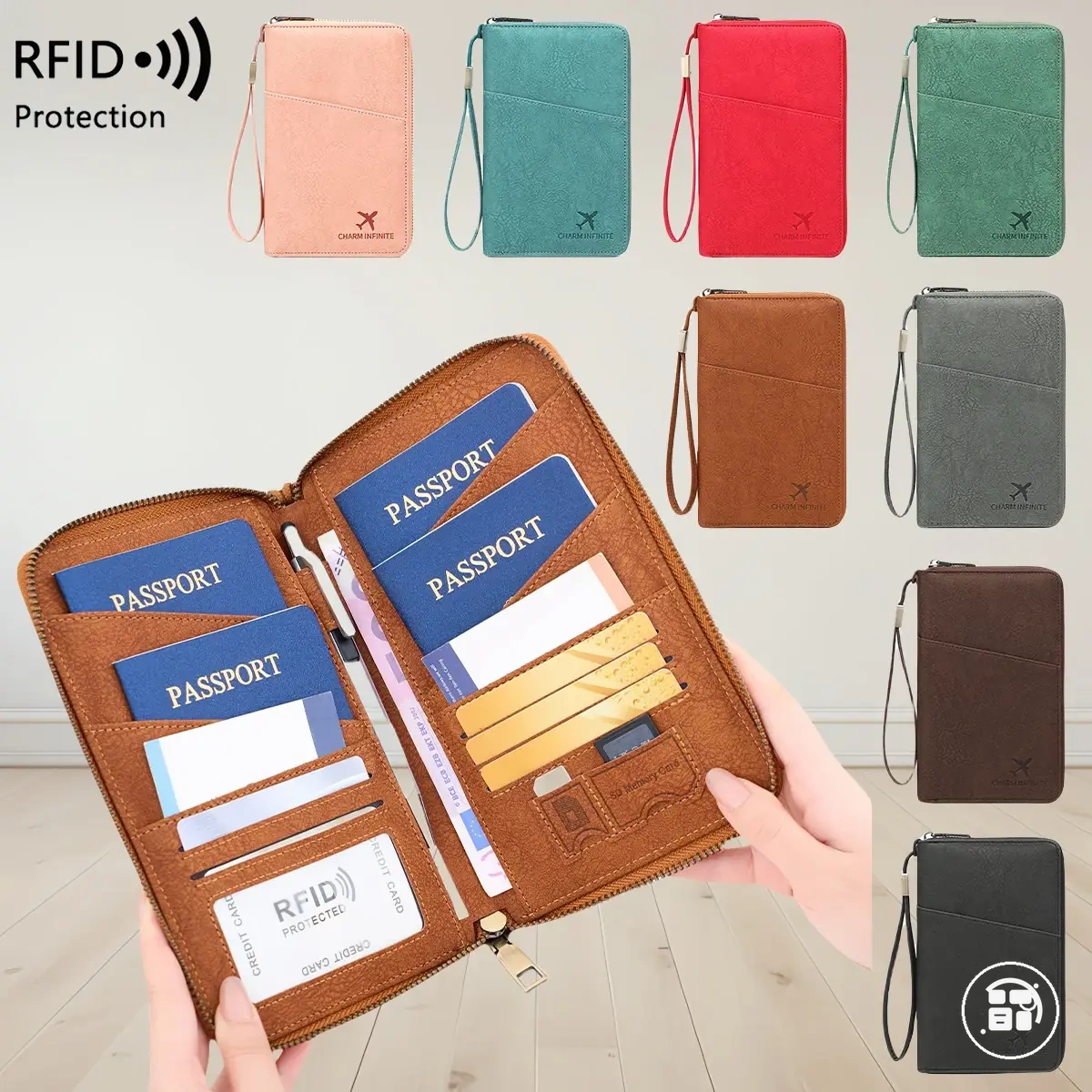
This chart shows the three main criteria—use frequency, packing benefit, and waste avoidance—to determine whether a travel organizer provides practical value.
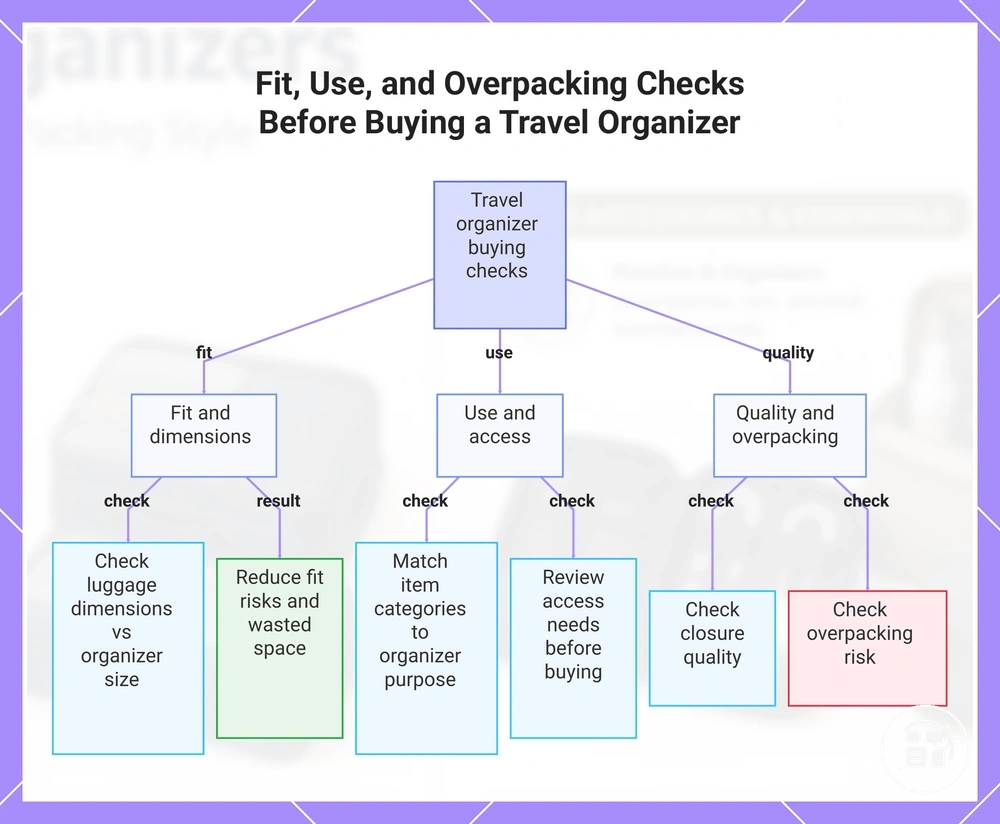
Check common fit and overpacking risks before buying
Fit risks and overpacking risks should be checked before choosing a travel organizer because poor fit, wasted space, or unnecessary pieces can weaken the packing system. A compact organizer, multi-purpose organizer, or full-set option may work only when it matches luggage dimensions, item categories, and access needs. Use this checklist as a final verification method before buying.
An organizer can look useful but still create problems when luggage dimensions, item categories, or access needs are not checked together. Buying checks are more reliable when they separate fit, use, quality, and redundancy. The checklist below organizes those final checks by fit, use, quality, and redundancy.
If a traveler is comparing several organizer formats, the safer choice is the one that reduces friction without adding avoidable bulk. For a deeper pre-buying review, use the buying checklist as the next verification step.
The myth is that more organizer pieces create better organization. In practice, compact, multi-purpose, and full-set options are useful only when they match the traveler’s luggage dimensions, item categories, and access habits.
- Check luggage dimensions against organizer size to reduce fit risks and wasted space.
- Match item categories to the organizer purpose so separation supports real usability.
- Review access needs before choosing organizers that may sit deep inside the bag.
- Compare organizer count with actual packing needs to avoid unnecessary extra pieces.
- Assess material suitability for the items being stored and the expected handling conditions.
- Check closure quality because weak or difficult closures may reduce usability over time.
- Look for redundancy when multiple organizers solve the same storage problem.
- Check overpacking risk when added pouches may encourage carrying more than needed.
This chart shows the key checks to verify fit, use, and overpacking risks before purchasing a travel organizer.