
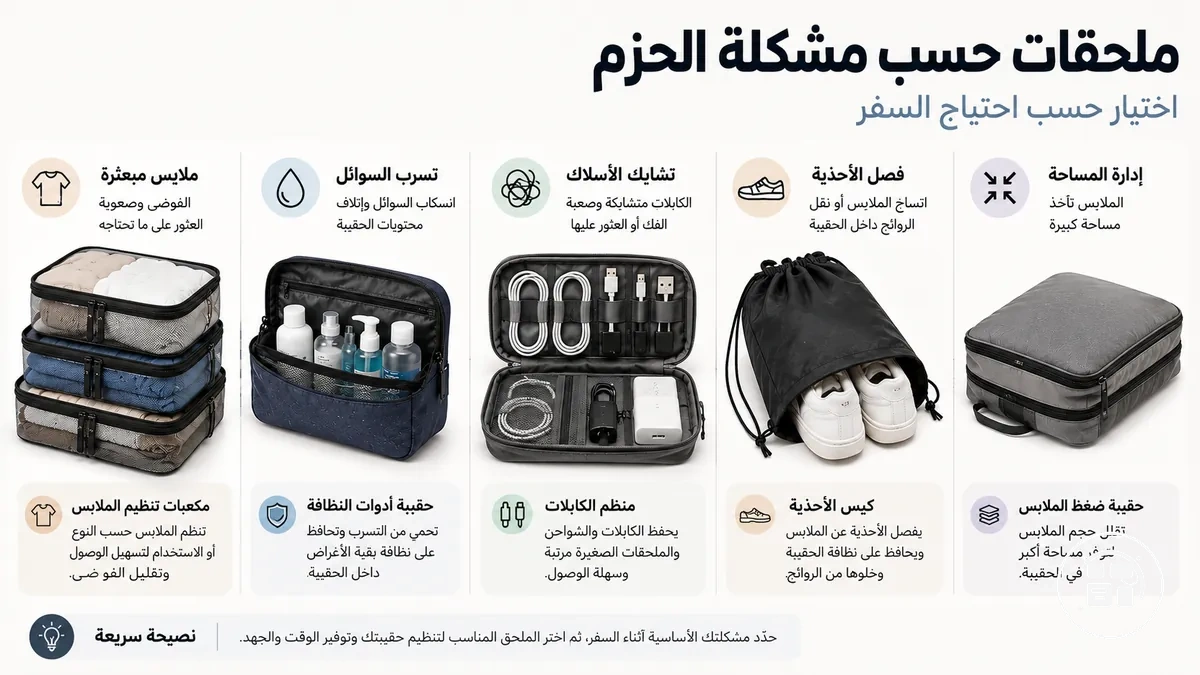
Travel Organization Accessories for Carry-On and Checked Luggage Fit
Travel organization accessories depend on the luggage format because carry-on luggage and checked luggage create different fit conditions. Carry-on luggage usually needs compact access and easier closure, while checked luggage can allow larger separation but still needs stability and weight control. Size, access, weight, and layout are the main filters.
Travel organization accessories are suitcase-fit tools that help packing cubes, pouches, an organizer set, and other accessory bags match the space inside a suitcase. Their role is not only to hold items, but to fit the suitcase dimensions, compartments, and internal layout without creating unnecessary friction. This page focuses on luggage-fit compatibility, not a full packing workflow or product catalogue.
Poor organizer fit can make a suitcase bulge, leave pockets unused, or make important items harder to reach. A packing cube that is too deep may press against the closure, while pouches placed in the wrong suitcase area may block access instead of improving it. An organizer set may also waste space when its pieces do not match the available compartments. The right setup depends on the suitcase body, trip contents, and baggage constraints.
A carry-on with limited depth and a checked suitcase with larger capacity need different organizer decisions before product examples make sense. The first compatibility check is suitcase size and internal layout, because those conditions shape organizer fit before style, material, or set size matters. For the broader category context, use the travel organization accessories hub before moving into suitcase size and compartment checks.
Organizer compatibility starts with suitcase size and internal layout
Organizer compatibility starts with suitcase size and internal layout because the suitcase body determines how organizers use packing space and how easily the luggage closes. Suitcase size, available depth, divider placement, compression space, and pocket layout create the first fit boundary before organizer features become relevant. A setup that works in one luggage interior may fit differently when these conditions change.
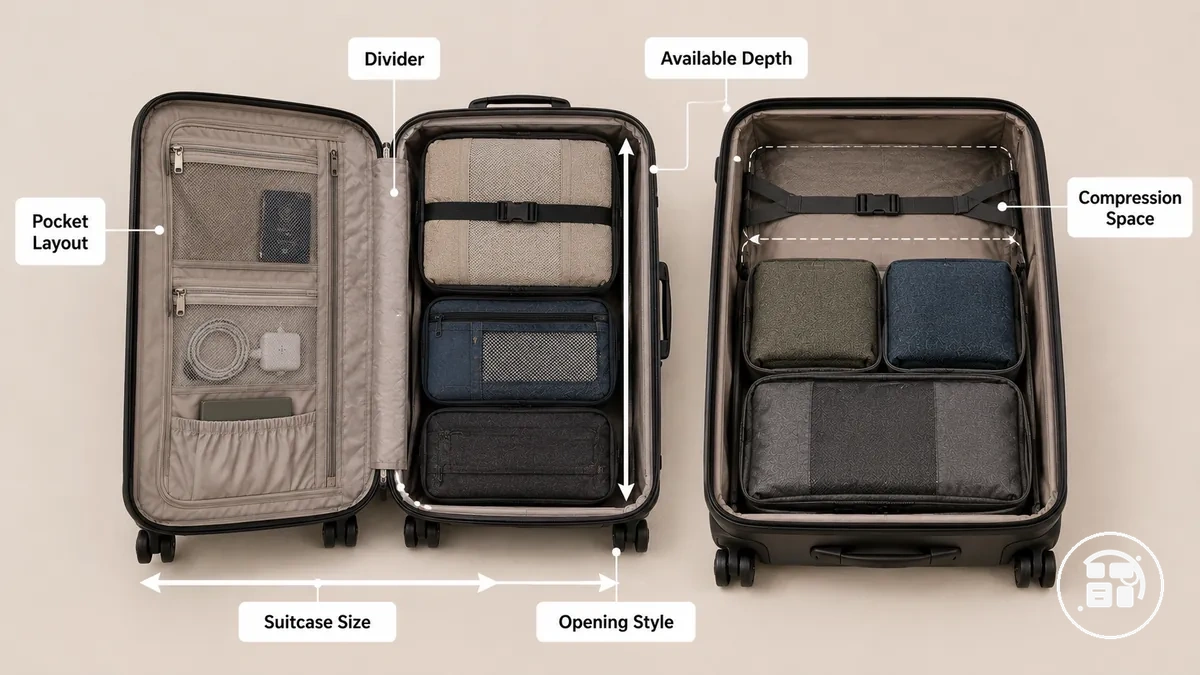
A clamshell suitcase, a single-cavity suitcase, and pocket-heavy luggage can support different organizer arrangements because their compartment design and opening style differ. A clamshell suitcase may separate organizers across two sections, while a single-cavity suitcase may provide a more open packing space. Pocket-heavy luggage can change access patterns when organizers extend into areas used for quick-access storage. These layout differences help frame the checklist below.
- Suitcase size and available depth can affect organizer height and closure pressure when organizers are filled unevenly.
- A divider design may improve separation, but it can also reduce usable packing space depending on organizer shape.
- A pocket layout can improve access when organizers leave key storage areas unobstructed.
- An opening style such as a clamshell design can change how organizers are distributed across the luggage interior.
- Limited compression space can increase overpacking risk when organizers extend beyond the available packing area.
Bulging may occur when organizer height exceeds available depth or when compression space is already limited. Blocked dividers and inaccessible pockets can happen when organizers overlap functional parts of the suitcase instead of the main packing space. For a closer review of structural criteria that influence organizer compatibility, see size and compartment features.
Carry-on organizers for limited cabin luggage space
Carry-on organizers for limited cabin luggage space should stay compact, accessible, and easy to close because limited space can increase closure pressure and reduce usable access. A compact organizer, slim packing cubes, and small pouches often support better use of shallow compartments while keeping essentials reachable. The most suitable arrangement may vary by luggage design, available depth, and compartment layout.
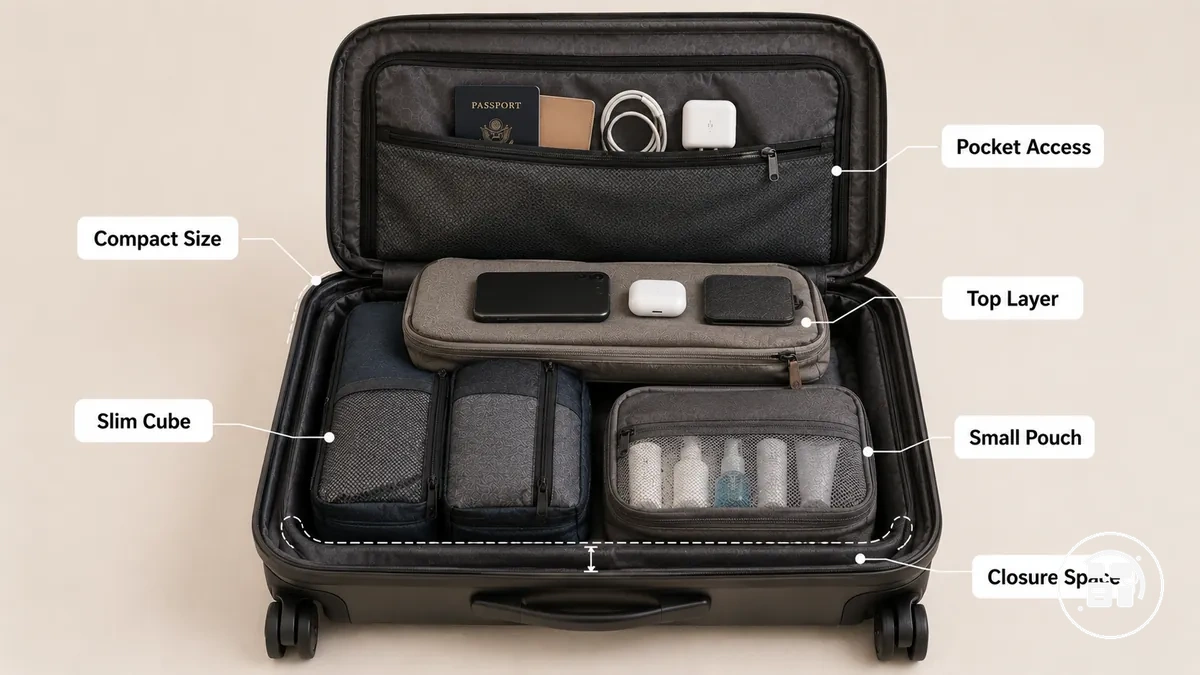
Limited cabin luggage space can make compactness and access compete with each other. Organizers that use too much depth may reduce pocket access or create closure pressure. Essentials often benefit from placement near the top layer because retrieval can be easier during travel. The comparison block below shows how carry-on organizers can respond to common space and access constraints.
| Carry-on constraint | Organizer response |
|---|---|
| Depth | Slim packing cubes may help reduce closure pressure when packing space is shallow. |
| Pocket access | Small pouches can help keep frequently used items accessible without blocking storage areas. |
| Essentials | A compact organizer near the top layer may improve item retrieval. |
| Compression tolerance | Lower-profile organizers may reduce bulging when space is limited. |
| Closure pressure | Compact carry-on organizer formats may leave more clearance around the closure area. |
When organizing essentials, clothing, toiletries, and electronics, carry-on organizers often work best when each item group matches the available depth and access needs of the luggage interior. Slim packing cubes may suit folded clothing in shallow sections, while small pouches can separate toiletries or electronics that benefit from quicker access. These fit scenarios depend on compartment shape, closure clearance, and compression tolerance rather than fixed cabin baggage rules.
Slim packing cubes and small pouches for carry-on depth limits
Slim packing cubes and small pouches help with carry-on depth limits only when their filled shape stays within the available compartment depth. Slim packing cubes usually create a lower-profile shape, while small pouches can adapt more easily to shallow spaces because of their flexibility. Fit may change when filled height approaches the available closure space.
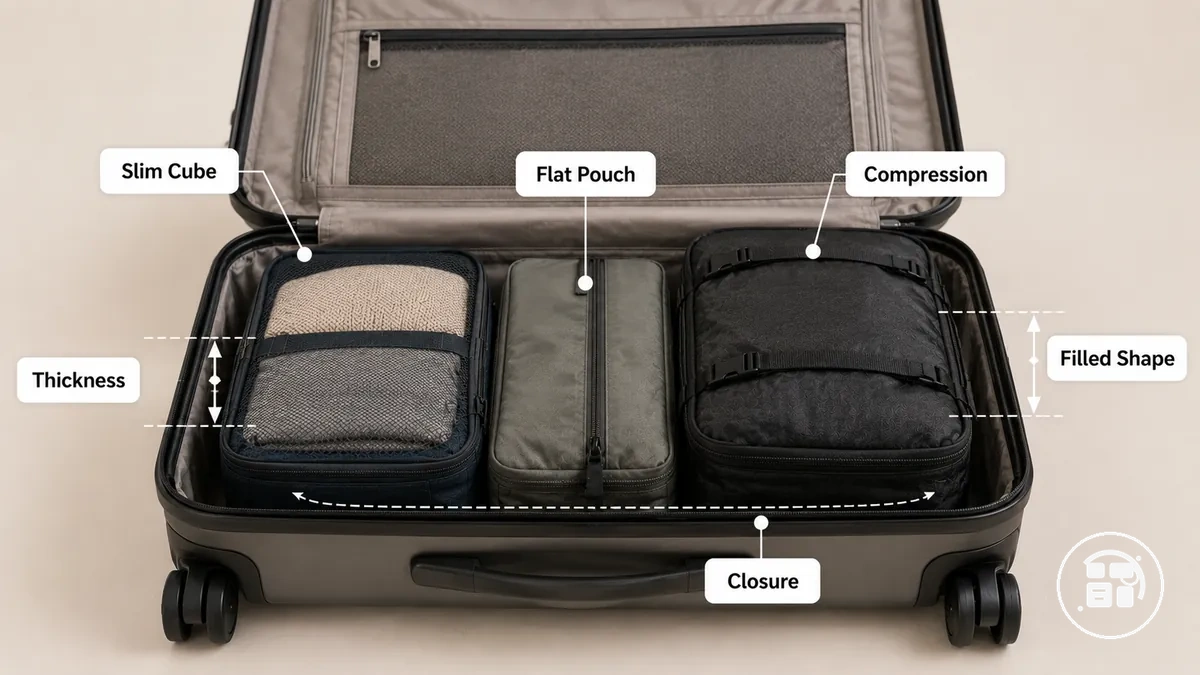
- Slim packing cube: Lower thickness and a flatter filled shape may support a flat fit when carry-on depth is limited.
- Flat pouch: Greater flexibility can help a shallow organizer conform to small gaps and shallow compartments.
- Compression pouch: Reduced bulk may help in certain situations, but excessive compression can alter the filled shape and increase bulging near the closure area.
- Closure style: A compact filled shape may reduce closure pressure when available depth is restricted.
Slim packing cubes, small pouches, and compression pouches differ mainly in thickness, flexibility, closure style, and filled shape. A flat pouch may fit more easily into irregular spaces because of its softer profile, while a slim packing cube can provide a more consistent shape. Compression pouches may reduce bulk in certain cases, but over-compression can increase the risk of bulging or a blocked closure.
Easy-access organizers for carry-on essentials
When a charging cable, document, or toiletry item is needed during transit, quick retrieval becomes the priority. Easy-access organizers help keep carry-on essentials reachable without opening multiple packing layers. The most suitable placement often depends on access frequency.
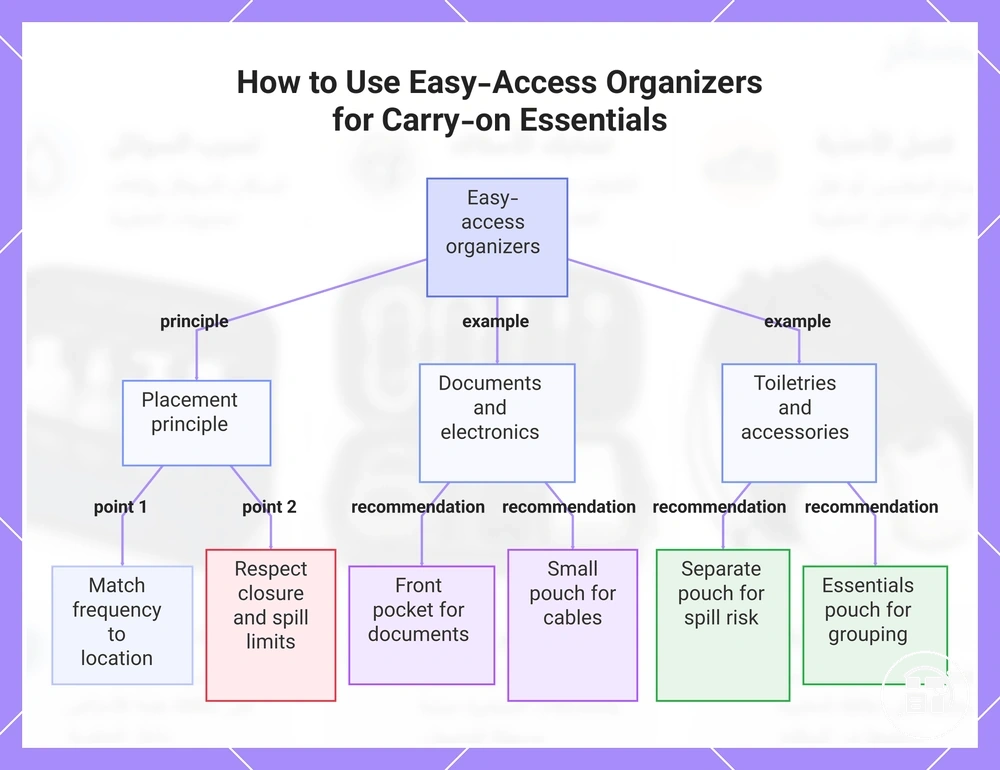
Easy-access organizers work best when placement matches how often an item is needed and where it can be reached with minimal disruption. A front pocket, top layer, or small pouch may improve retrieval when suitcase design and available space support that position. Easy access should not override closure, balance, or liquid-separation needs.
- Documents: A security need and frequent access may support front pocket placement when pocket access remains practical.
- Electronics: A small pouch can help reduce cable tangling and keep frequently used items easier to locate.
- Toiletries: Spill risk may justify separate placement in a small pouch, with location chosen according to compartment and closure limits.
- Carry-on essentials: High access frequency often supports top layer placement when quick retrieval is the main goal.
- Small accessories: An essentials pouch or travel pouch may help group frequently used items and reduce loose-item searching.
This chart shows the placement principles and item-specific recommendations for organizing carry-on essentials with easy-access organizers.
Checked luggage organizers for larger suitcase capacity
Checked luggage organizers depend on larger suitcase capacity, available depth, separation needs, stability, and weight control. Larger suitcase capacity can accommodate larger organizer formats, including large packing cubes and a compression bag, but organizer suitability still depends on packed weight and available space. Greater volume does not remove fit, separation, or weight constraints.
For longer stays or trips that include bulkier clothing, checked luggage organizers can help distribute items across a larger packing area. Large packing cubes and a compression bag may suit higher-volume clothing when depth supports their filled shape. Bulky items can occupy more space than expected, so organizer size should remain proportional to the suitcase interior. As packing volume increases, a shoe bag, laundry bag, or toiletry bag may help maintain separation between clean clothes and isolated items.
Handling movement during transit can cause contents to shift when weight is concentrated in one area of a checked suitcase. A shoe bag, laundry bag, or toiletry bag may help contain specific item groups, while stability can improve when weight is distributed more evenly across the luggage interior. Organizer selection should account for handling movement, separation needs, and weight control before considering capacity alone.
| Checked-luggage condition | Organizer type | Fit or risk signal |
|---|---|---|
| Higher volume | Large packing cubes | May support organization when available depth accommodates the filled size. |
| Greater depth | Large packing cubes | Deeper packing areas can allow larger organizer formats, depending on packed weight. |
| Handling movement | Large packing cubes | Stability may improve when contents are grouped and distributed evenly. |
| Item separation | Shoe bag, laundry bag, toiletry bag | May help isolate specific items from clean clothes. |
| Weight concentration | Compression bag | Reduced volume can still create uneven loading if packed weight gathers in one area. |
Large packing cubes and compression bags for checked luggage volume
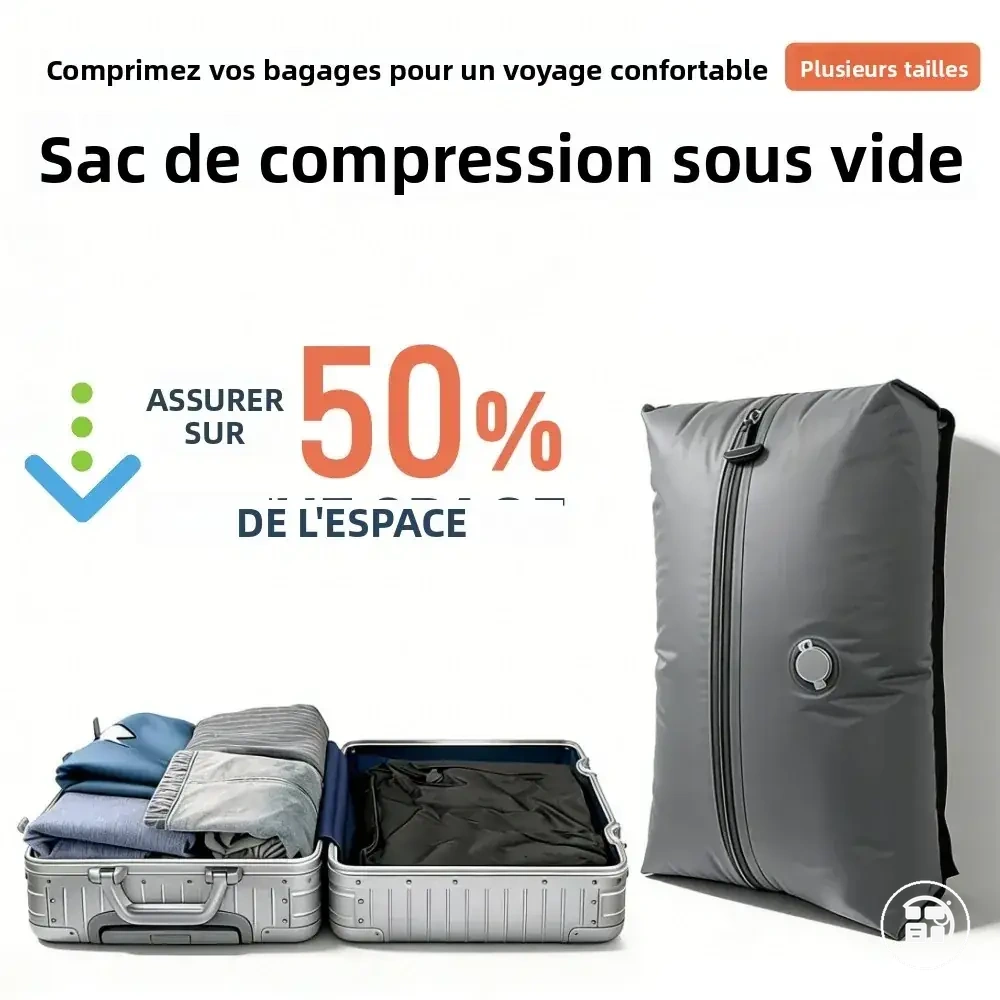
Large packing cubes help organize checked luggage volume, while compression bags may reduce bulk when clothing type, fabric flexibility, and filled shape support compression. Large packing cubes are usually more focused on capacity and stacking, whereas compression bags change how bulky items occupy space. Neither format reduces packed weight, so weight concentration can still occur.
A common assumption is that compression always creates more usable space. In practice, compression bags do not remove weight and may not eliminate closure pressure when a compressed load becomes dense. Space use, wrinkle risk, closure pressure, and weight concentration can vary based on compression level, fabric flexibility, and filled shape.
| Organizing volume | Reducing bulk |
|---|---|
| Large packing cubes support clothing organization by capacity and can make stacking easier. | Compression bags may reduce bulk when fabric flexibility allows a flatter filled shape. |
| Large packing cubes often maintain a more predictable shape for space planning. | Higher compression levels may increase wrinkle risk or closure pressure for some clothing types. |
| Capacity management is the primary goal when using large packing cubes. | Bulk reduction is the primary goal when using compression bags, but weight concentration can remain. |
Shoe, laundry, and toiletry bags for separated checked-luggage storage
Shoe bags, laundry bags, and toiletry bags depend on the type of item being separated from clean clothes inside checked luggage. Dirty, damp, or potentially leaky items can create mixing risks when packed together. Separated storage reduces those risks by keeping item groups apart.
During handling movement or longer trips, contents may shift and come into contact with nearby items. Shoe bags, laundry bags, and toiletry bags help maintain separation boundaries when placement is planned around moisture, odor, leakage, or shape risk. Protection depends on bag material, closure quality, and travel conditions.
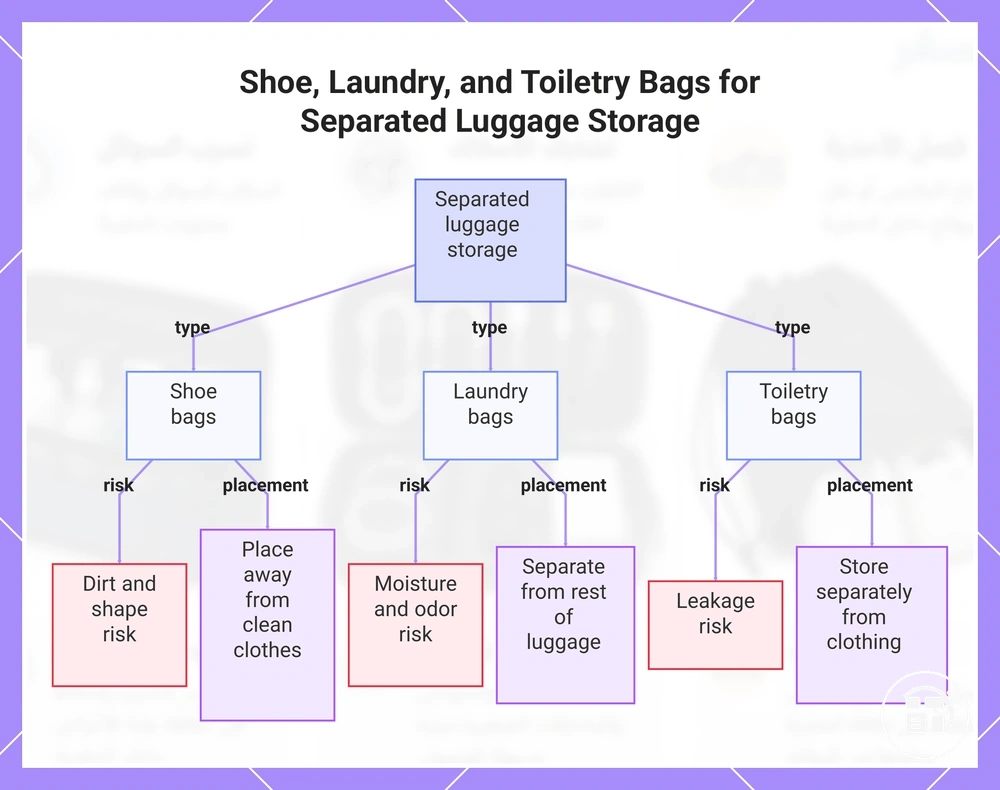
- Shoes: Dirt and shape risk may justify shoe bags, with placement away from clean clothes to reduce direct contact.
- Dirty clothing: Laundry bags or a dirty laundry bag can help separate items associated with moisture or odor from the rest of the luggage.
- Toiletries: Leakage risk may support toiletry bags or a toiletry organizer, especially when liquid containers are closed securely and stored separately from clothing.
- Small mixed items: Separation pouches can help isolate contents when checked luggage movement may otherwise cause unwanted mixing.
This chart shows how shoe bags, laundry bags, and toiletry bags address specific risks to keep checked luggage contents separated.
Organizer formats that fit different suitcase areas
Organizer formats should match suitcase areas and the specific fit job of each space rather than the product name alone. Different suitcase areas create different storage conditions for packing cubes, pouches, and organizer sets because depth, shape, access, and closure constraints vary. The main areas include the main cavity, mesh divider, lid pocket, corner gap, side pocket, and compression panel.
In practical packing scenarios, the main cavity often suits packing cubes for clothing stacking, while lid pockets and mesh dividers usually work better with flatter pouches. Corner gaps and side pockets may accommodate softer organizer types when their shape aligns with the available space. Compression panels create a separate fit consideration because organizer height can affect closure and overall fit. The table below maps organizer formats to common suitcase areas.
| Suitcase area | Organizer format | Fit advantage | Watch-out |
|---|---|---|---|
| Main cavity | Packing cubes | May support clothing stacking and structured space use. | Overfilled cubes can reduce available packing space. |
| Mesh divider | Flat pouches | Can suit shallow storage zones with limited depth. | Bulky contents may reduce divider flexibility. |
| Lid pocket | Flat pouches | May improve access to smaller items. | Thicker pouches can limit pocket closure. |
| Corner gap | Soft pouches | Can help use irregular spaces and support stability. | Rigid organizer types may not adapt to the gap shape. |
| Side pocket | Small pouches | May keep compact items grouped within luggage compartments. | Larger organizers can reduce usable pocket space. |
| Compression panel | Low-profile organizer sets | May work when organizer height remains within available clearance. | Excess organizer height can increase closure pressure and fit risk. |
Packing cubes for main clothing sections
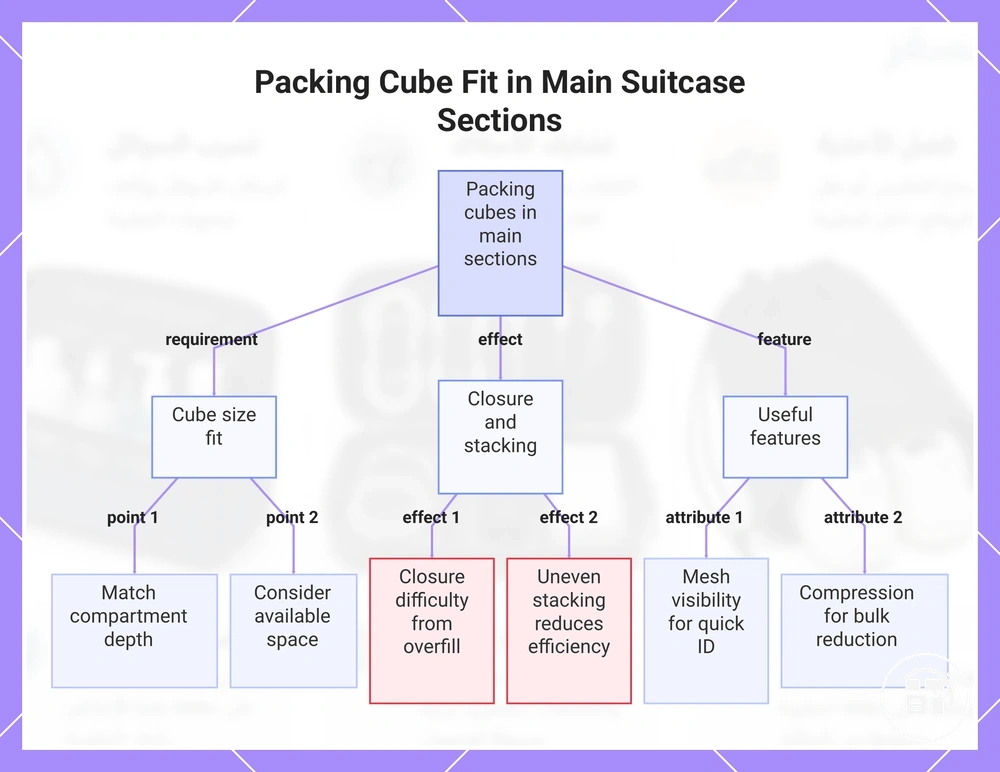
Packing cubes fit best in main clothing sections when cube size follows the compartment depth and available space within the main suitcase cavity. Packing cubes can help group clothing into separate categories while supporting more organized stacking. Closure may become more difficult when cube size or filled height exceeds the available depth.
When filled height becomes uneven, stacking can use space less efficiently and make clothing access harder. Mesh visibility may help identify clothing categories without opening every cube, while compression behavior can alter how cubes stack inside the compartment. For example, a large cube may suit a deeper suitcase half, whereas a smaller cube may fit more comfortably in a shallower section where closure clearance is limited.
- Small packing cubes: Often suit compact clothing groups when compartment depth is limited and stacking space is shared.
- Medium packing cubes: May balance clothing grouping and stacking when the main suitcase cavity has moderate depth.
- Large packing cubes: Can organize larger clothing sections when filled height remains compatible with available closure space.
- Compression-style cubes: Compression behavior may reduce bulk in certain situations, but closure and stacking outcomes still depend on filled height.
This chart shows the key factors for fitting packing cubes in main clothing sections, including size criteria, closure and stacking outcomes, and useful features.
Pouches and accessory bags for pockets, corners, and gaps
Pouches and accessory bags depend on irregular-space compatibility when larger organizers cannot use smaller suitcase areas efficiently. Their soft shape can adapt to spaces that packing cubes may leave partially unused, helping improve local storage use. These spaces commonly include pockets, corners, and gaps.
When a suitcase has uneven spaces or limited-depth compartments, pouches and accessory bags may fit more effectively because soft shape, closure style, and item category can be matched to the available area. Travel pouches and small organizer bags are often suitable for grouped small items that benefit from easier retrieval. Pocket fit and access usually depend on organizer thickness, closure position, and the shape of the storage space.
- Pockets: Accessory bags with a slim profile may improve pocket fit when depth is limited and small items need easier retrieval.
- Corners: Pouches with a soft shape can adapt to angled spaces where more rigid organizers may leave unused areas.
- Gaps: Accessory pouches may support gap-filling when the remaining space is too small for larger organizers.
- Side spaces: Small organizer bags can help group related items when closure size and available width support access.
Luggage organizer sets for mixed suitcase compartments
Luggage organizer sets work best when the size mix matches the mixed suitcase compartments that need to be organized. The usefulness of a luggage organizer set depends on how well cube sizes, pouch sizes, and bag types fit the available spaces. Piece count alone is not a reliable indicator of value or fit.
- Check whether cube sizes match larger storage areas without creating unused space or unnecessary closure pressure.
- Check whether pouch sizes fit smaller compartments, pockets, or side spaces where access remains important.
- Check whether bag types support different storage needs rather than repeating the same function.
- Check for unused pieces that may not correspond to any practical compartment size.
- Check for redundancy when multiple organizers overlap in purpose while other spaces remain underserved.
When mixed suitcase compartments require different organizer dimensions, unused pieces and redundant sizes can reduce the value of a travel organizer set. A fixed organizer set may be useful when its size mix aligns with the available spaces, but poor size matching can leave components without a practical role. Separate pieces may fit better when unused pieces or recurring redundancy limit mixed-compartment fit.
Fit criteria before choosing a suitcase organizer
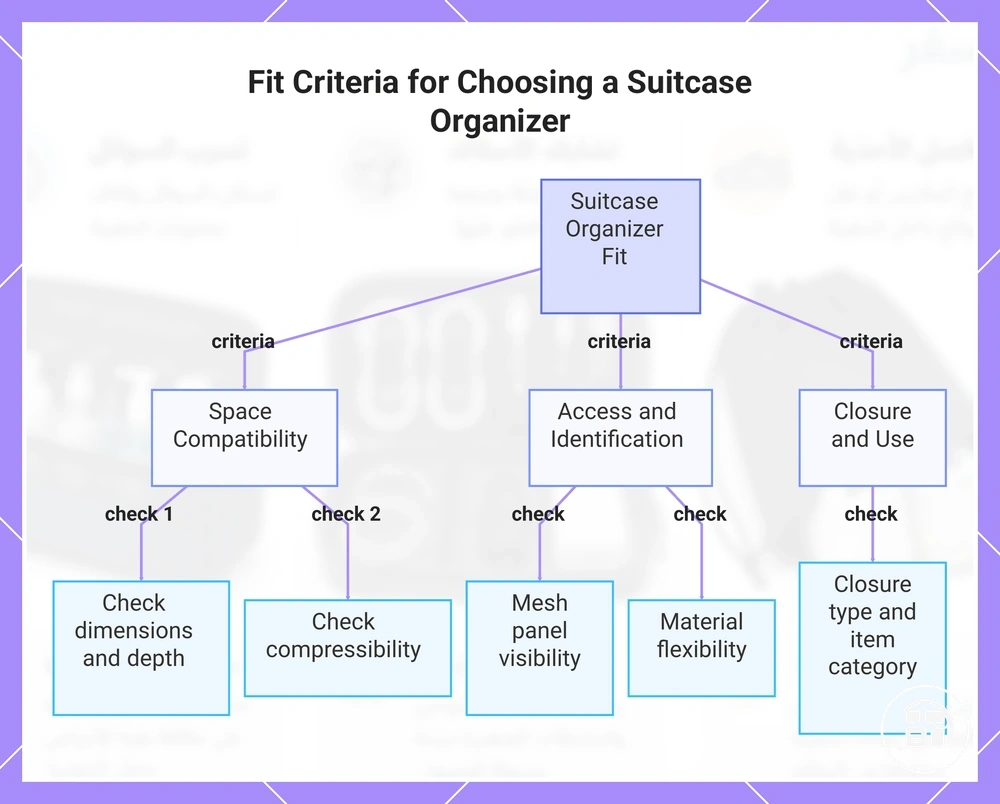
Fit criteria should be checked before choosing a suitcase organizer because organizer suitability depends on luggage dimensions, item needs, and practical use conditions. A suitcase organizer that aligns with the available space may support fit, access, and separation with less risk of bulging or wasted capacity. The main decision frame is how organizer attributes match the luggage interior and intended item category.
- Check dimensions against available luggage space because oversized organizers may increase closure pressure or reduce access.
- Check depth relative to compartment depth because filled height can affect fit and balance.
- Check compressibility when packing volume varies because compression may change the filled shape.
- Check visibility features such as mesh panels when item identification and access are important.
- Check material flexibility because softer organizers may adapt more easily to irregular spaces.
- Check closure type and item category together because separation and retrieval needs can vary by use case.
Dimensions, depth, and compressibility influence how a suitcase organizer occupies space inside luggage. An organizer that appears suitable when empty may create closure pressure when filled beyond the available depth. Compressibility can reduce bulk in certain conditions, yet the filled shape still affects balance and clearance. A practical test-fit cue is to compare the organizer's filled profile with the intended luggage space before making a decision.
When quick retrieval matters, visibility can become as important as storage capacity. Mesh visibility may make contents easier to identify, while material flexibility can affect how an organizer adapts to compartment shape. Closure type also influences separation because different item categories may require different levels of containment or access. Suitability depends on how these attributes interact with the intended use condition.
Fit criteria should guide selection before comparing organizer examples or formats. Readers who need a broader evaluation framework can choose organizers for your luggage using additional criteria that connect luggage space, organizer characteristics, and packing needs. The goal is to evaluate compatibility rather than focus on product variety.
Overbuying, bulging, and access problems often result from overlooking trade-offs between dimensions, compressibility, visibility, material flexibility, and closure type. A suitcase organizer may suit one item category but create balance or separation compromises in another situation. Evaluating fit criteria first helps make later product examples more relevant to the intended luggage setup.
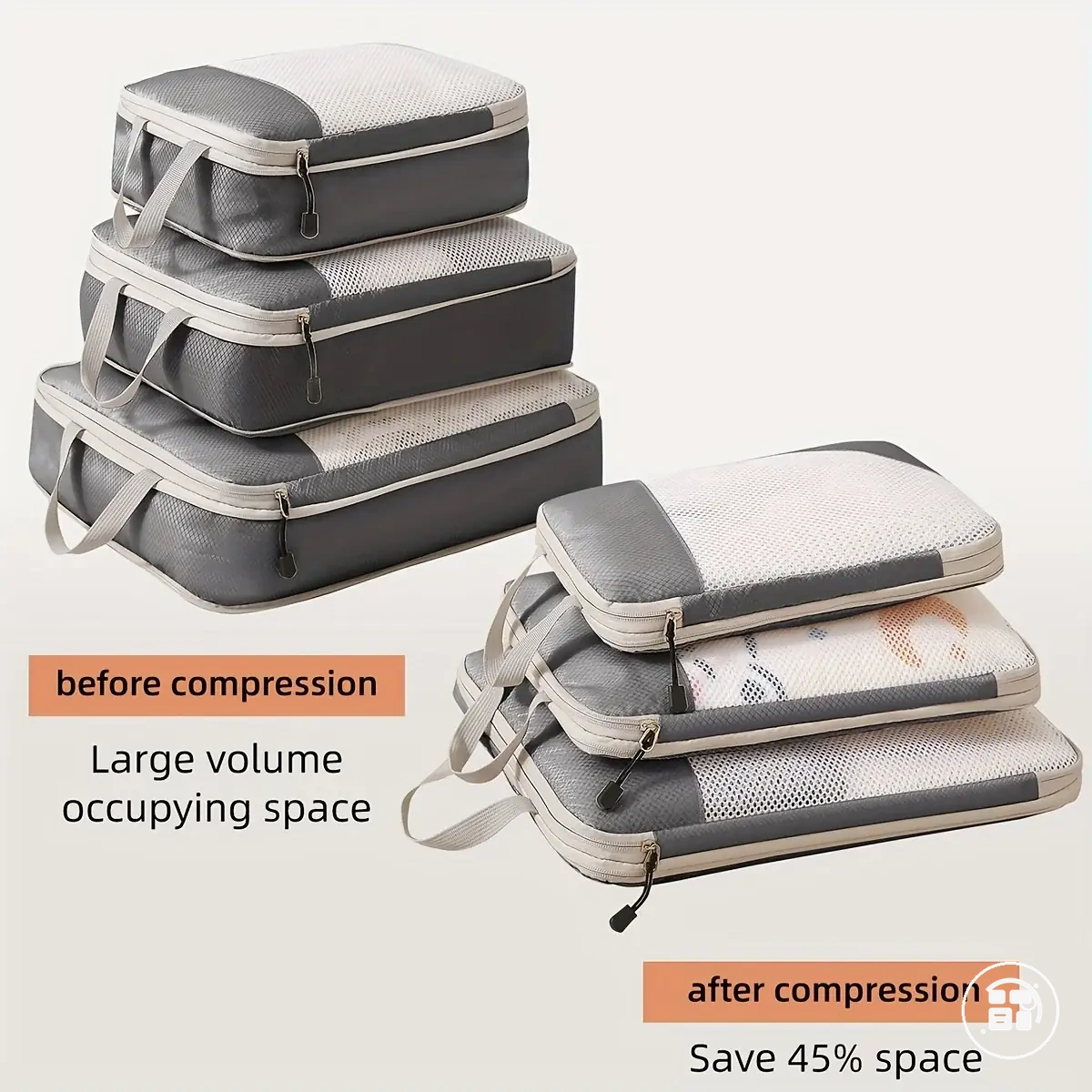
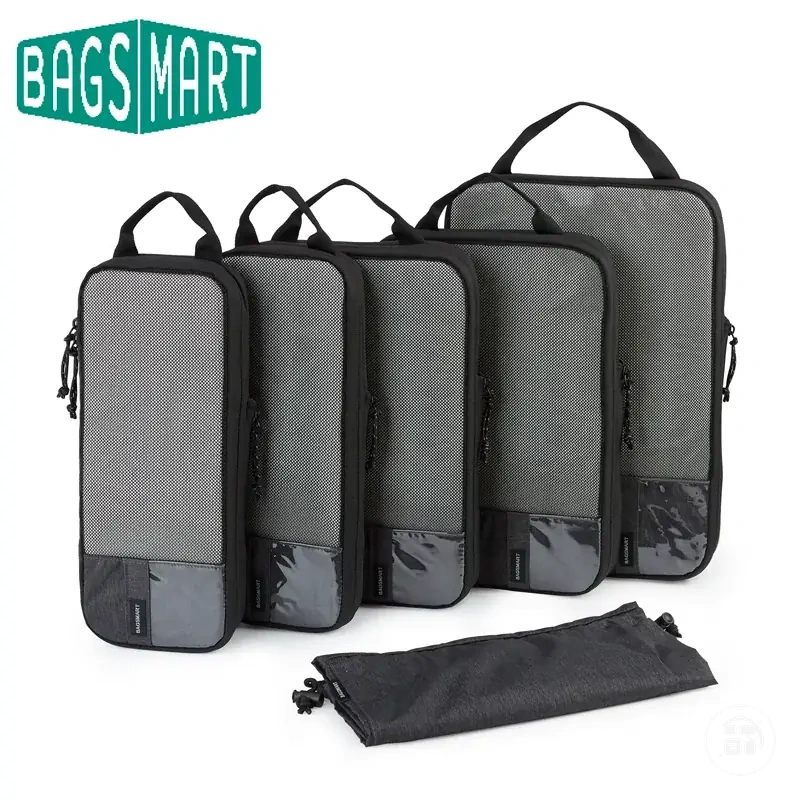
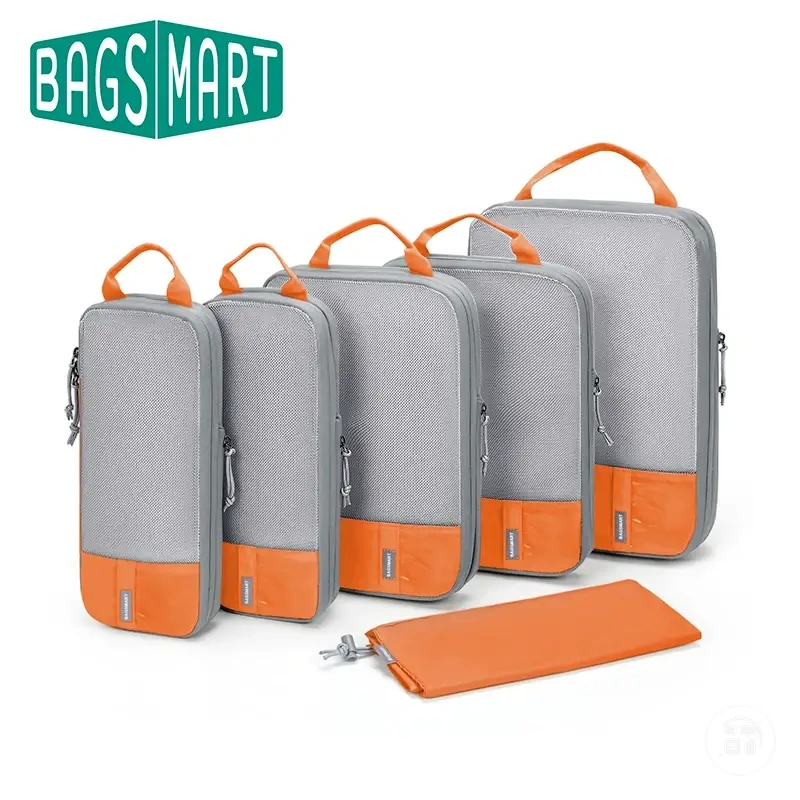
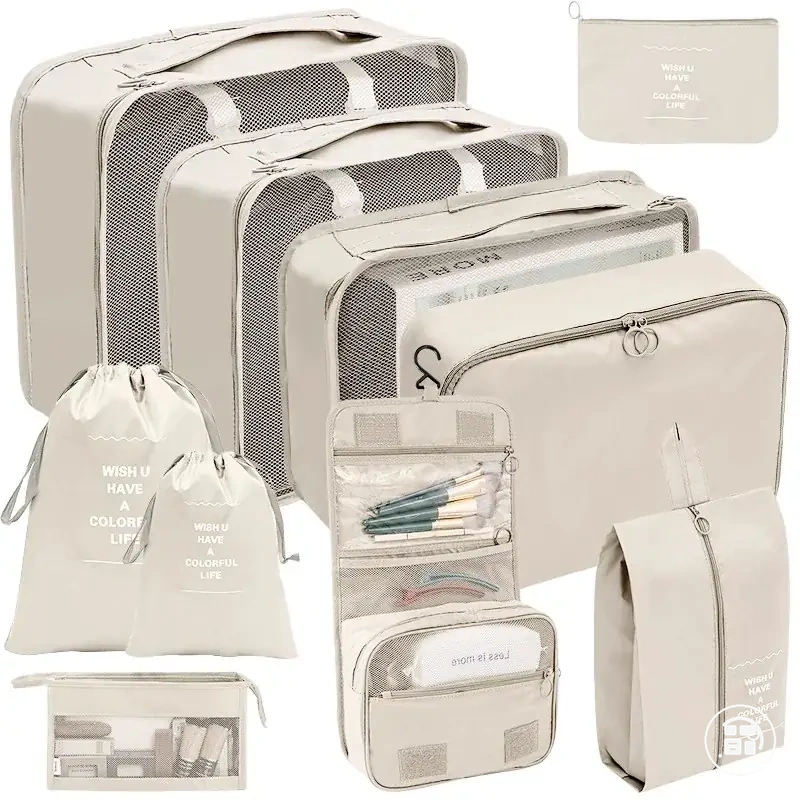
The products below are useful examples for comparing available options. Before buying, check that the compatibility criteria, key features, and product details match your needs.
This chart shows the main fit criteria to check before selecting a suitcase organizer, covering space, access, and use conditions.
Dimensions, depth, and compressibility
Dimensions matter most after an organizer is filled because empty measurements may not reflect the real packed shape. Depth, filled depth, and filled height affect how cleanly the organizer sits inside a compartment. Closure pressure may increase when the filled organizer extends beyond the available compartment depth.
Length and width determine whether the organizer can sit flat, while softness and compressibility influence how the filled shape adapts to the luggage space. A compression limit matters because pushing past it may create bulging, reduce stacking ability, or waste space around the organizer. Use the checklist below to test organizer measurements against suitcase closure and compartment depth.
- Check length against the intended compartment so the organizer does not overlap dividers, corners, or closure areas.
- Check width against the available flat surface because excess width can reduce stacking ability.
- Check filled height against compartment depth because packed height can create closure pressure.
- Check softness when the storage area is uneven because flexible depth may reduce wasted space.
- Check the compression limit because over-compression can change the filled shape and affect fit.
Weight distribution, visibility, and access inside the suitcase
A fitted organizer can still perform poorly if weight distribution, visibility, or access is weak after packing. A packed organizer affects how easily contents can be located, reached, and managed during travel. These usability factors become clearer once the packed organizer is in its final position inside the suitcase.
Weight concentration can affect balance, while mesh visibility or labels can improve retrieval speed when visible contents matter. Handle position and layer placement influence access and may reduce repacking friction when frequently used items are easier to reach. Heavier or denser organizers usually benefit from lower or more stable placement when suitcase orientation and packing conditions support that arrangement.
Use the signals below to evaluate packed-state usability:
- Balance: Weight distribution depends on weight concentration and suitcase orientation because uneven loading may reduce balance and create a less stable placement condition.
- Visibility: Mesh visibility or labels can improve retrieval speed when visible contents need to be identified without opening multiple organizers.
- Access: Handle position and layer placement affect the access point because easier reach may reduce repacking friction when items are needed during travel.
How organizers fit inside luggage without overpacking
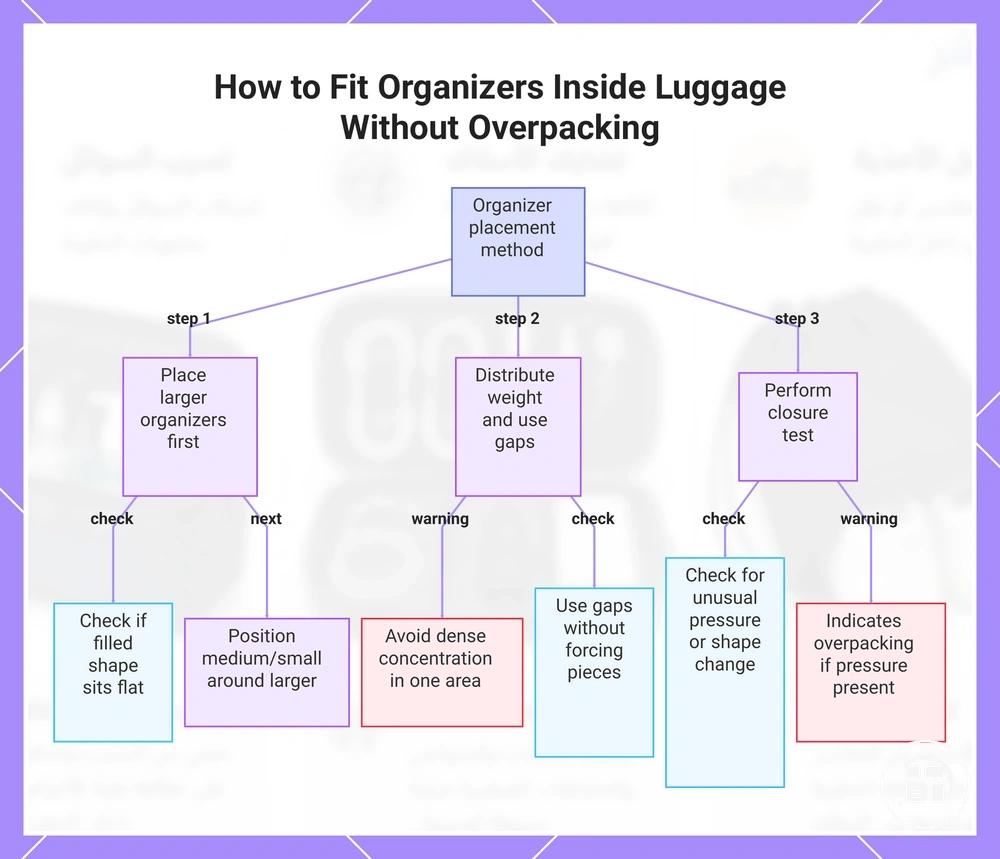
Fit inside luggage usually improves when larger organizers are placed first and a closure test is performed before adding more pieces. This practical organizer placement method helps reveal space limits, access constraints, and early signs of overpacking. The process focuses on fitting organizers, not on deciding every item to pack.
Size order, filled shape, weight, and gap use affect how organizers share the available luggage space. A bulky filled shape may reduce access or interfere with nearby organizers, while uneven weight can affect a stable layout depending on suitcase orientation. Smaller gaps can often accommodate compact organizers, but forcing additional pieces into those spaces may create an overpacking warning. Use the steps below to guide placement.
- Place larger organizers first and check whether the filled shape sits flat. If the organizer creates pressure against surrounding space, treat that as an overpacking signal.
- Follow a size order by positioning medium and smaller organizers around the larger organizers. If stacking becomes uneven, reassess placement before adding more pieces.
- Distribute weight so the suitcase layout remains stable for the expected suitcase orientation. If dense organizers concentrate in one area, balance and access may become less practical.
- Use gaps for smaller organizers only when they fit without forcing surrounding pieces out of position. If gaps disappear completely, access may become more difficult.
- Perform a closure test before adding anything else. If closure requires unusual pressure or changes the filled shape noticeably, the condition may indicate overpacking.
When a suitcase layout needs further refinement after the initial fit check, readers can arrange organizers inside luggage using a broader packing-focused method. That resource expands on usage scenarios, while this section remains limited to fitting organizers inside luggage without overpacking.
This chart shows the step-by-step process for positioning organizers inside luggage, including checks to avoid overpacking.
Large organizers first and smaller organizers in remaining gaps
Large organizers should usually take first placement because they help establish the main layout inside a compartment before available space becomes fragmented. Smaller organizers can then fill remaining gaps that are easier to identify after larger pieces are positioned. This placement sequence may support cleaner stacking when the shape of each organizer remains compatible with the compartment.
Gap availability often becomes more visible after large organizers define the layout. Smaller organizers, small pouches, or other gap-filling pieces may use remaining gaps more effectively when their softness and shape adapt to the available space. When shape, softness, and gap size align, compartment use may improve with less noticeable bulging near closure areas.
- Place large organizers first and check whether their shape sits flat within the compartment.
- Identify remaining gaps and confirm that gap availability is suitable for smaller organizers.
- Use smaller organizers or soft gap-filling pieces where softness helps adapt to irregular spaces.
- Check stacking and closure areas for bulging before finalizing the arrangement.
Heavier organizers placed where luggage stays balanced
Heavier organizers need stable placement based on luggage balance, weight, density, and suitcase orientation. Weight affects balance, but the most suitable position depends on how the luggage is carried, rolled, or stored. Balanced placement may reduce shifting risk when weight is distributed with the suitcase layout in mind.
In upright, clamshell, and roller-bag handling conditions, heavier organizers can influence movement differently. Wheel-side position, compartment layout, and density distribution may affect how luggage responds during handling, while fragile items and liquid items may require separate placement logic. Use the orientation conditions below as placement cues rather than fixed rules.
- Upright suitcase: Heavier organizers may work better in a supported area that helps maintain luggage balance, because high weight concentration can increase shifting risk.
- Clamshell suitcase: Dense organizers may benefit from more even weight distribution across both sides when suitcase orientation allows it, because uneven density can affect balance during movement.
- Roller-bag handling: Wheel-side position may support easier handling when weight remains closer to the area that carries movement, but placement still depends on suitcase orientation and nearby fragile items or liquid items.
When carry-on and checked luggage need different organizer setups
A shared set works only when a carry-on organizer setup and a checked luggage organizer setup have similar space, access, and trip needs. Carry-on and checked luggage have different constraints around space limit, access need, handling movement, and packing capacity. The decision outcome depends on how closely those conditions overlap.
A carry-on organizer setup usually faces a tighter space limit and a greater access need during travel. Compact organizers may fit more easily when quick retrieval and efficient use of limited space matter. This condition often supports a compact set rather than larger pieces.
| Setup option | Works best when | Watch-out |
|---|---|---|
| Shared set | Space, access, and trip needs remain similar across both luggage types. | One size mix may not suit different luggage dimensions equally well. |
| Carry-on-focused compact set | Space limit and access need are higher priorities than storage volume. | Compact organizers may not use larger luggage capacity efficiently. |
| Checked-luggage larger pieces | Capacity and handling movement allow larger checked-luggage pieces. | Larger organizers may be less practical in tighter carry-on spaces. |
| Mixed setup | Different luggage types require separate pieces for different conditions. | More pieces can increase setup complexity. |
A checked luggage organizer setup often provides more capacity, but handling movement can influence how organizers perform during transport. Larger checked-luggage pieces may make better use of available space when access is less frequent. This condition can support a larger-piece approach rather than a compact set.
trip length and travel context can influence whether a shared set remains practical across different luggage types. Longer or more varied travel situations may create different space, access, or capacity requirements. These conditions should support the comparison rather than become the primary decision factor.
When a carry-on organizer setup and a checked luggage organizer setup share similar requirements, a shared set may be sufficient. When space limit, access need, handling movement, or trip length conditions differ, separate pieces or a mixed organizer set may provide a clearer decision outcome. The trade-off is usually between simplicity and luggage-specific fit.
The products below are useful examples for comparing available options. Before buying, check that the compatibility criteria, key features, and product details match your needs.