
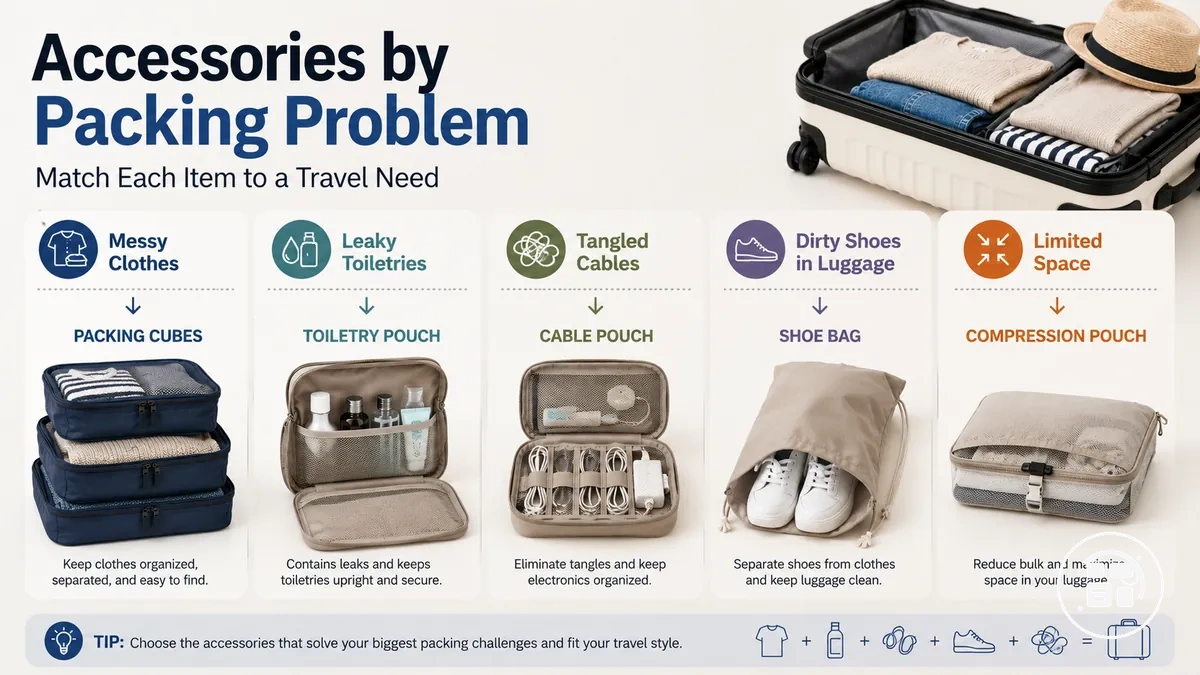
Travel Organization Accessories for Common Packing Problems
Travel organization accessories are decision-support tools for matching organizer choice to the packing problem being solved. The page is about choosing by constraint first, not by brand, color, or general catalog category. Packing problems are the selection lens.
Space saving, leakage, tangling, dirt separation, quick access, and protection can each require a different organizer choice. Compressible clothes may point toward compression when luggage space is tight, while toiletries with leakage risk may need a pouch with water-resistant lining or better spill containment. Cables and small electronics may need separation for tangling and protection, while documents may need a pouch that keeps a passport or papers reachable. The right choice depends on item type, luggage space, trip context, and risk level.
A short-trip traveler may only need travel pouches for quick access and light separation. A traveler carrying liquids, chargers, documents, shoes, and laundry may need packing organizers that separate risks instead of one mixed bag. A traveler with an overpacked suitcase may need to diagnose whether the real issue is compression, access, dirt separation, or protection before comparing organizer accessories.
Product examples belong after the criteria are clear. Travel organizers should support the packing problem, not replace the decision process.
Packing Problems That Should Drive Organizer Choice
Packing problems should determine organizer choice before brand, color, or set size. A packing constraint defines the need that an organizer attribute is intended to address. Using the constraint first creates a clearer decision framework because the same item category can create different packing problems depending on luggage space, trip context, and handling risk.
Packing problems can usually be grouped by space, leakage, tangling, dirt, access, or protection. Each constraint points toward a different organizer attribute rather than a fixed organizer type. travel organization accessories overview refers to the broader category of tools used to manage these constraints during travel. The table below organizes common packing issues by likely organizer role.
A traveler carrying electronics may actually have a tangling problem rather than an electronics problem. A traveler packing shoes may be dealing with dirt separation rather than footwear storage. Identifying the packing constraint first helps when organizer choice depends on the underlying issue rather than the item itself.
Packing Problems That Should Drive Organizer Choice can be viewed as a constraint map before organizer selection. The image labels common constraints before the table organizes them into decision criteria.
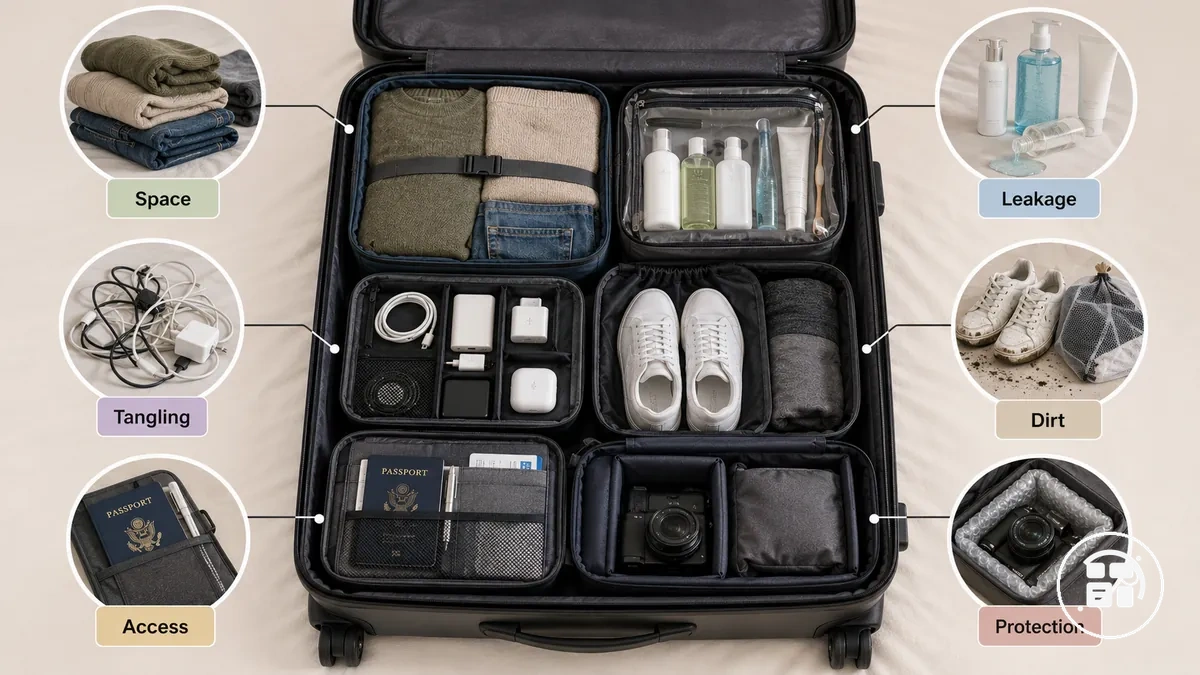
| Packing problem | Main constraint | Useful organizer attribute | What it helps decide |
|---|---|---|---|
| Space pressure | Limited luggage space | Compression-oriented organization | Whether volume reduction may be useful |
| Liquid leakage | Spill risk from toiletries | Protective lining or containment features | Whether separation from other items may be needed |
| Cable tangling | Mixed electronics and cables | Internal separation or cable retention | Whether access and cable control are priorities |
| Dirty item separation | Shoes or used laundry | Dedicated separation area | Whether clean and used items should be isolated |
| Document access | Frequent retrieval needs | Access-focused organization | Whether quick access is more important than storage volume |
| Item protection | Risk of pressure or contact damage | Protective structure or padding | Whether additional protection may be beneficial |
Later sections examine each packing problem in more detail. The goal is to connect the constraint to the organizer attribute before evaluating specific organizer options.
Space, Leakage, Tangling, Dirt, and Access Constraints
Space, leakage, tangling, dirt transfer, and access constraints are the practical reasons behind organizer choice. Each constraint represents a specific risk that may influence which organizer feature is useful. The image below labels these common constraints before the bullet list connects them to feature signals.
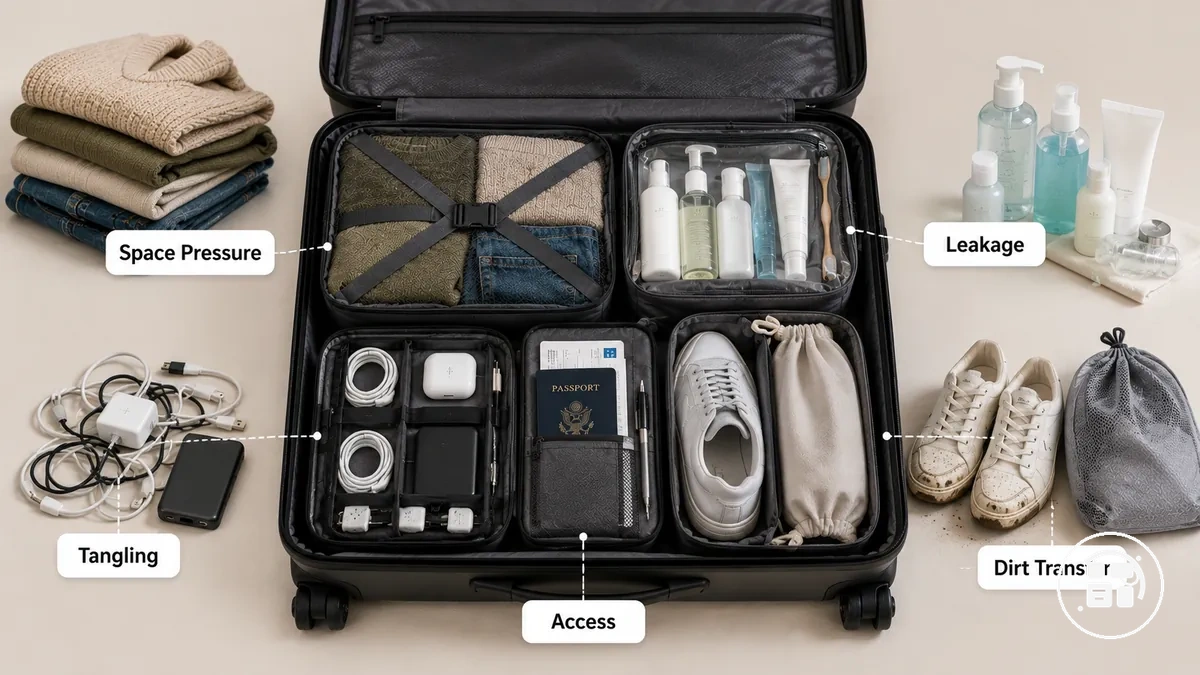
- Space pressure: Space pressure is a constraint created by limited luggage space or bulky clothes. The related risk is inefficient volume use, which may point toward an organizer feature focused on compression or compact organization.
- Leakage: Leakage is a packing risk when liquids or toiletries are carried with other items. This constraint may point toward an organizer feature such as protective lining or contained separation.
- Tangling: Tangling commonly affects cables and electronics during travel. An organizer feature such as loops or internal separation may help support cable management.
- Dirt transfer: Dirt transfer can occur when shoes, laundry, or used items contact clean belongings. This constraint may point toward an organizer feature that creates a barrier or separation area.
- Access: Access is a constraint when documents or devices need frequent retrieval. The related risk is slower item location, which may point toward an organizer feature designed for easier reach and visibility.
- Mixed constraints: The same item type can create different constraints. Clothes may create space pressure on one trip and only require simple separation on another, so the useful organizer feature depends on the underlying constraint.
Space-Saving Organizers for Bulky Clothes and Overpacked Bags
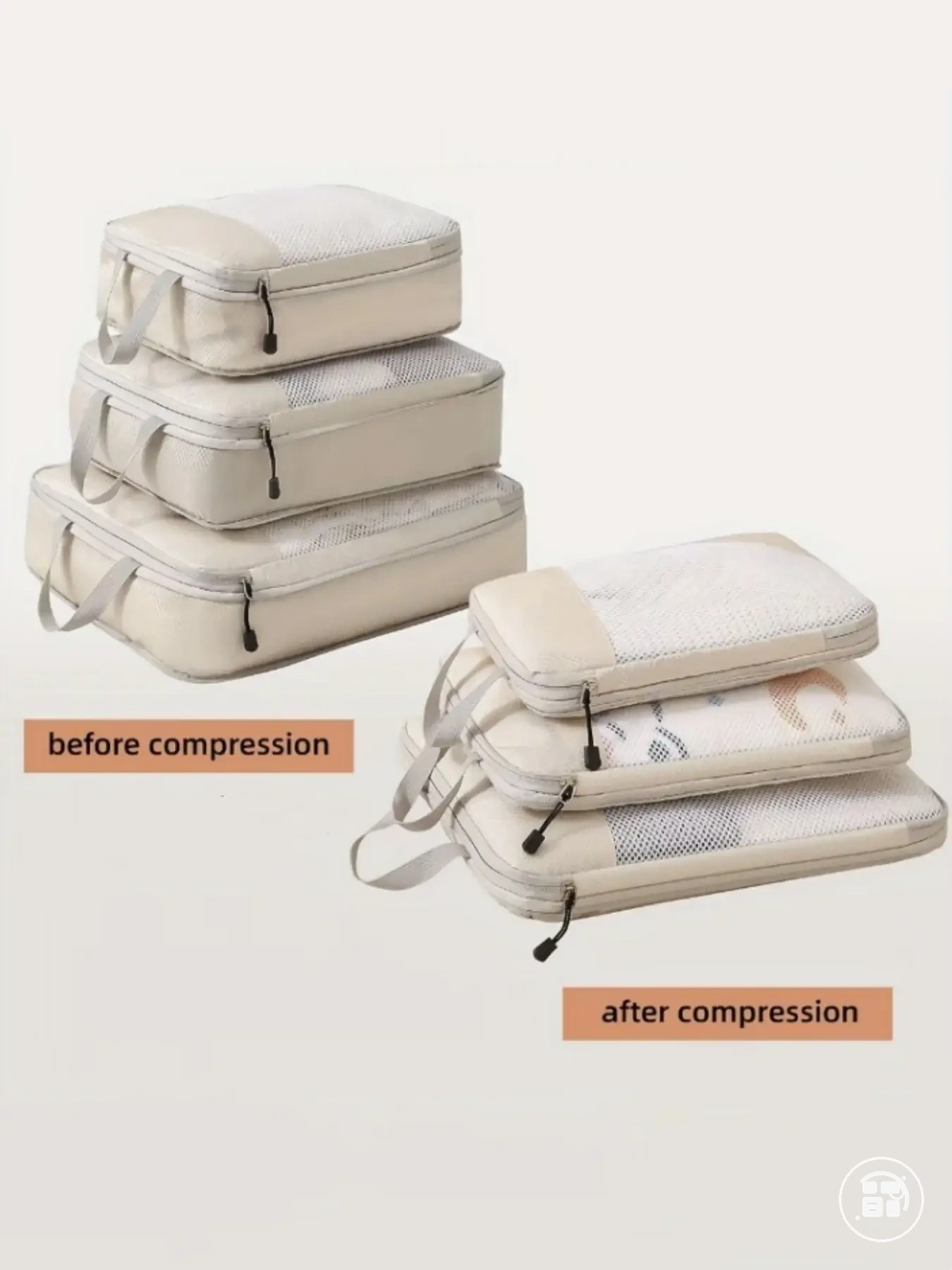
Space-saving organizers may help when compressible clothing creates unused volume and luggage fit is limited by soft items rather than by the suitcase itself. Bulky clothes and overpacked bags often contain air gaps that can sometimes be reduced through more structured packing. The outcome depends on garment compressibility, cube structure, and available clearance rather than compression alone.
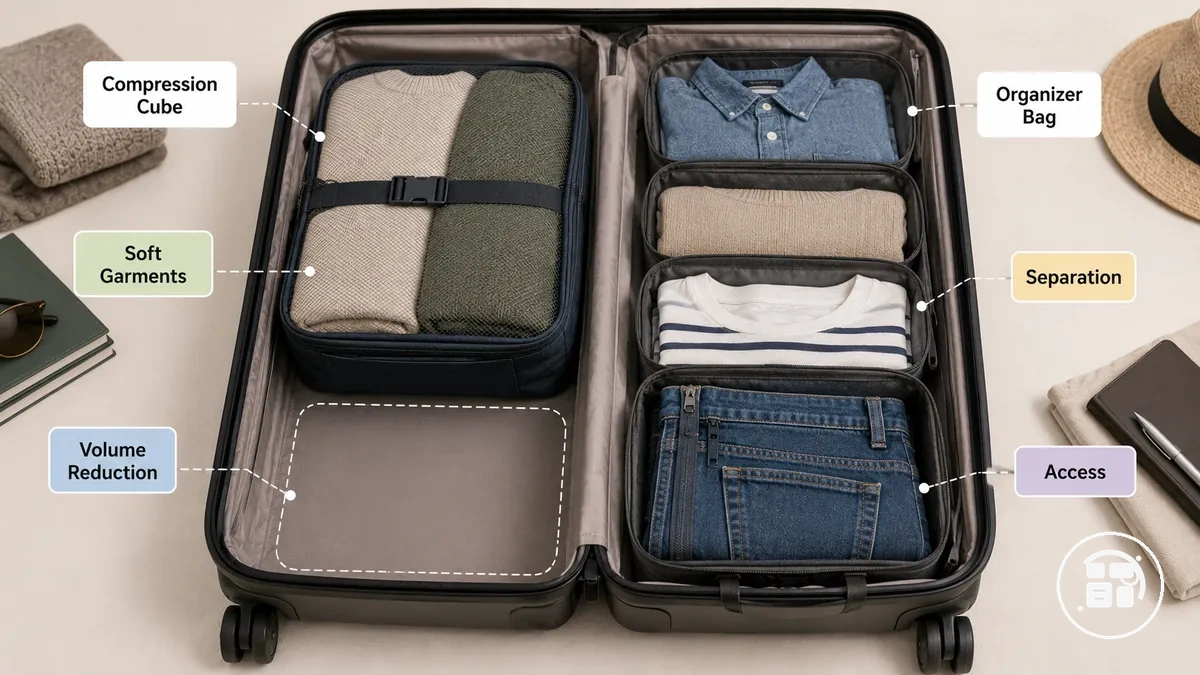
Space-Saving Organizers for Bulky Clothes and Overpacked Bags depend on fabric compressibility, cube structure, and luggage fit. The image compares compression and separation approaches before the comparison block below.
| Space-saving choice | Best-fit condition |
|---|---|
| Compression packing cubes | Compressible clothing, soft garments, and limited luggage clearance where volume reduction may help |
| Regular clothes organizer bags | Outfit grouping, separation, and easier access when compression is not the main need |
| No added compression | When luggage capacity is already the main limit and further compression may provide limited benefit |
Compressible clothing such as soft garments can often be packed more densely than rigid or structured items. Compression packing cubes reduce unused space within the cube rather than changing suitcase capacity. A wrinkle trade-off may occur depending on fabric type, cube fill level, and packing duration. Rigid items should not be forced into compression because luggage fit may become the limiting constraint.
A suitcase filled with bulky clothes may benefit from a compression cube when the garments contain compressible space. A mixed-clothes suitcase may place greater value on separation and access than on volume reduction. Clothing organizers are only one category within broader organizer types for different items used for different packing problems. In that situation, clothes organizer bags may be the more suitable choice.
A common assumption is that compression always improves packing outcomes, but results depend on clothing type and available luggage space. When luggage capacity, rigid contents, or access become the primary constraint, additional compression may provide limited benefit and can increase the wrinkle trade-off for certain garments. The comparison block above highlights the decision split between compression, separation, and no added compression.
Compression Packing Cubes for Compressible Clothing
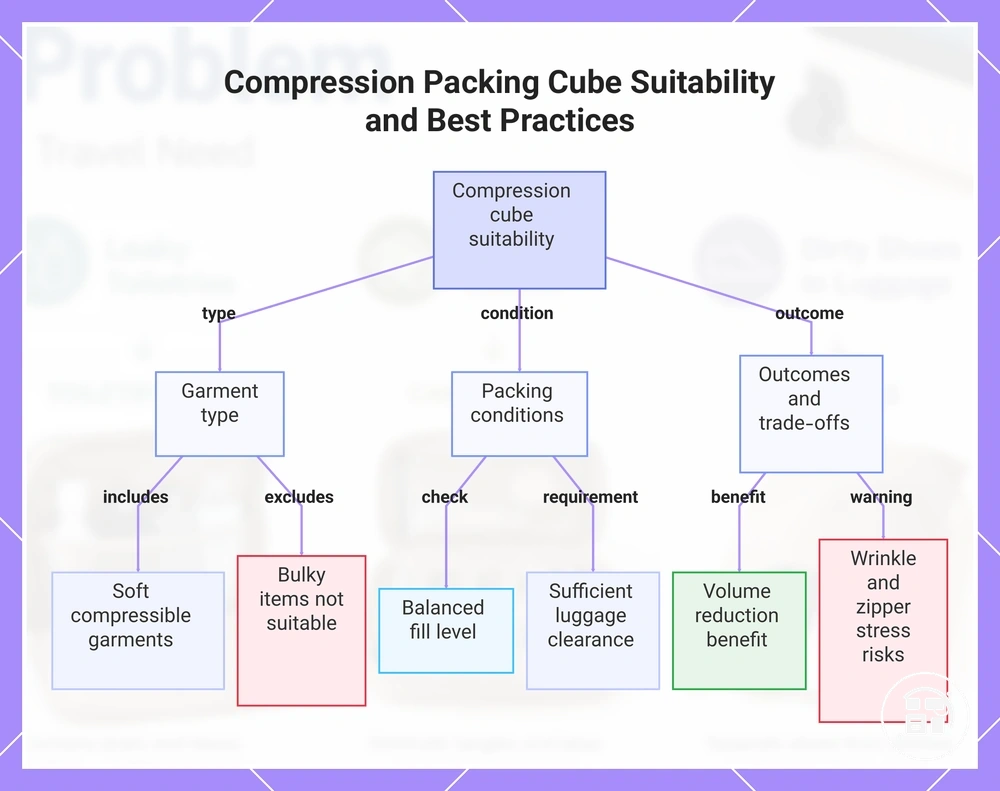
Compression packing cubes are most suitable when compressible clothing and soft garments can be packed more densely without creating excessive zipper stress. Suitability depends on garment type, cube fill level, compression zipper use, and available luggage clearance. Soft clothing often responds better to compression than structured items, while overfilling a cube can reduce the intended benefit.
- Compressible clothing is primarily made of soft garments that can be packed with less unused volume.
- The cube fill level allows the compression zipper to close without excessive resistance.
- Compression zipper movement remains reasonably smooth rather than showing signs of zipper stress.
- Enough luggage clearance remains after compression for the suitcase to close comfortably.
- The wrinkle trade-off is acceptable for the clothing being packed.
Compression packing cubes can support volume reduction when soft garments contain compressible space because the compression zipper reduces unused volume inside the cube. More compression does not automatically create a better result because wrinkle trade-off and zipper stress can increase as the cube becomes overfilled. Bulky non-compressible items may create a fit issue and leave wasted space inside a compression organizer, so they are usually not the strongest match for this packing method.
This chart shows the key factors that determine when compression packing cubes work best, including suitable garment types, packing conditions, and important trade-offs.
Clothes Organizer Bags for Separation Without Compression
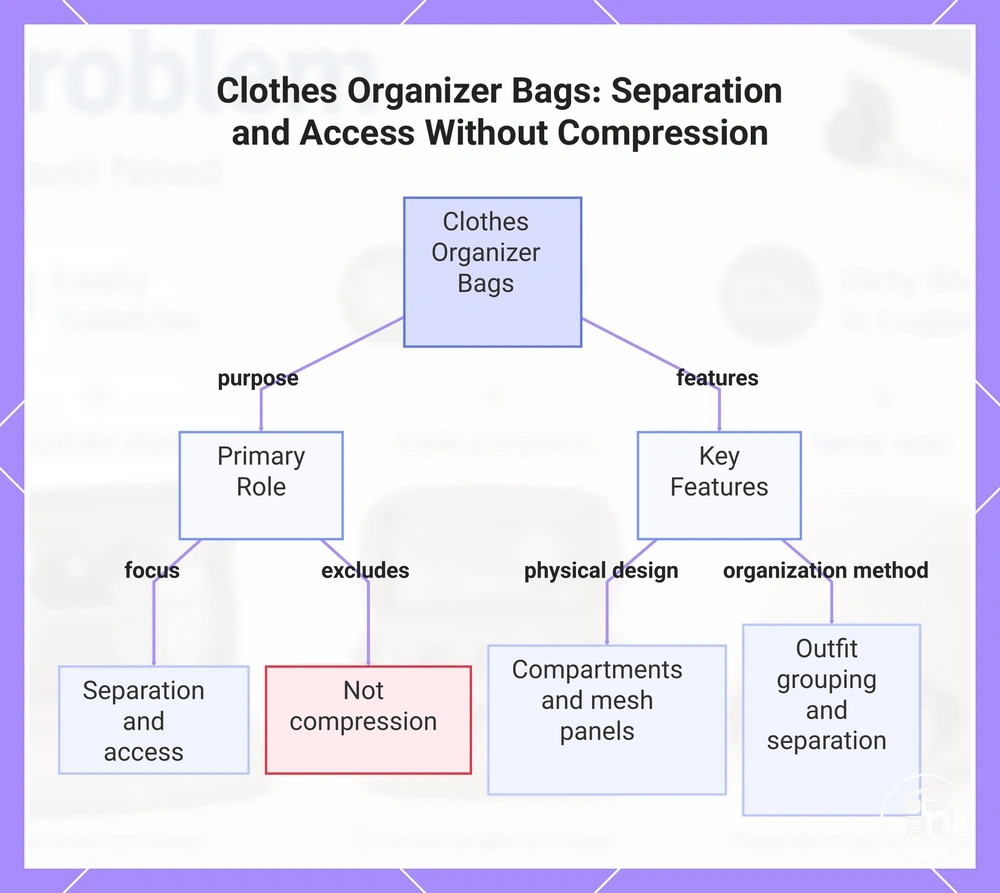
Clothes organizer bags fit the problem when separation and access are more important than compression. Compartments, mesh panels, and zip closure designs help organize garments by outfit, category, or condition. Their primary role is easier access and cleaner separation rather than volume reduction.
- Outfit grouping keeps related garments together for faster item selection.
- Clean-item separation may help keep freshly packed clothing apart from worn garments.
- Mesh panels can improve visibility depending on bag layout and packing style.
- Repacking speed may improve when clothing categories remain organized throughout a trip.
- Delicate garment separation can help reduce contact with heavier clothing items.
Clothes organizer bags address mixed clothing organization by separating garments into dedicated sections. Outfit grouping and clean-item separation can make access easier when different garment conditions are packed together, while mesh and zip closure features may support visibility and organization. Unlike compression packing cubes, clothes organizer bags focus on separation and access rather than reducing volume through compression.
This chart shows the main purpose and key features of clothes organizer bags, explaining how they prioritize separation and access over compression.
Leak-Control Organizers for Toiletries and Liquids
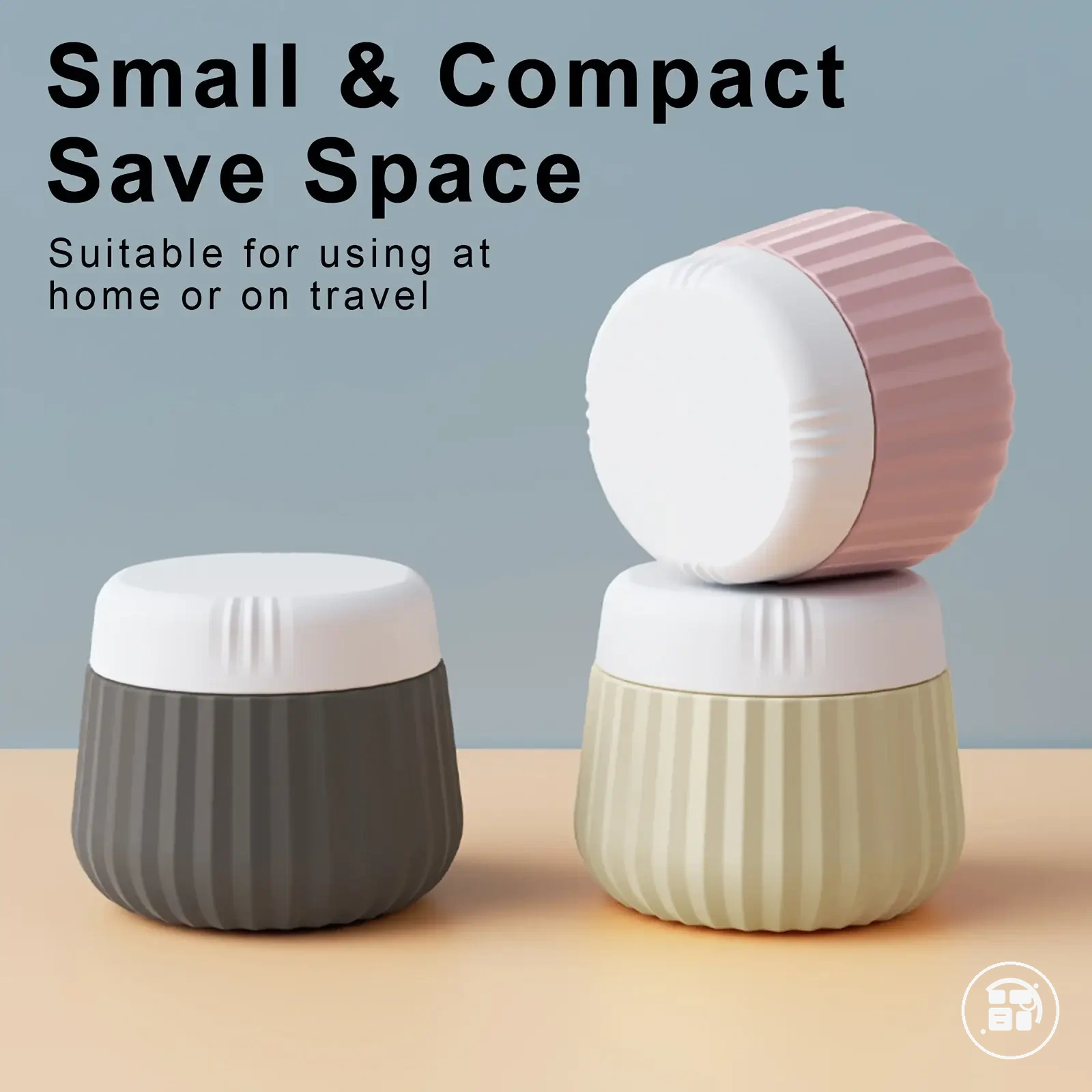
Leak-control organizers reduce spill risk when liquids are matched to suitable closures and containment features. Protection depends on the toiletry organizer, bottle behavior, and travel condition rather than on any single material. A water-resistant lining, sealed pocket, or separate pouch can support spill containment, but effectiveness may vary if a container leaks or opens during transport.
Liquids create different levels of leakage risk depending on liquid volume, closure condition, and container reliability. A toiletry organizer with a water-resistant lining can make cleanup easier after minor spills, while a compartment layout that separates bottles from other items may limit spread if leakage occurs. Sealed pockets can add another layer of containment, especially when leak likelihood is higher. Cleaning requirement should also influence selection because interior materials differ in how easily they can be wiped after a spill.
Flights, hotel stays, and shared-bathroom use can change which organizer features are most useful. Higher access frequency may increase the value of organized compartments, while shared storage areas may make item separation more important. Travelers who need to organize clothes toiletries documents and devices may prefer a layout that balances liquid control with convenient access.
Water-resistant materials help reduce risk, but they should not be interpreted as a fully waterproof guarantee or leakproof guarantee. Spill containment depends on bottle behavior, closure security, compartment layout, and packing conditions. A toiletry organizer can reduce leakage risk, but no single feature should be assumed to prevent every spill in every situation.
Leak-Control Organizers for Toiletries and Liquids can be selected more effectively when toiletry problems are matched to the feature, condition, and outcome that matter most.
| Toiletry problem | Useful feature | Condition to check | Selection effect |
|---|---|---|---|
| Liquid bottles | Sealed pocket | Leak likelihood and closure condition | May improve spill containment |
| Wet items | Water-resistant lining | Moisture exposure level | May simplify cleaning |
| Frequent-use toiletries | Accessible compartment layout | Access frequency | May improve retrieval speed |
| Shared-bathroom access | Organized sections | Item separation needs | May support quicker access |
| Cleaning after spills | Wipe-clean interior | Cleaning requirement | May reduce cleanup effort |
Water-Resistant Linings, Hanging Hooks, and Compartment Layout
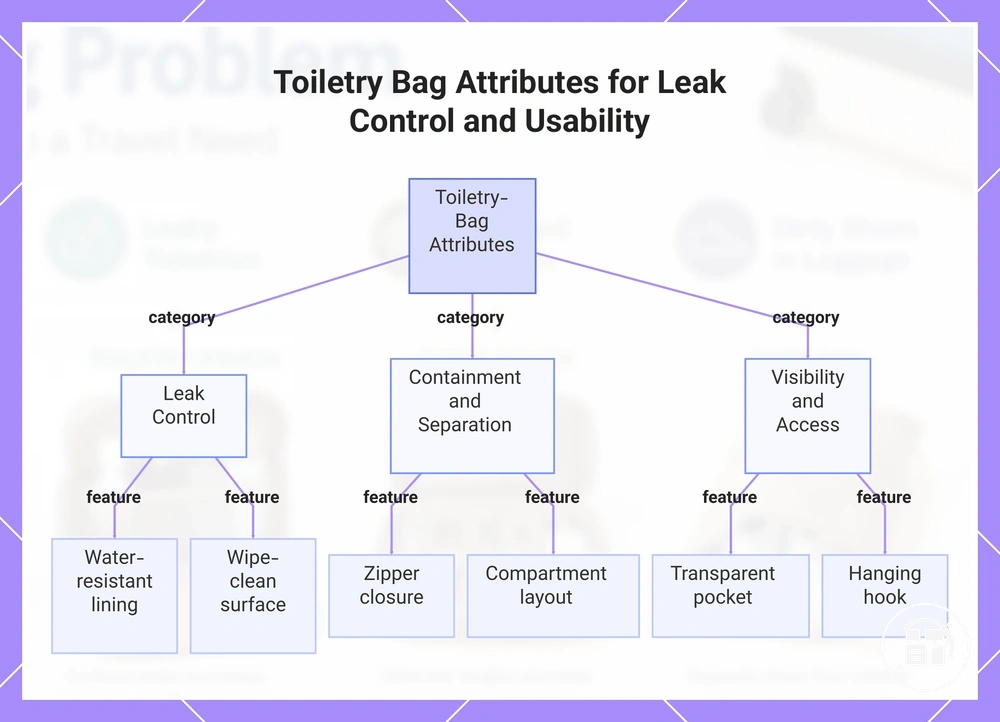
Water-resistant linings, hanging hooks, and compartment layout are toiletry-bag attributes that affect leak control and usability. Their value depends on travel conditions, bottle behavior, and how toiletries are arranged inside the bag. These attributes can help reduce mess and improve access when matched to the intended use.
- Water-resistant lining can help limit liquid residue from spreading when a minor leak occurs, which may support leak control and simplify cleanup.
- Zipper closure can help keep toiletries contained when bottle closures remain secure, which may reduce item movement inside the toiletry compartment.
- Transparent pocket can improve visibility when small toiletries are difficult to identify, which may support faster access.
- Hanging hook can improve visibility and access when toiletries need to remain organized in a shared bathroom or limited counter space.
- Compartment layout can separate liquid bottles from other items when organization and spill containment are priorities, which may improve access and reduce cross-contact.
- Bottle height and wipe-clean surface can support better storage fit and easier cleanup when taller containers or minor residue are present; these features help with leak control but do not replace proper bottle sealing.
This chart categorizes key toiletry-bag attributes into leak control, containment and separation, and visibility and access features.
Protection and Access Organizers for Electronics and Cables
Electronics organizers should be chosen by tangling risk, protection need, and access frequency. Electronics organization depends on both protection and retrieval speed because the feature that controls cable tangling is not always the feature that supports device protection. Selection should match the type of item being carried and the travel conditions in which it will be stored or accessed.
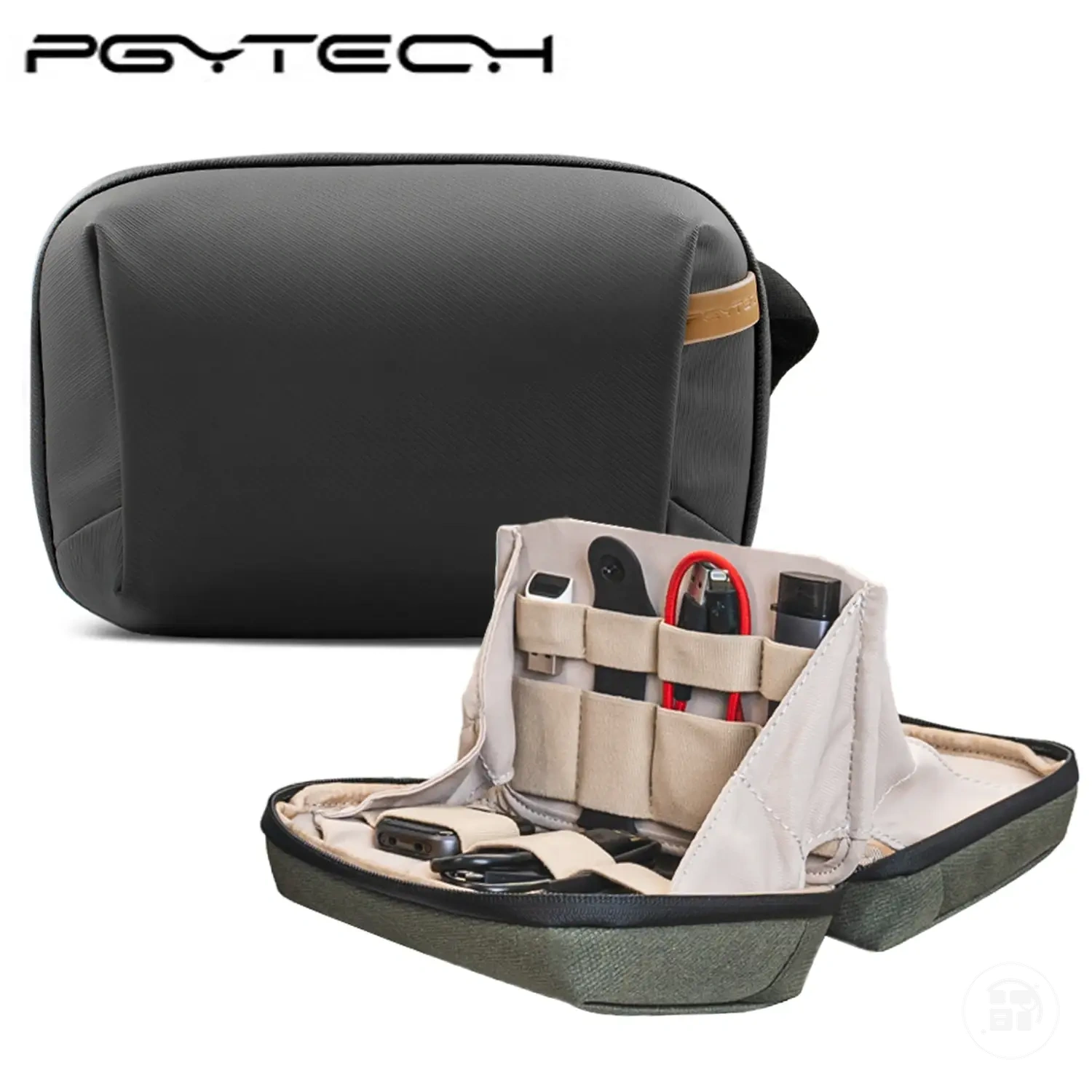
Cables often benefit from separation features that reduce tangling, while chargers, adapters, earbuds, power banks, and other small accessories may benefit from visibility and organization features. A cable organizer with elastic loops can help keep cords separated when multiple cables are packed together. Mesh pockets may improve visibility for small accessories, while a divider can help organize items into dedicated sections. An electronics organizer intended for devices may benefit from padding when protection is a priority.
When quick access is important, features that improve visibility and retrieval may be more useful than additional padding. In packed luggage, protection and item separation may become more important because electronics can shift during transport. The preferred balance depends on whether the organizer is accessed frequently or stored for most of the trip.
A common assumption is that every cable pouch protects electronics, but protection depends on padding, fit, and item placement inside the organizer. Elastic loops and mesh pockets can improve organization and access, yet they do not automatically provide meaningful protection for fragile electronics. Protection-focused electronics organizers and access-focused cable organizers serve different purposes even when they carry similar accessories.
Electronics and cable organizer selection becomes clearer when protection, access, and tangle-control needs are evaluated separately. The comparison below highlights feature-to-condition matching rather than product differences.
| Organizer need | Helpful feature | Best-fit condition | Risk reduced |
|---|---|---|---|
| Cable tangling | Elastic loops | Multiple cables packed together | Tangling and cable mixing |
| Small accessory loss | Mesh pockets | Chargers, adapters, earbuds, power bank, or similar accessories | Misplacement and retrieval difficulty |
| Fragile device protection | Padding and suitable fit | Devices that may need additional separation | Contact and movement inside luggage |
| Frequent access | Divider or organized pocket layout | Items retrieved regularly during travel | Slow access and poor visibility |
Padded Tech Pouches, Elastic Loops, and Cable Separation
When cables become tangled or electronics accessories shift inside luggage, feature-specific organization can help improve cable separation and localized protection. Tech-pouch features are most useful when matched to the packing risk they address. The goal is to improve visibility, reduce cable mixing, or add protection without assuming that every pouch serves the same purpose.
- Padded tech pouch: A padded tech pouch can help improve protection when device fit is appropriate and padding surrounds the stored item. The outcome depends on fit, padding position, and the risk of item movement.
- Elastic loops: Elastic loops can support cable separation when multiple cords are stored together. This may reduce tangling and improve cable retrieval.
- Mesh pocket: A mesh pocket can improve visibility when small accessories need to be identified quickly. It is often more useful for visibility and access than for protection, which affects pouch selection.
- Zip compartment: A zip compartment can separate accessories into dedicated storage areas when loose items may mix together. This may reduce retrieval difficulty and accessory confusion.
- Cable length separation: Cable length separation can help organize shorter and longer cables into different sections. This may reduce cable overlap and support cleaner cable management decisions.
Secure Access Organizers for Documents, Passports, and Cards
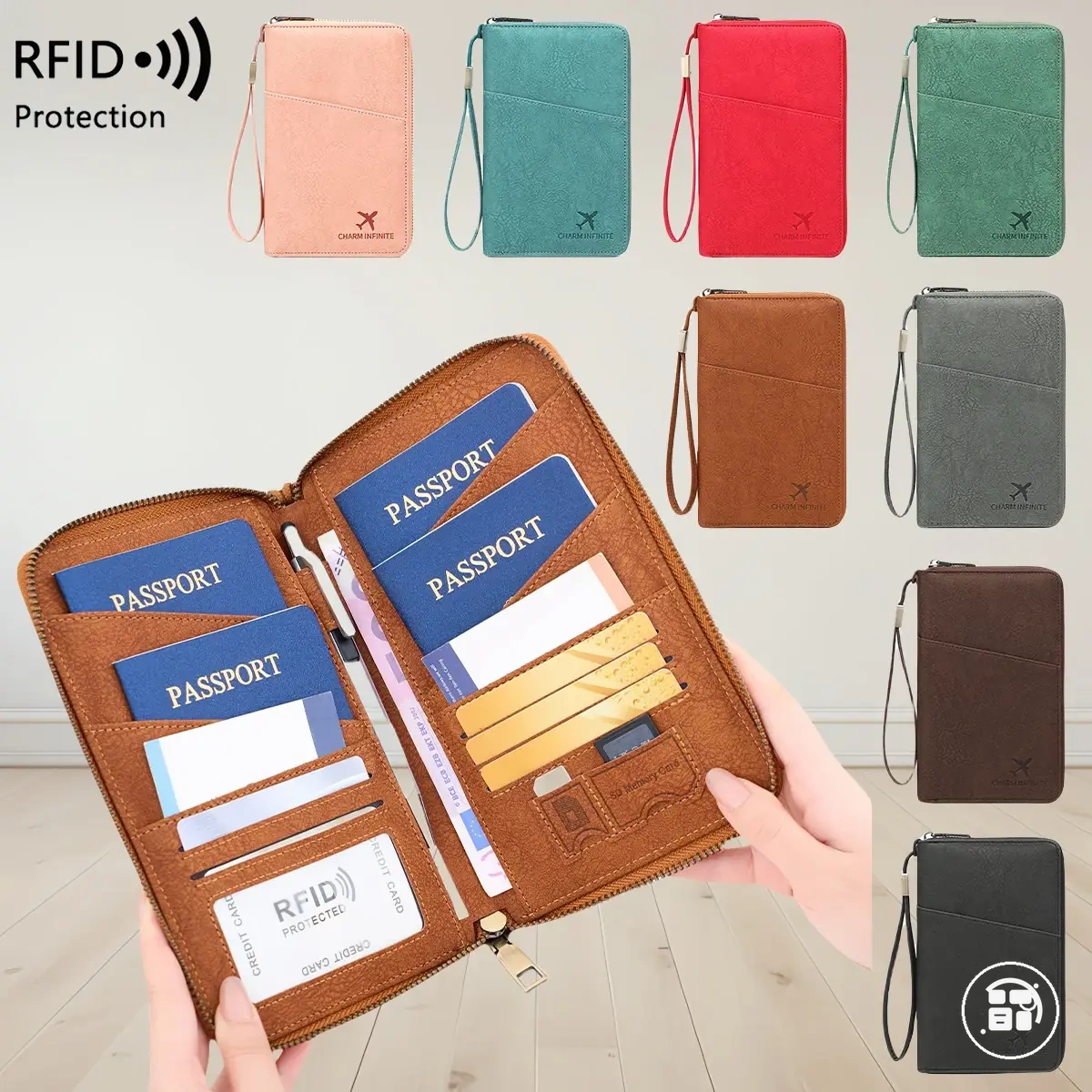
Document organizers should be selected by access frequency, document volume, and moisture risk. Secure access depends on keeping a passport, cards, tickets, and paper documents reachable when needed without exposing them unnecessarily during travel. Travel-party size also matters because family documents often require more capacity and separation than individual travel documents.
At airports, frequent document retrieval may make visibility and organized access more important than maximum storage capacity. Hotel stays may place greater value on keeping documents grouped and easy to locate between check-in and daily travel activities. Family travel often increases document volume because multiple passports, cards, tickets, and papers may need organized separation within a single document organizer.
When documents are difficult to find, pocket layout can improve retrieval by assigning dedicated spaces to passports, cards, and paper documents. A suitable closure can help keep contents organized during movement, while visibility features may reduce searching time when access frequency is high. Capacity should match document volume so items remain organized rather than crowded into a single section, which may help reduce document misplacement.
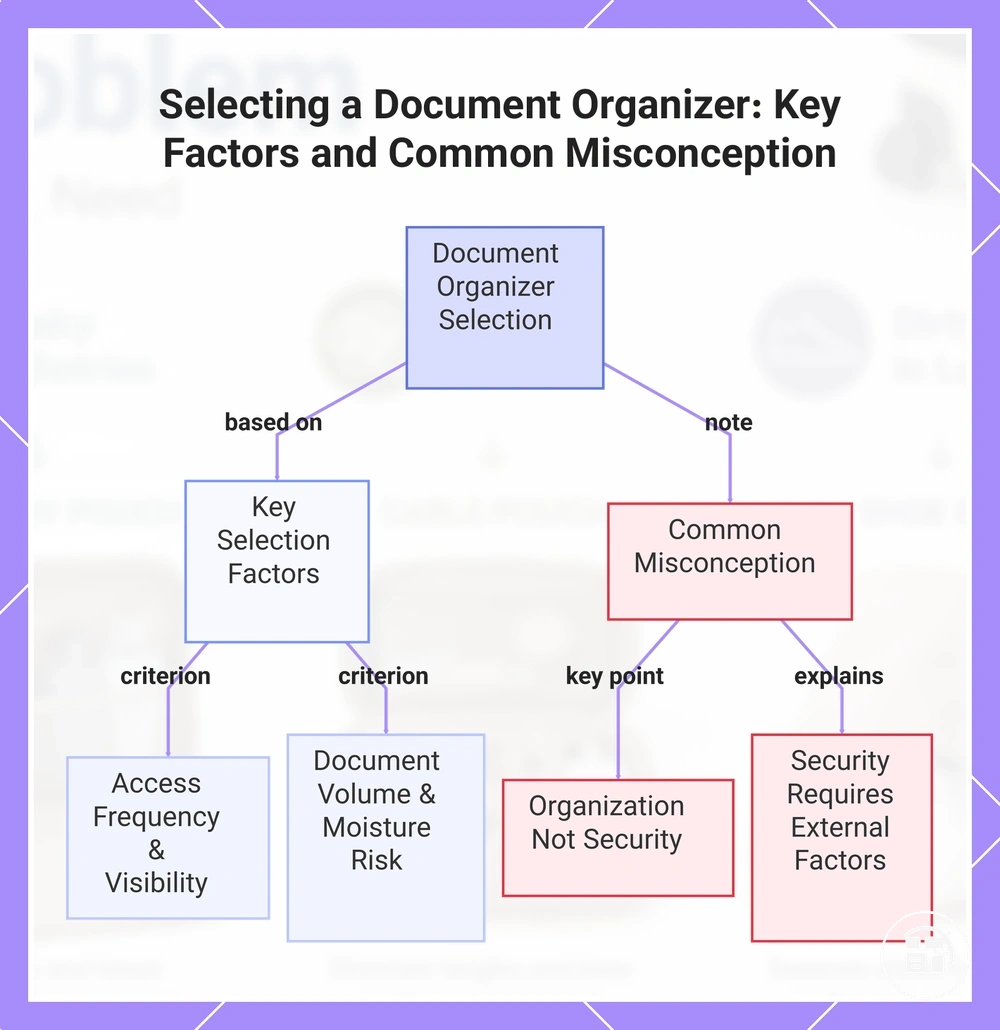
A common assumption is that a document organizer provides personal security, but organization and security are not the same function. A document organizer supports grouping, access, and document management, while moisture-resistant materials may help when moisture risk is a concern. Personal security depends on factors beyond the organizer itself, so document organization should not be treated as a security guarantee.
Use the checklist below to match document-organizer features to travel needs.
- Verify that passport storage matches the number of passports being carried.
- Check whether card slots support the quantity of cards used during the trip.
- Confirm that tickets and paper documents fit without excessive folding.
- Review the closure type to help keep documents grouped during travel.
- Consider moisture risk and whether the pouch provides suitable moisture protection.
- Match pocket layout and visibility features to expected access frequency.
This chart shows the main factors for choosing a document organizer and clarifies a common misunderstanding about security.
RFID Protection, Waterproofing, and Family Document Capacity
RFID protection, water resistance, zipper closure, passport slots, and family document capacity are document-pouch attributes that influence protection, organization, and storage capacity under specific travel conditions. These attributes should be evaluated as functional features rather than guarantees, and their usefulness depends on how the document pouch is used during travel.
- RFID protection: RFID protection or an RFID lining may provide an additional layer of risk reduction for cards in certain situations. Its relevance depends on the cards being carried and the travel conditions where access is needed.
- Water resistance: Water resistance can help reduce moisture exposure for paper documents and cards stored inside a document pouch. The level of protection may vary with pouch construction and the amount of moisture encountered.
- Zipper closure: A zipper closure can help keep passports, cards, and tickets grouped in one location. This attribute matters most when documents are accessed repeatedly during travel.
- Passport slots: Passport slots can improve separation and access by assigning dedicated storage areas within a travel wallet or passport holder. This may be useful when multiple passports or related documents are carried together.
- Family document capacity: Family document capacity affects how many passports, cards, and family documents can be organized within a single document pouch. When travel-party size increases, sufficient capacity and easy access may matter more than additional protection features.
Separation Organizers for Shoes and Dirty Laundry
Separation organizers are needed when shoes, dirty laundry, damp items, or mixed-condition clothing could come into contact with clean clothes inside luggage. They protect clean items by creating a barrier that controls contact transfer and may help with odor control and moisture transfer. The need becomes more apparent when clean and used items share the same packing space.
Contact transfer can occur when shoe soles or dirty laundry are stored beside clean clothes. Shoe bags create a barrier between footwear and other luggage contents, while laundry bags separate dirty laundry from freshly packed garments. Ventilation, closure design, and washable material may also help manage odor and moisture conditions depending on the item being stored.
On a short trip, a separation bag may be sufficient when only a small amount of dirty laundry or a single pair of shoes needs isolation. On a longer trip, laundry volume often increases, and mixed-condition packing may require more deliberate separation between clean clothes, worn items, and damp garments. In those situations, organizer capacity and separation features become more important.
A common assumption is that separation organizers replace cleaning or garment care, but their primary role is separation rather than maintenance. Shoe bags and laundry bags help isolate item conditions inside luggage, while odor control and moisture handling depend on the stored items, closure type, and travel conditions. Their value comes from managing contact, sorting, and separation rather than functioning as a complete cleaning routine.
The comparison below highlights when shoe bags and laundry bags are justified based on the packing problem being managed.
| Separation need | Organizer type | Feature to check | Outcome |
|---|---|---|---|
| Shoes with dirty soles | Shoe bags | Barrier and closure | Helps separate shoes from clean clothes |
| Dirty laundry | Laundry bags | Washable material and closure | Supports sorting and separation |
| Damp clothes | Laundry pouch | Ventilation and washable material | May help reduce moisture transfer |
| Mixed clean-dirty packing | Separation organizers | Dedicated compartments or separation bag | Helps maintain organized luggage conditions |
Shoe Bags for Clean-Clothes Separation
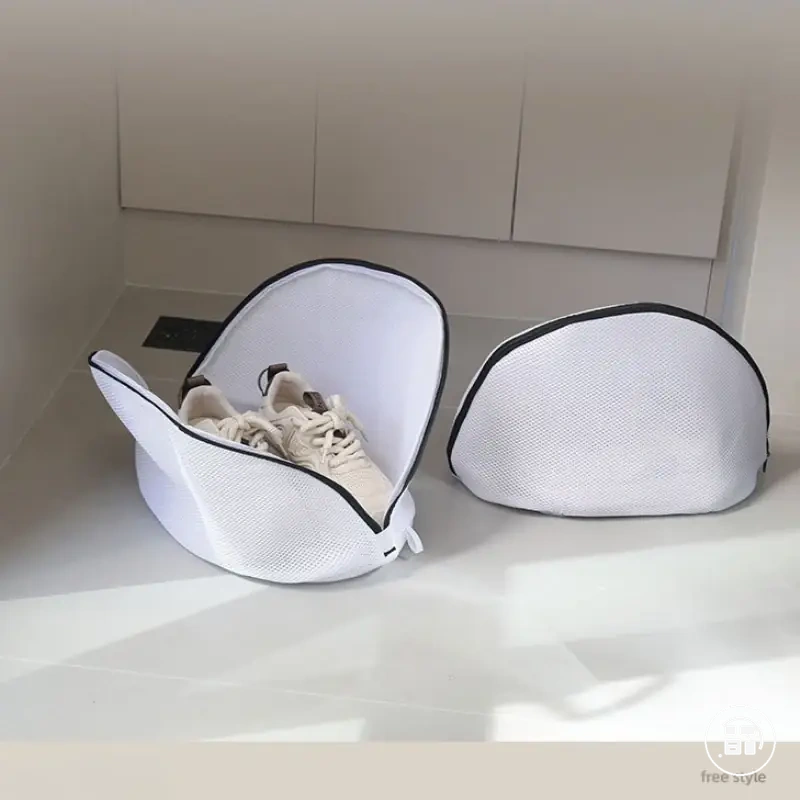
Shoe bags create a barrier between soles and clean clothes inside luggage. Clean-clothes separation works best when the bag fits the shoes and the material thickness matches the dirt transfer risk. Bulky shoes may still need placement planning as well as a shoe bag when luggage space is tight.
- Closure: Closure helps keep soles covered when shoes shift inside the bag. This supports separation from nearby garments.
- Material thickness: Material thickness affects how well the shoe pouch works as a barrier between soles and clean clothes. Thicker material may be more useful when dirt transfer risk is higher.
- Ventilation: Ventilation can help when shoes are not fully dry or have been worn recently. This may support odor control without implying an odor-proof guarantee.
- Shoe size fit: Shoe size fit matters because a bag that is too small may leave part of the shoe exposed. A suitable fit supports clean-clothes separation inside luggage.
Laundry Bags for Odor and Dirty-Clothes Containment
Laundry bags help contain dirty clothes by separating them from other luggage contents and supporting sorting during travel. Laundry-bag choice depends on material, closure, ventilation, and size because different clothing conditions create different containment needs. A suitable travel laundry bag can help manage odor, dampness, and organization within the separation area of a suitcase.
A common assumption is that a sealed laundry bag is always the better option, but material and clothing condition influence the choice. Breathable laundry bags may be more suitable when dampness is a concern, while a more sealed closure may help contain worn clothes during transport. For damp items, the value of ventilation depends on the clothing condition and the intended sorting or containment outcome.
The checklist below focuses on organizer-choice signals.
- Material: Match the material to the condition of the dirty clothes and the desired containment or sorting outcome.
- Closure: Choose a closure that helps keep dirty clothes separated from other luggage contents.
- Ventilation: Consider ventilation when dampness may influence odor or moisture conditions inside the laundry bag.
- Size: Select a size that matches the expected clothing volume and supports easier sorting during travel.
Matching Organizer Features to Packing Risks
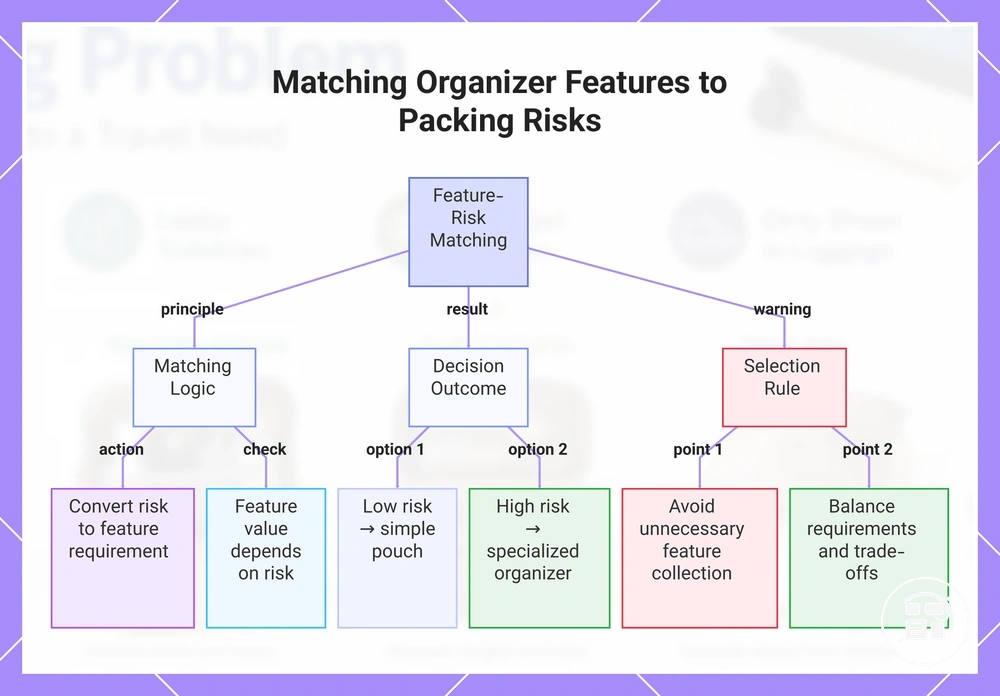
Packing risks should be converted into feature requirements before comparing products. Organizer features only matter when they address a specific problem such as compression, leakage, protection, access, or separation. Feature matching creates a clearer selection decision because suitability depends on the risk being managed rather than the organizer category alone. The same organizer feature may be useful in one travel condition and unnecessary in another.
Use a decision checklist to connect packing risks with organizer criteria before evaluating options. For broader selection criteria for packing problems, focus on the risk, the required attribute, and the acceptable condition rather than the number of features offered.
- Compression risk → compression feature → clothing is compressible → compression organizer may be justified.
- Leakage risk → closure and protective lining → liquids are carried together → leak-control organizer may be useful.
- Protection risk → padding → electronics need additional separation → padded organizer may be appropriate.
- Access risk → visibility and compartments → items are retrieved frequently → visibility-focused organizer may help.
- Sorting risk → washability → dirty clothes or toiletries need containment → washable organizer may support separation.
- Capacity risk → suitable capacity → item volume exceeds simple storage needs → larger organizer may be justified.
- Mixed risks → combined features → multiple conditions exist together → mixed setup may be more suitable.
When packing risks are limited, a simple pouch may be enough. A pouch can work when only basic containment, visibility, or grouping is needed and the risk severity remains low. Specialized organizers become more useful when compression, leakage, padding, or capacity concerns directly affect packing outcomes. A mixed setup may be appropriate when different item types create different feature requirements within the same luggage space.
A common assumption is that more organizer features automatically create a better solution, but feature value depends on the packing risk being solved. To avoid packing mistakes, evaluate whether each feature addresses a real condition rather than collecting features that may not be needed. The final selection decision should balance feature requirements, acceptable conditions, and practical trade-offs before comparing products.
Here are product examples that may make comparison easier. Before buying, always review the compatibility criteria, essential features, and product details.
This chart shows how to convert packing risks into organizer feature requirements and decide between a simple pouch and a specialized organizer.
When One Organizer Type Cannot Solve the Packing Problem
Mixed packing problems may require an organizer combination because one organizer type often addresses only part of the problem. Space, protection, separation, and access needs can occur together within the same luggage condition. When packing risks overlap, combined organizers may provide a better-fit decision than relying on a single accessory. The trade-off depends on the trip condition, item mix, and storage constraints.
Mixed packing problems often reveal shared attributes and missing attributes across organizer types. A compression organizer may help with space reduction but may not address leakage or protection needs. A padded organizer may support electronics protection but may offer limited separation for documents or toiletries. An organizer combination becomes more useful when missing attributes create a gap between the packing problem and the required outcome.
When clothes and toiletries travel together, compression and leakage concerns may require different organizer features. Electronics and documents can create a different organizer combination because protection and access often depend on separate attributes. Shoes and laundry may benefit from combined organizers when separation and containment are needed at the same time. In each case, the better-fit decision depends on which packing problem remains unresolved by a single organizer type.
Organizer selection and packing arrangement are separate jobs. After choosing the organizer combination that addresses the missing attributes, the next step is deciding how to pack with organizers so space, access, and separation remain balanced throughout the trip. Luggage condition may influence whether the arrangement prioritizes compression, visibility, protection, or containment.
A common assumption is that a larger set automatically solves multi-problem packing, but mixed packing problems are usually resolved by matching organizer functions to specific risks. The comparison below highlights when combined organizers may be justified and where the trade-off should be evaluated. A better-fit decision comes from comparing shared attributes, missing attributes, trip condition, and luggage condition rather than assuming one organizer type or a larger collection will solve every problem.
Here are product examples that may make comparison easier. Before buying, always review the compatibility criteria, essential features, and product details.
| Mixed problem | Single-organizer limitation | Useful combination | Trade-off to check |
|---|---|---|---|
| Clothes and toiletries | Space control may not address leakage | Compression organizer and leak-control organizer | Available luggage space |
| Electronics and documents | Protection may not improve document access | Padded organizer and document organizer | Access versus protection balance |
| Shoes and laundry | One separator may not suit both conditions | Shoe bag and laundry bag | Capacity and separation needs |