Travel Organization Accessories vs Packing Cubes
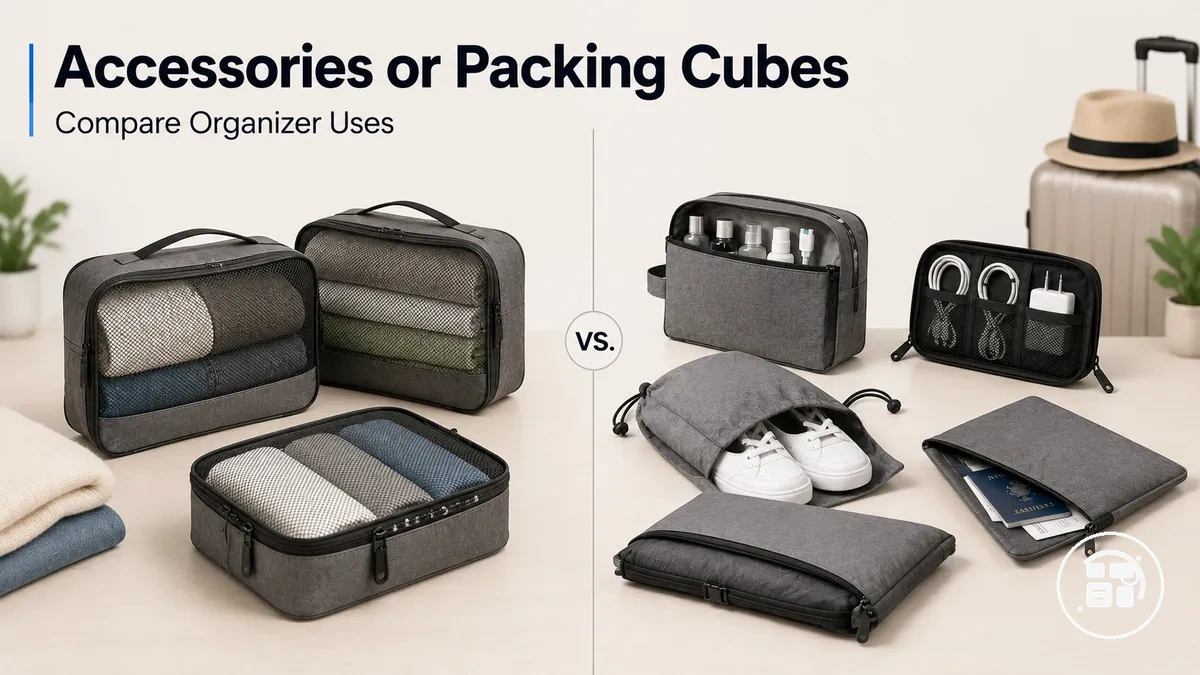
Travel organization accessories and packing cubes solve different packing problems. Packing cubes work well when clothing order and compression matter, while broader travel organizers help when pouches, access, and protection matter more. The core decision is whether cubes alone fit your luggage or whether broader organizers give a better mix.
If your trip mainly involves folded clothing in one suitcase, a cube set may be enough. If your luggage also carries toiletries, electronics, documents, shoes, or small accessories, travel pouches and other organizer accessories can make the setup more useful. The main selection criteria are item type and luggage fit.
Packing cubes are useful, but packing cubes are not a universal organizer replacement. Compression can help with soft clothing in many cases, yet access, protection, and separation often depend on the item being packed and the luggage layout.
This comparison starts with how packing cubes sit inside the wider category of travel organization accessories. From there, the choice becomes clearer without turning the page into a product catalog.
How packing cubes sit within travel organization accessories
Packing cubes are fabric packing organizers used mainly for clothing organization inside luggage. They group clothing into separate spaces so a suitcase can stay more orderly. Packing cubes are a subset of travel organization accessories.
How packing cubes sit within travel organization accessories is easier to see when the parent category stays clear: travel organization accessories also include travel pouches, toiletry organizers, electronics organizers, luggage organizer bags, and accessory sets. Packing cubes are strong for clothing sorting, but packing cubes do not cover every organizer need because non-clothing items may need leakage control, padding, visibility, or quick access. For the wider category context, use the travel organization accessories hub.
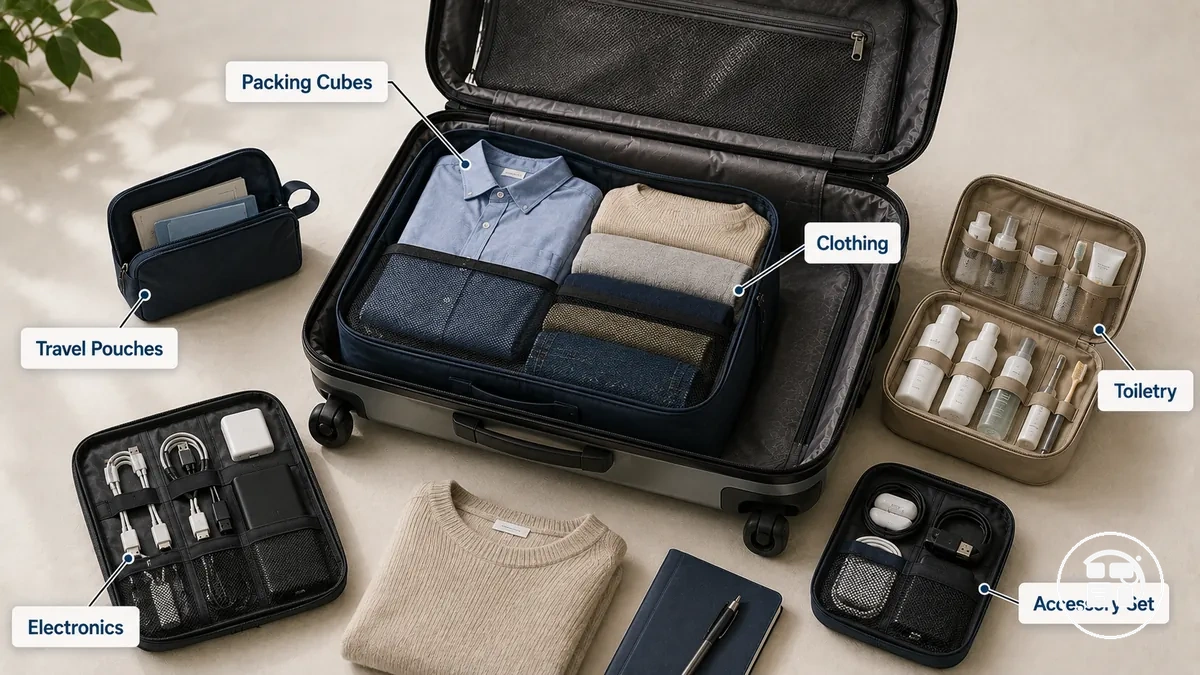
If your luggage contains clothing plus smaller belongings, packing cubes may handle the clothing while pouches and specialty organizers handle item-specific storage. The comparison below separates organizer purpose from product lists so the next sections can compare practical use, limits, and fit more clearly.
| Organizer type | Main purpose |
|---|---|
| Packing cubes | Group clothing and support suitcase order, with practical limits for non-clothing items. |
| Travel pouches | Separate small items and improve access when loose belongings would be hard to find. |
| Toiletry organizers | Hold liquids and bathroom items where leakage control and separation may matter. |
| Electronics organizers | Group cables, chargers, and devices where padding or visibility may be useful. |
| Accessory sets | Combine organizer types for mixed items, but the usefulness depends on the belongings and luggage layout. |
Packing cubes as clothing-focused luggage organizers
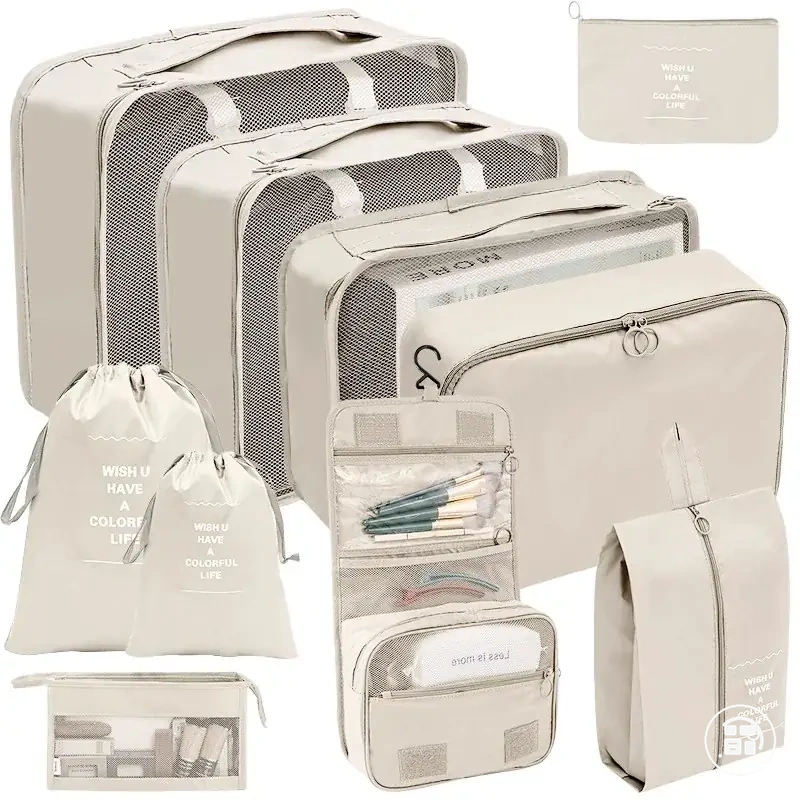
Packing cubes are fabric containers used mainly to group and separate clothing inside luggage. Most packing cubes use a compartment shape with a zipper, and many include a mesh panel that can improve visibility of stored clothing. These features support clothing sorting and help maintain luggage order.
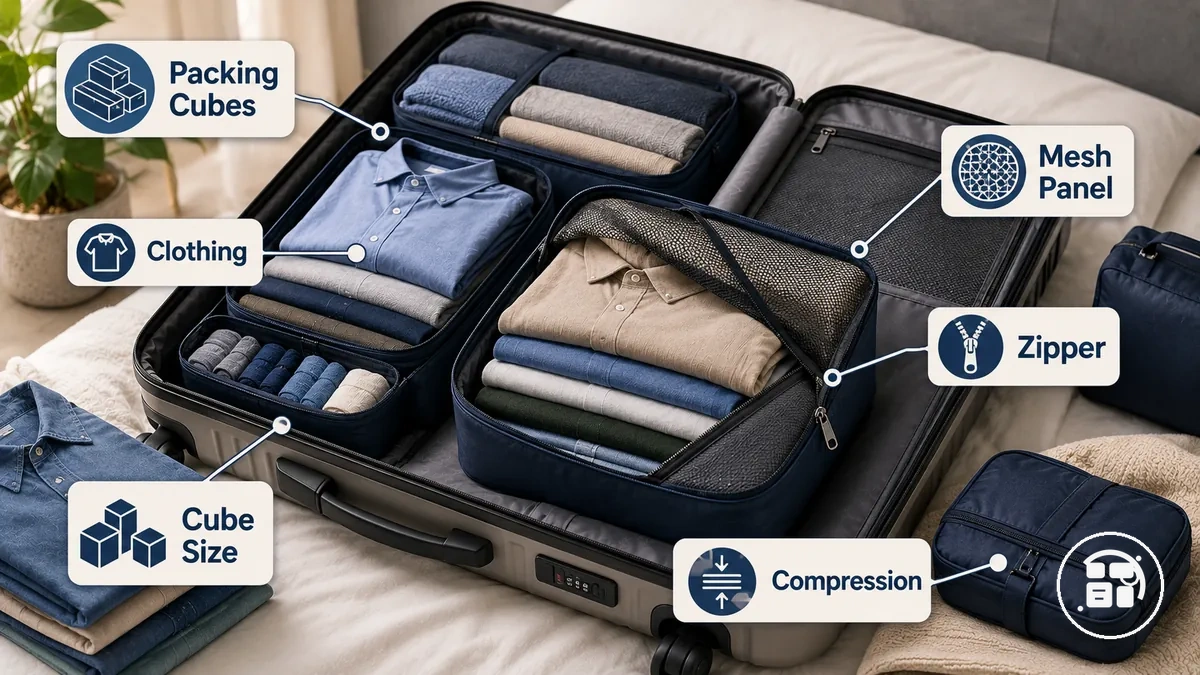
If clothing is divided into separate groups, different cube size options can help organize items more clearly within luggage. A compression option may reduce bulk for soft clothing in some situations, but the result depends on clothing type, folding method, cube size, and luggage shape; for example, one packing cube may hold shirts while another holds socks and undergarments.
Travel pouches, toiletry bags, and accessory organizers beyond cubes
Non-cube organizer types help manage belongings that clothing-focused packing cubes do not handle well. Travel pouches, toiletry bags, and accessory organizers solve item-specific problems related to separation, protection, and access.
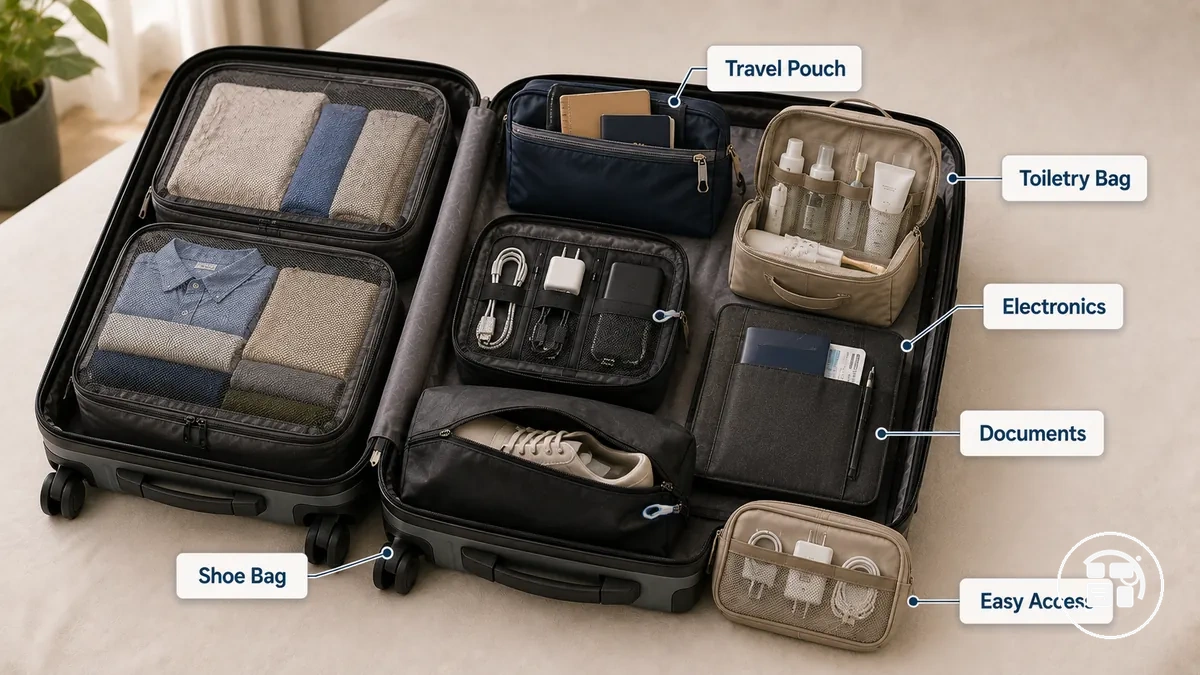
If luggage includes cables, documents, toiletries, or other small items, specialty organizers can make those items easier to find and manage. Travel pouches, toiletry bags, and accessory organizers beyond cubes focus on item-specific storage rather than clothing grouping. Packing cubes group clothing, while pouches and specialty organizers separate or protect non-clothing items; for a broader explanation, see types beyond packing cubes.
- Travel pouches: Small items such as chargers or personal essentials; improve separation and access.
- Toiletry bags: Liquids and bathroom items; may help with organization and leakage control when materials and closures are suitable.
- Electronics pouches: Cables and small devices; can improve visibility and provide padding depending on design.
- Document holders: Passports and papers; support quicker access and organized storage.
- Shoe bags: Footwear; separate shoes from clothing and may help reduce dirt transfer.
- Small accessory bags: Mixed small items; keep related belongings together for easier retrieval.
Core differences between packing cubes and broader travel organizers
Packing cubes and broader travel organizers differ mainly by item type, storage purpose, and organization method. Packing cubes focus on clothing grouping and compression, while broader travel organizers focus on access needs, protection needs, and separation for non-clothing items. The comparison depends on item type, space behavior, access needs, and protection needs.
If a traveler needs clothing compression and small-item separation in the same luggage setup, the two organizer types can work together. The table below compares packing cubes and broader travel organizers across the main decision variables.
| Decision variable | Packing cubes | Broader travel organizers | What it means |
|---|---|---|---|
| Item type | Mainly clothing and soft garments | Toiletries, electronics, documents, shoes, and other small items | Organizer type should match the items being stored. |
| Space behavior | Compression options may help manage clothing bulk depending on luggage shape and clothing type | Usually prioritize separation and organization over compression | Space outcomes vary by contents and organizer type. |
| Access | Supports grouped clothing access inside a suitcase | Often emphasizes visibility and quicker access to specific items | Access needs influence which organizer is more practical. |
| Protection | Focuses on clothing order and containment | May provide waterproofing, padding, or separation depending on material and compartment design | Protection needs vary by item sensitivity and use case. |
| Repacking | Helps maintain suitcase order during clothing changes | Can reduce searching through mixed belongings when items need frequent access | Repacking convenience depends on visibility, access needs, and organization method. |
If both clothing compression and small-item separation matter, packing cubes can organize clothing while broader travel organizers manage non-clothing belongings.
Organization purpose and item type
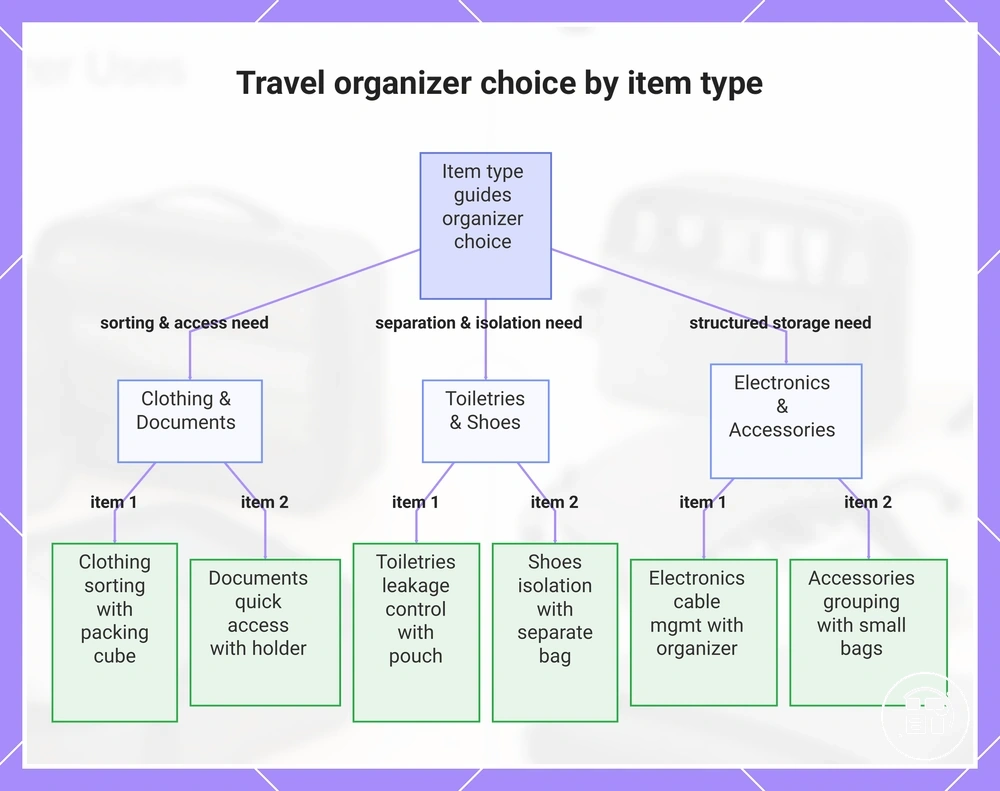
Item type determines organizer choice because different belongings have different containment needs. Organization purpose and item type help match belongings to organizer conditions, making item type the main decision signal.
- Clothing: Containment need is sorting and suitcase order; a packing cube may be suitable when clothing needs grouped organization.
- Toiletries: Containment need is separation and leakage control; a pouch organizer may be suitable when liquids need isolation from other belongings.
- Electronics: Containment need is cable management, padding, and access; an electronics organizer may be suitable when devices or accessories need structured storage.
- Documents: Containment need is visibility and quick access; a document holder may be suitable when travel papers need organized retrieval.
- Shoes and laundry: Containment need is isolation and protection; separate bags may be suitable when used or bulky items need separation from clothing.
- Small accessories: Containment need is grouping and access; small accessory bags may be suitable when loose items need to stay together.
This chart shows how item type determines the suitable travel organizer based on specific containment needs.
Space saving, compression, and luggage fit
Space saving is often misunderstood as automatic extra capacity, but luggage fit depends on multiple factors. Compression cubes may reduce bulk in soft clothing, while fabric volume, compression panels, cube dimensions, and suitcase shape still influence the result. Space-saving claims should be evaluated within those conditions.
Space behavior across compression cubes, regular packing cubes, and flexible pouches affects luggage fit in different ways. The comparison below highlights how each organizer type can influence bulk reduction, wasted space, and repacking ease.
| Option | Space behavior | Fit risk |
|---|---|---|
| Compression cubes | May reduce bulk in soft clothing through compression panels when fill level and fabric volume allow it | Overpacking can increase zipper pressure and may make suitcase closure more difficult |
| Regular packing cubes | Support sorting and space control without additional compression | Luggage fit depends on cube dimensions and suitcase shape |
| Flexible pouches | Can adapt to corners and small gaps, which may reduce wasted space around small items | Less structured storage may reduce repacking ease when contents shift during travel |
If suitcase shape creates unused corner space, flexible pouches may provide a closer fit than fixed cube dimensions.
Access, separation, and protection while traveling
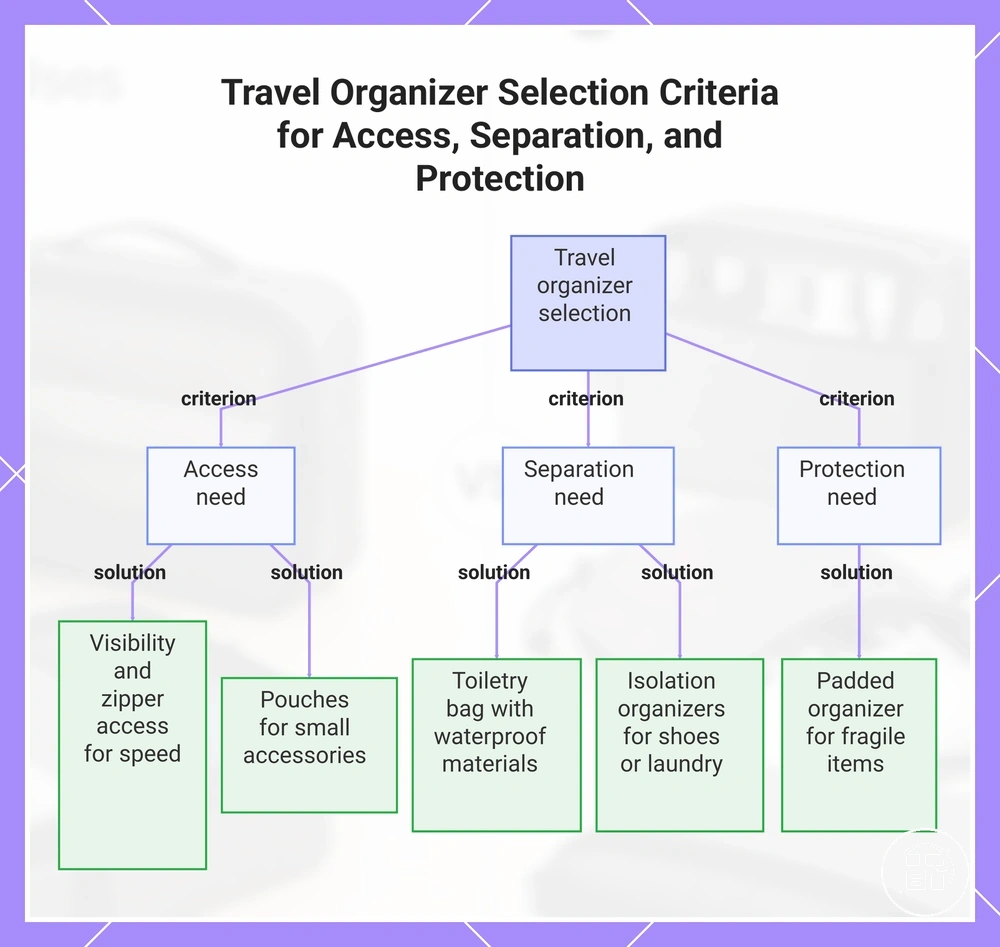
When items need to be reached during transit, organizer choice depends on how quickly belongings must be accessed and how much separation or protection they require. Travel use conditions can change whether cubes, pouches, a toiletry bag, or a padded organizer is more suitable because visibility, zipper access, waterproofing, isolation, and padding vary by design. Access, separation, and protection are the local criteria.
Access, separation, and protection while traveling depend on the travel condition and the type of organizer response needed. The checklist below highlights the conditions that most often influence organizer selection.
- Need quick access at airports: Limited visibility can slow retrieval; organizers with strong visibility and zipper access may improve access speed.
- Carrying toiletries and liquids: Leakage can affect nearby clothing; a toiletry bag with suitable materials and closures may improve separation and waterproofing performance.
- Transporting electronics or fragile items: Movement during travel can increase risk of contact damage; a padded organizer may provide additional protection depending on padding design.
- Separating shoes or laundry from clean items: Direct contact may be undesirable; organizers that support isolation can help keep categories separate.
- Managing small travel accessories: Loose items can reduce organizer visibility and slow retrieval; pouches may improve item separation and quick access.
This chart shows the three main travel needs and the recommended organizer solutions for each common condition.
When packing cubes are worth choosing
Packing cubes are worth choosing when clothing sorting, suitcase order, and repeatable packing matter more than specialized protection. They are most suitable when the main condition is keeping clothing grouped inside luggage.
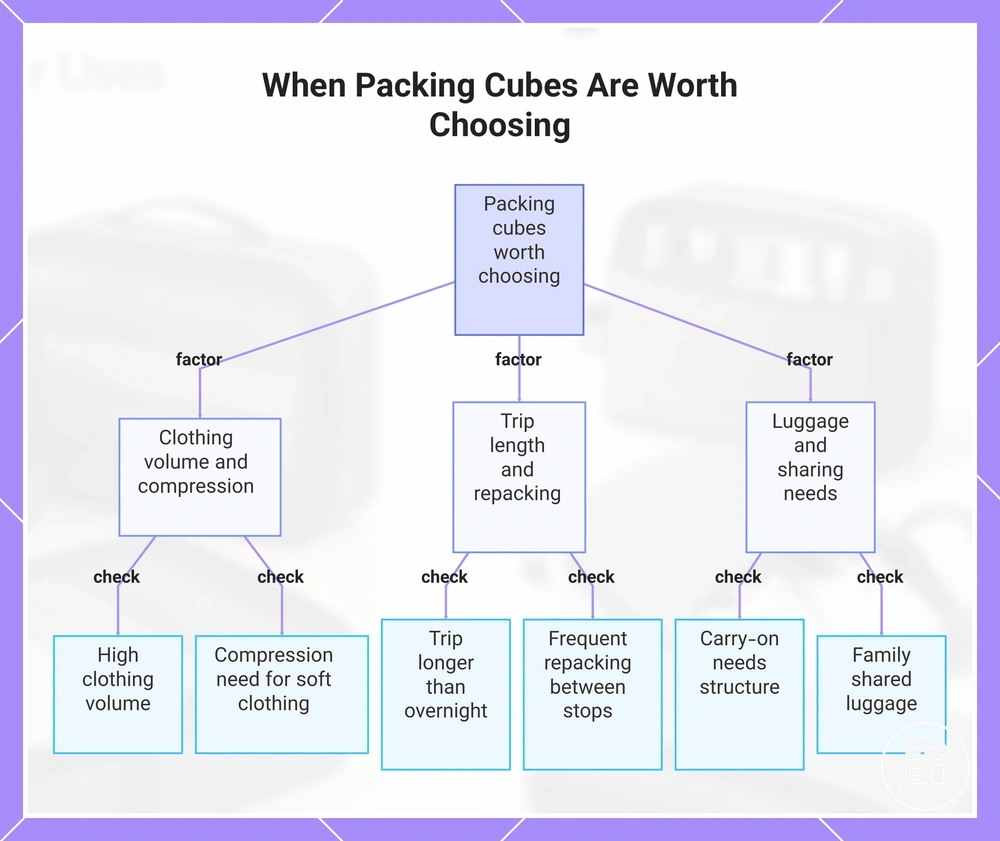
If a trip involves multiple outfits, shared luggage, or repeated hotel changes, packing cubes can make the packing routine easier to maintain. A cube set may also help when carry-on space needs clearer clothing control, although the result depends on clothing volume, luggage type, and compression need. The main decision variables are traveler profile, trip length, luggage type, clothing volume, repacking frequency, and compression need.
Packing cubes are worth it when those variables point toward clothing order rather than item-specific storage. When packing cubes are worth choosing, the checklist below verifies the condition and the recommendation signal.
- Clothing volume is high: If the luggage carries several clothing groups, packing cubes may be useful because clothing sorting becomes the main need.
- Trip length is more than a simple overnight stay: If outfits need to stay grouped across the trip, packing cubes can support suitcase order and repeatable packing.
- Repacking happens often: If the traveler moves between hotels or stops, packing cubes may reduce friction because each clothing group already has a place.
- Carry-on packing needs structure: If a carry-on has limited internal organization, packing cubes can help manage clothing bulk when cube size fits the luggage type.
- Family travel uses shared luggage: If different people’s outfits need separation, packing cubes may make access clearer without mixing clothing groups.
- Compression need is clothing-specific: If soft clothing creates bulk, compression cubes may help when fabric type, fill level, and suitcase shape allow it.
This chart shows the main conditions that indicate packing cubes are a good choice for organizing luggage.
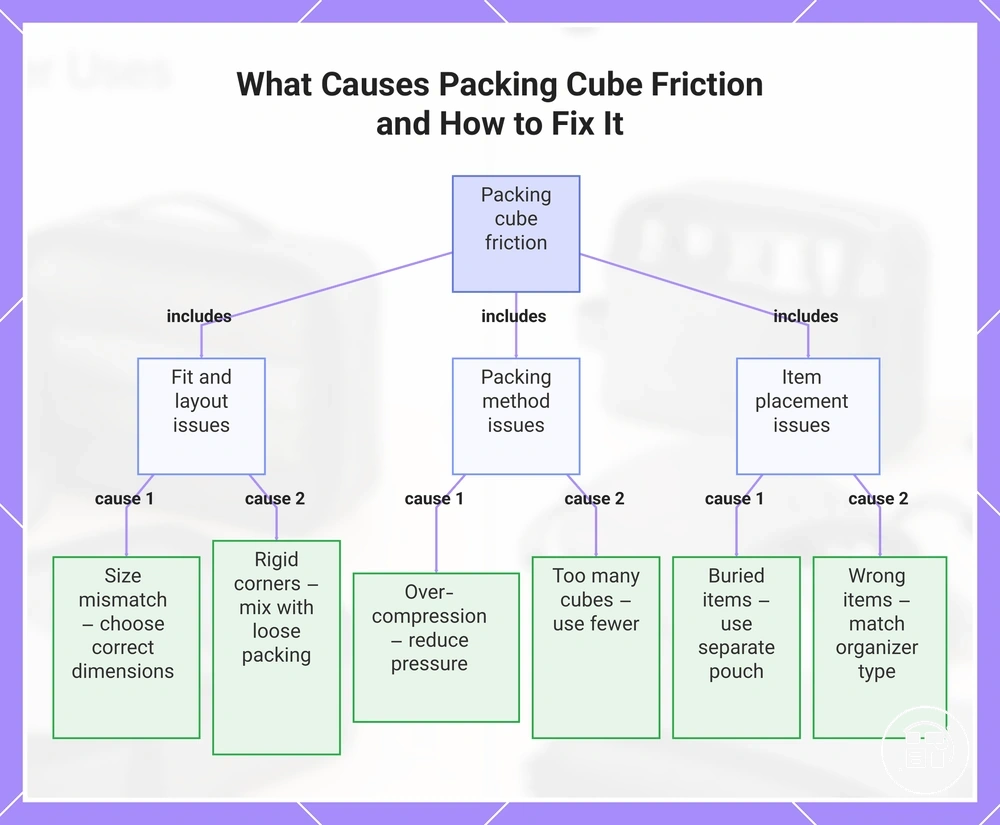
When Packing Cubes Create Limits or Packing Friction
Packing friction can happen when packing cubes do not match the way a suitcase is packed. These limitations are usually linked to cube size, packing style, or luggage layout, so cube limits depend on fit and use.
A cube size mismatch can create wasted space instead of improving organization. Choosing a cube that better matches the suitcase layout may reduce fit problems and improve access. Other packing problems may come from over-compression, rigid luggage corners, or storing the wrong item types inside cubes, which are the main friction causes.
A common myth is that packing cubes always improve packing efficiency. The reality is that some conditions can make packing less flexible or create disadvantages during travel. These cube-specific limits should be separated from broader organizer mistakes.
When packing cubes create limits or packing friction, the points below diagnose the most common causes and help identify a safer decision.
- Cube size mismatch: A cube may not fit the suitcase layout well, causing wasted space and uneven packing. Safer decision: Choose cube dimensions that better match the available space.
- Over-compression: Excess pressure can increase wrinkles or make closure more difficult. Safer decision: Reduce compression when clothing needs easier access or a flatter packing arrangement.
- Hard-to-access items: Items needed during airport transit can become buried inside a cube. Safer decision: Keep quick-access items in a pouch or separate location.
- Non-clothing items: Toiletries, electronics, or irregular shapes may not fit cube organization well. Safer decision: Match the organizer choice to the item type instead of using cubes for everything.
- Rigid luggage corners: Stiff suitcase shapes can leave unused gaps around cubes. Safer decision: Use a combination of cubes and loose-fill packing where needed.
- Too many cubes: Excessive separation can create clutter, slower repacking, and added friction. Safer decision: Use only the number of cubes needed for clear organization.
These limitations describe cube-specific conditions rather than general travel organization failures. For a broader look at packing problems and organizer choices, compare the underlying cause before changing your packing system, and use packing-problem selection logic to choose the most suitable organizer.
This chart shows the main cube-specific causes of packing friction and the recommended safer decisions for each.
When travel pouches and organizer accessories are the better choice
Travel pouches and organizer accessories are the better choice when the packing problem involves item separation, protection, leakage control, or fast access rather than clothing grouping. This decision becomes stronger when non-clothing items need different storage conditions.
If you need to access chargers during transit, separate liquids from clothing, or keep travel documents easy to reach, broader organizer accessories may fit the situation better. Different belongings create different storage requirements, and one organizer type may not suit every item. These conditions introduce item-specific organizer needs.
Travel pouches and organizer accessories are selected by matching the item to the storage function it requires. When travel pouches and organizer accessories are the better choice, the table below connects item type to organizer function and decision signals.
| Item or problem | Better organizer type | Useful attribute | Decision signal |
|---|---|---|---|
| Toiletries | Toiletry bags | Leakage control and waterproofing features when available | Choose when liquids need separation from nearby belongings. |
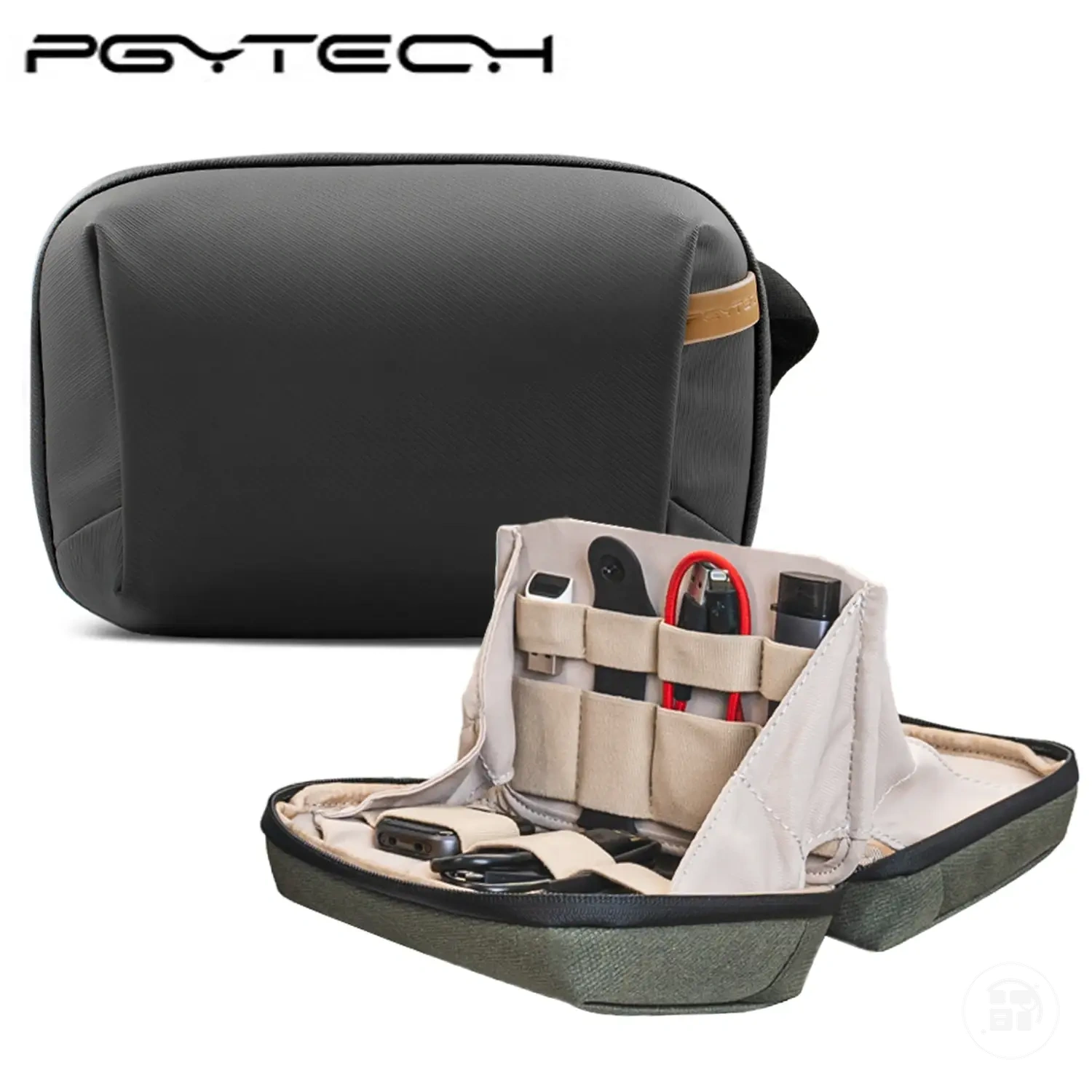
| Electronics | Electronics organizers | Visibility, cable management, and possible padding | Choose when devices or cables need structured access. |
| Documents | Document holders | Organization and quick retrieval | Choose when passports or papers need fast access. |
| Shoes or laundry | Shoe bags or suitcase organizer bags | Item separation inside luggage | Choose when isolation from clothing is the main goal. |
| Small accessories | Travel pouches | Grouping and accessibility | Choose when loose items need organized storage. |
Trade-offs still matter because organizer accessories often focus on one storage purpose at a time. A toiletry bag may improve leakage control, while electronics organizers may improve visibility and access, but usefulness depends on the item and travel condition. The more specific the storage need, the stronger the selection cue.
Travel pouches, toiletry bags, electronics organizers, document holders, and suitcase organizer bags are usually selected because of item-specific needs. The better choice depends on the type of item and the storage condition being solved.
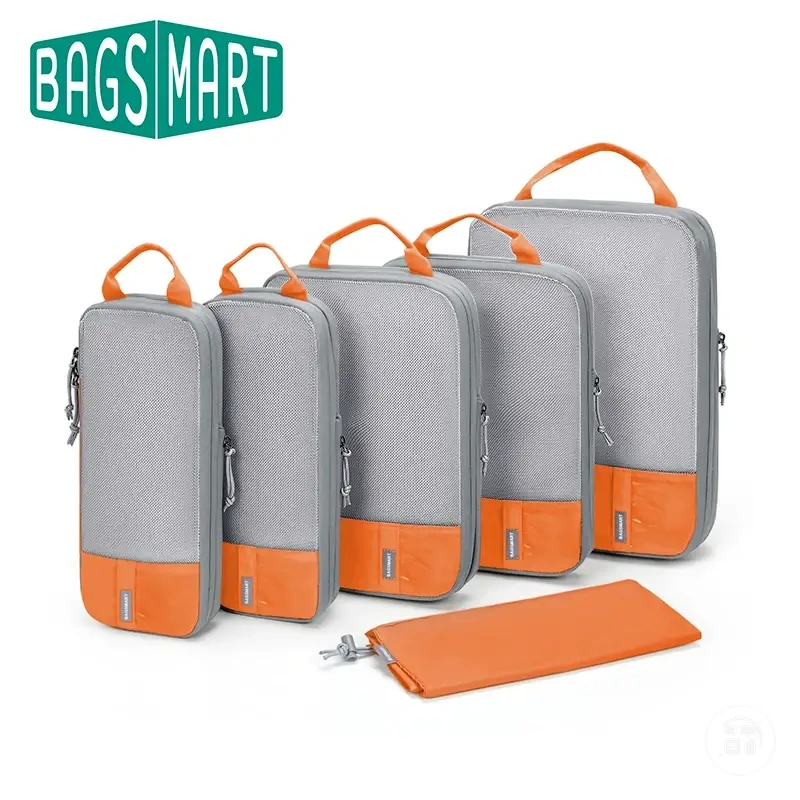
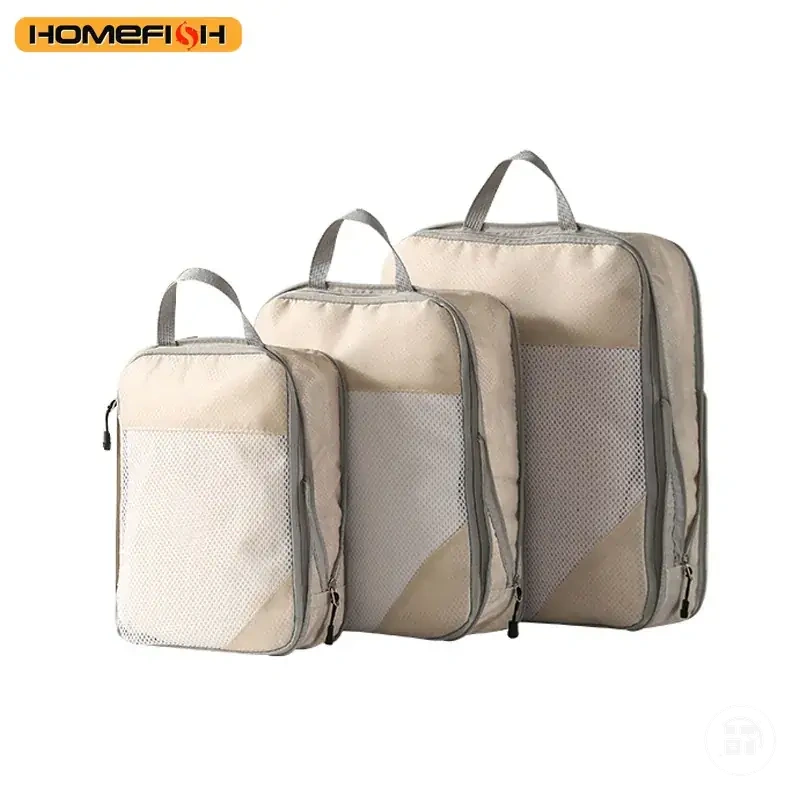
The products below are useful examples for comparing available options. Before buying, check that the compatibility criteria, key features, and product details match your needs.
Compression packing cubes versus regular packing cubes
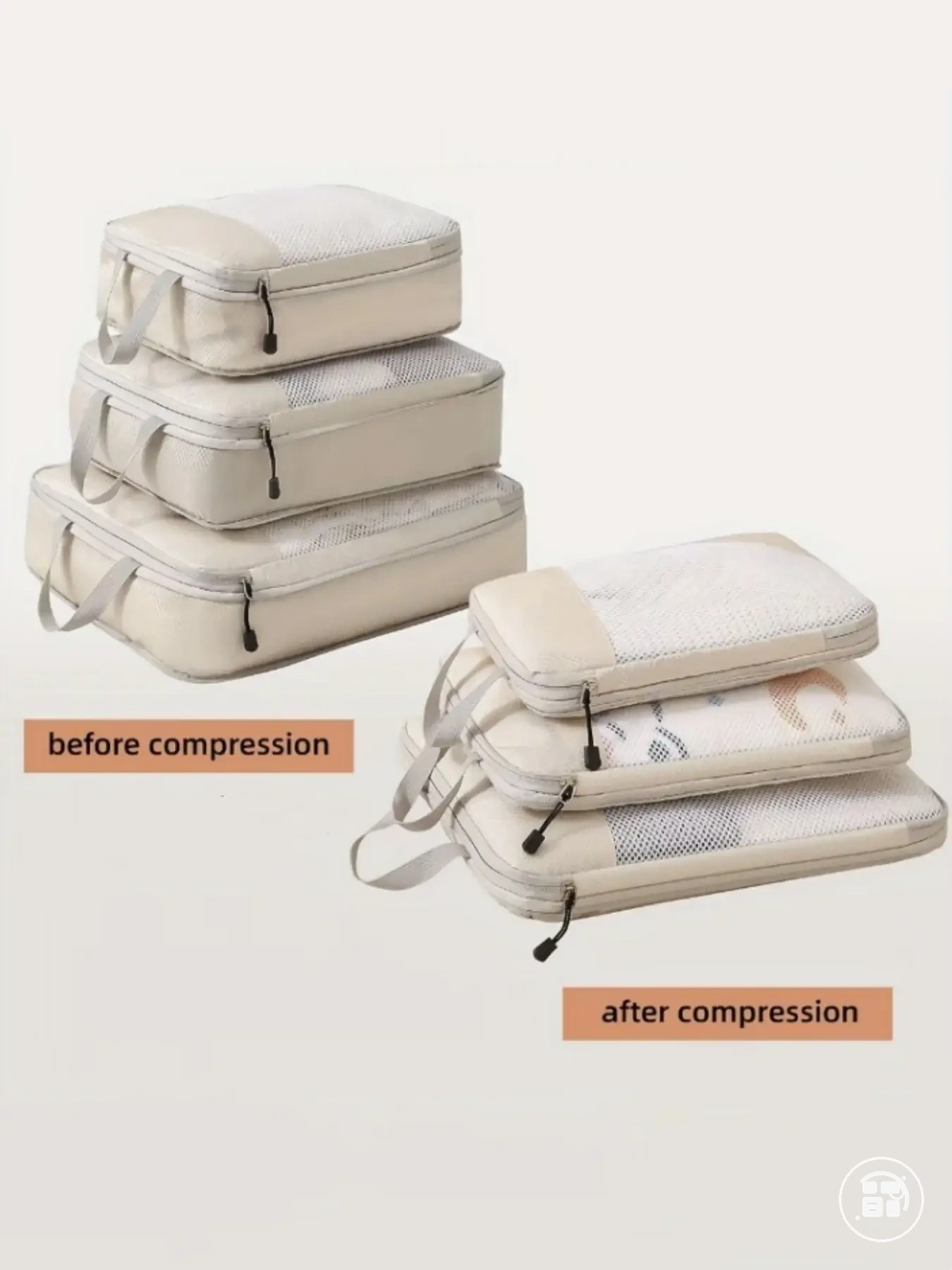
Compression packing cubes and regular packing cubes solve different packing problems. Compression cubes focus on reducing clothing bulk when conditions allow, while regular packing cubes focus on sorting clothing and maintaining order.
A common myth is that compression is automatically the stronger format. Compression can help with soft clothing, but added fabric tension and zipper structure may increase packing effort, wrinkle risk, or overpacking pressure. The benefit depends on clothing type, fill level, suitcase space, and how often the cube needs to be reopened.
If the main issue is bulky clothing in a carry-on, compression cubes may be useful when the suitcase can still close without excess pressure. If the main issue is repacking ease during a multi-stop trip, regular packing cubes may be easier to manage; the table below compares both cube formats.
| Cube format | Main function | Trade-off | Best use case |
|---|---|---|---|
| Compression cubes | Reduce clothing bulk through zipper structure and fabric tension when soft clothing and fill level allow it | May increase packing effort, wrinkle risk, and overpacking friction if the cube is overfilled; packed weight still depends on contents | Useful when clothing bulk is the main issue and repacking is less frequent |
| Regular packing cubes | Sort clothing and support suitcase order without extra compression pressure | May not reduce bulk as much as compression cubes when clothing volume is high | Useful when visibility, routine, and repacking ease matter more than bulk reduction |
Compression cubes for reducing clothing bulk
Compression cubes can reduce clothing bulk when soft clothing, fill level, and suitcase shape support compression. An expansion zipper and fabric pressure help compress contents into a flatter form, but wrinkles and luggage closure may still depend on garment type and packing condition. Compression helps most when soft clothing is packed at a suitable fill level.
Compression cubes for reducing clothing bulk can be verified through the following best-fit conditions:
- Soft clothing: Compressible garments may respond better to fabric pressure, but delicate items may have a higher wrinkle risk.
- Moderate fill level: A balanced fill level may support bulk reduction, while an overfilled cube can create more friction during luggage closure.
- Expansion zipper use: The expansion zipper can help reduce clothing bulk when the zipper closes without excessive pressure on the contents.
- Suitable suitcase space: Compression may be more useful when the suitcase can accommodate the compressed cube shape without creating closure difficulties.
Regular cubes for simpler sorting and repacking
Regular cubes support sorting, visibility, and repacking when clothing organization is a higher priority than compression. Mesh visibility, zipper access, and shape stability help keep folded clothing grouped and easier to locate. Regular cubes are often preferable when repeated unpacking and suitcase order matter more than clothing bulk reduction.
When hotel travel involves frequent unpacking, clothing categories may need to be accessed multiple times during the trip. In that condition, regular cubes can support a more consistent routine because grouped items remain easier to identify and return to the same location after use.
Regular cubes for simpler sorting and repacking can be verified through the following checklist:
- Cube size: A suitable size can help keep clothing categories separated without complicating simple packing.
- Mesh visibility: A mesh panel can provide a quicker view of stored clothing when visibility is important.
- Zipper access: Direct zipper access can help when clothing needs to be retrieved or returned repeatedly.
- Shape stability: A stable shape can help maintain suitcase order and support repeated repacking.
How to choose the right organizer mix for your luggage
Organizer mix for luggage depends on luggage space, item categories, access frequency, and protection needs. The main choice principle is to match each organizer type to the storage problem it needs to solve.
When luggage space is limited, organizer priorities may shift from maximum separation to efficient use of available room. A traveler carrying mostly clothing may need a different organizer setup than someone carrying electronics, toiletries, or travel documents. Item categories, access frequency, protection needs, and luggage space are the key luggage constraints.
How to choose the right organizer mix for your luggage can be verified through the following checklist:
- Need: Mostly clothing organization. Constraint: Clothing occupies most luggage space. Organizer type: Packing cubes. Decision: May support sorting and suitcase order.
- Need: Frequent access to small items. Constraint: Accessories are used during transit. Organizer type: Travel pouches. Decision: May improve access and item separation.
- Need: Protection for sensitive belongings. Constraint: Electronics, documents, or liquids require separation. Organizer type: Organizer accessories. Decision: May improve protection and organization.
- Need: Mixed belongings. Constraint: Clothing and accessories share the same luggage. Organizer type: Mixed setup. Decision: May balance sorting, access, and protection needs.
- Need: Minimal organizer complexity. Constraint: Simple packing routine. Organizer type: Fewer organizer pieces. Decision: May reduce packing friction.
- Need: Multiple storage priorities. Constraint: Different item categories require different handling. Organizer type: Travel organizer mix. Decision: May provide more targeted organization.
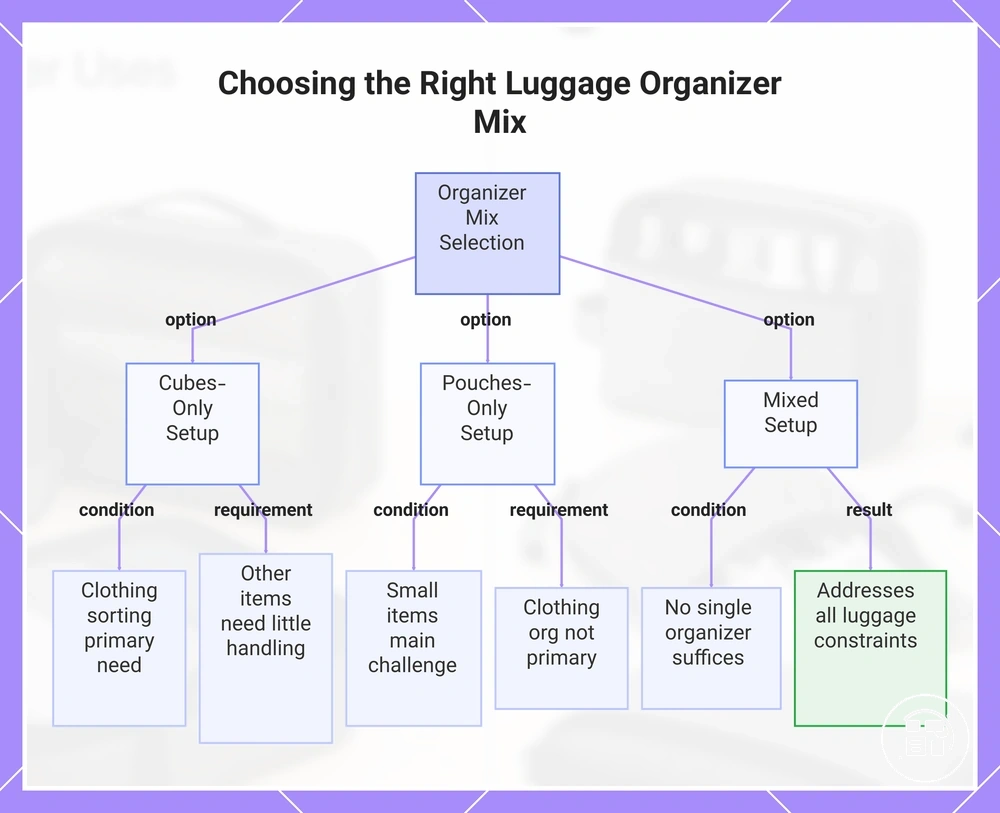
Packing cubes may be sufficient when clothing sorting is the primary requirement and other belongings need little special handling. This condition supports a cubes-only setup when clothing categories dominate the luggage.
Travel pouches may be sufficient when the main challenge involves small items, access frequency, or separation needs. This condition supports a pouches-only setup when clothing organization is not the primary concern.
Criteria should focus on traveler need, luggage constraint, item categories, access frequency, and protection needs. To choose the right packing system, match each organizer type to the storage condition it addresses. A mixed setup may be appropriate when no single organizer type addresses all luggage requirements.
The products below are useful examples for comparing available options. Before buying, check that the compatibility criteria, key features, and product details match your needs.
Organizer mix decisions depend on balancing organization, access, and protection needs. For a related comparison of sets versus separate organizers, consider whether a combined or separate-piece approach better matches the luggage condition.
This chart shows the three main organizer mix options and the conditions that favor each setup.