Travel Organization Accessories for Trip Length and International Travel Fit
Travel organization accessories are compatibility-based decision tools for matching belongings to a trip, a bag, and the way items need to stay accessible. Their usefulness depends on how much space the trip length creates, how the carry-on or suitcase is shaped, and which items need separation during travel. This page stays focused on organizer compatibility rather than general travel planning, with trip length and international fit as the decision frame.
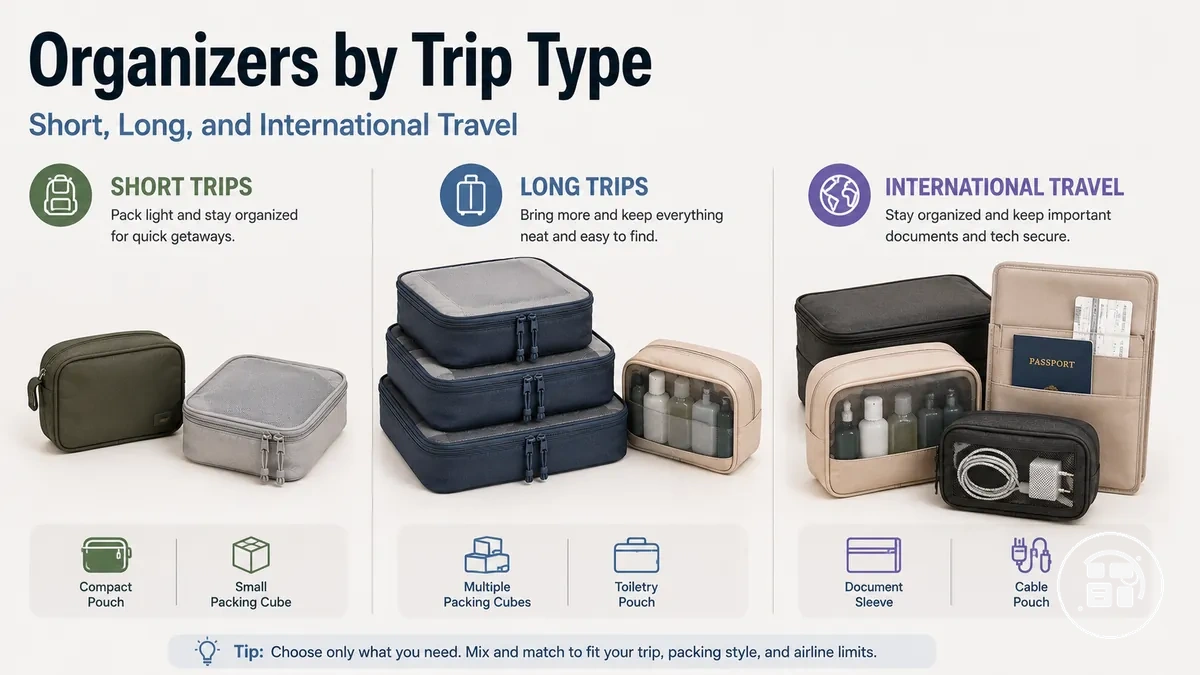
For short trips, a compact organizer setup may reduce bulk when essentials, documents, toiletries, and chargers need quick access. For long trips, packing volume, clothing separation, repeat-use items, and suitcase space can make larger or more structured packing organizers useful, depending on luggage fit. For international travel, document access, toiletry handling, carry-on access, and destination movement often change the organizer setup. The main compatibility variables are trip duration, luggage size, item categories, access frequency, and packing style.
The right travel organizers are the ones that match the trip context before buying readiness is considered. A compact pouch, packing cube, document organizer, or toiletry pouch can be useful only when it fits the bag and the items it needs to control. The next sections separate short-trip, long-trip, and international travel requirements without turning the page into a product list.
How Trip Length Changes Travel Organizer Requirements
Trip length changes organizer requirements because packing volume, access frequency, separation needs, and repeat-use items often shift as trip duration increases. Travel organization accessories that work for a brief stay may create packing friction on a longer trip when more items need storage, access, or separation. The main variables are trip length, luggage size, item count, and travel context.
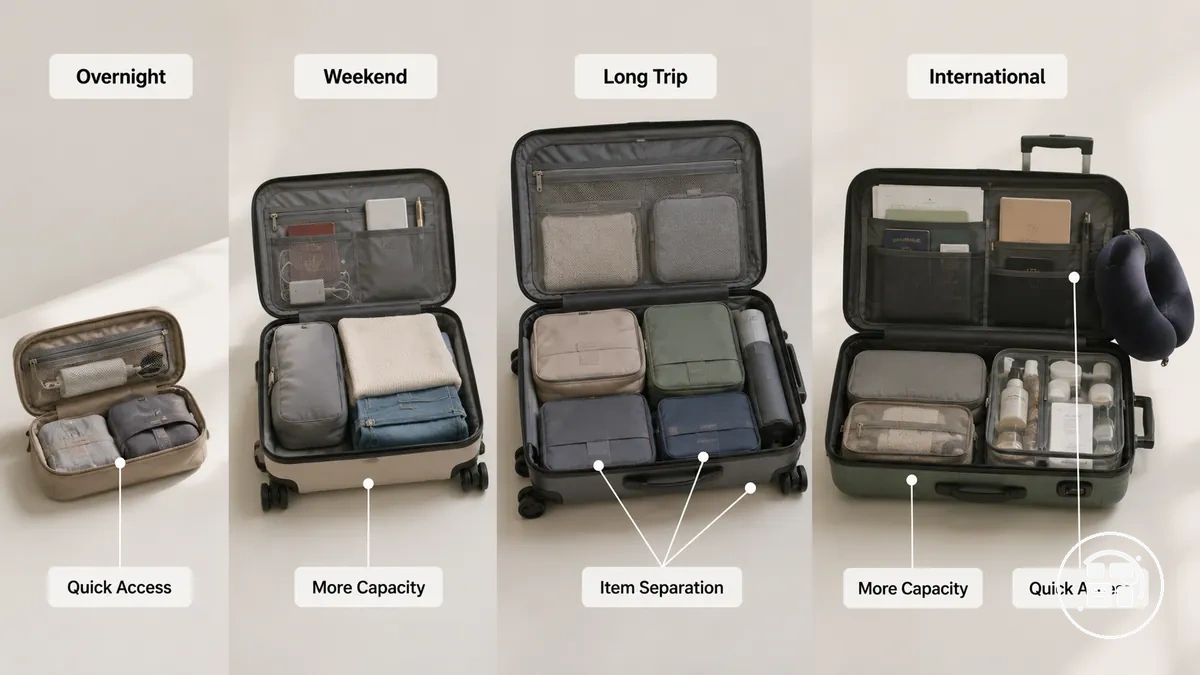
An overnight trip may prioritize quick access to essentials in a compact pouch, while a weekend trip can require additional separation for clothing and toiletries. An extended trip usually increases capacity needs because more repeat-use items or laundry-related separation may be involved. International travel can place greater emphasis on documents, toiletries, and access during transit. For broader context, see the travel organization accessories overview. The comparison below highlights how trip duration can influence organizer requirements.
Packing friction often appears when organizer requirements do not match the amount of gear being carried. A setup focused only on compactness may limit separation on longer trips, while a higher-capacity setup may add unnecessary bulk on shorter trips. The most suitable arrangement still depends on luggage fit, item count, and personal travel habits.
| Trip context | Organizer pressure | Useful organizer attributes | Risk if mismatched |
|---|---|---|---|
| Overnight trip | Low volume with frequent access to essentials | Compact pouch, simple access, minimal separation | Unnecessary bulk or unused organizer space |
| Weekend trip | Moderate volume and category separation | Balanced capacity, clothing and toiletry separation | Limited access or mixed item categories |
| Long trip | Higher volume and more repeat-use items | Greater capacity, structured separation, flexible access | Overcrowding, difficult retrieval, reduced organization |
| International travel | Document access and transit-related organization | Document storage, toiletry separation, accessible layout | Slower access to important items during travel |
Short-Trip Organizers for Compact Packing
Short-trip organizers depend on bag size, item count, and access frequency. Compact travel pouches, small packing cubes, and lightweight organizers often fit short trips when low luggage volume and quick access matter most. Compactness is the key condition.
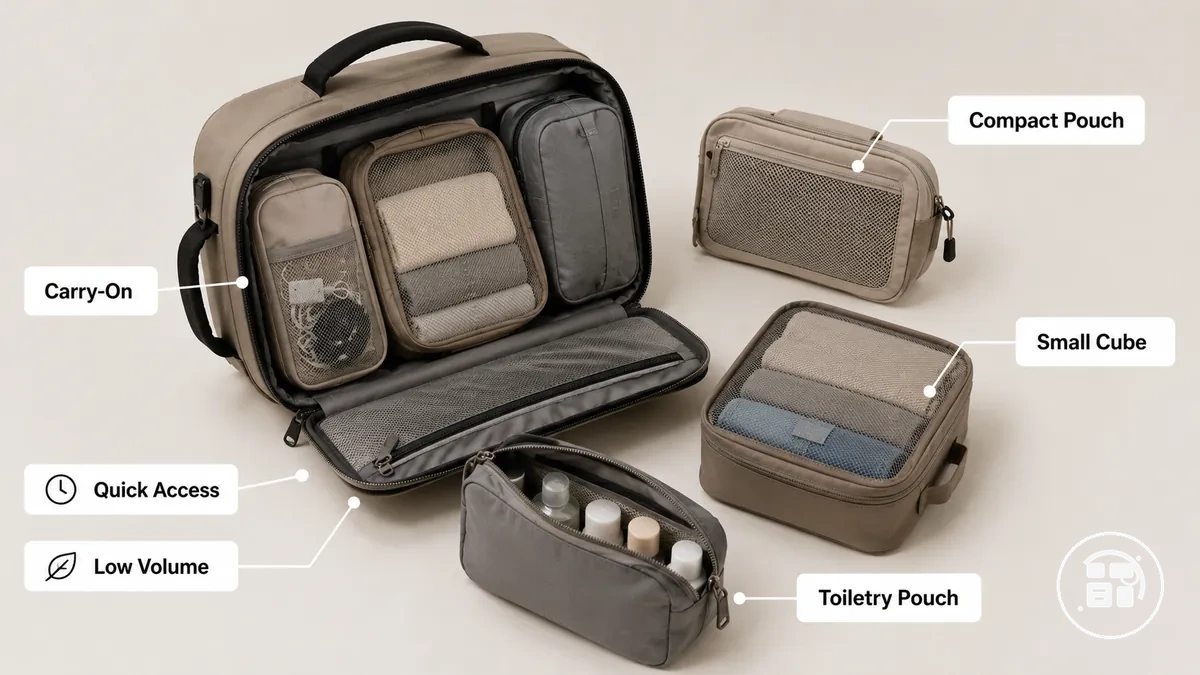
For an overnight trip, a compact travel pouch may help separate documents, chargers, and small accessories when packing volume is limited. A business short trip can benefit from a small packing cube and a toiletry pouch if clothing and personal items need separate storage. During weekend travel, organizer needs may increase slightly, but a carry-on or small bag can still favor lightweight organizers over larger setups. The suitability of each organizer type depends on bag-size limits.
Packing problems often start when organizer size exceeds the amount of gear being carried. Choosing organizers that match compact packing needs can reduce bulk while maintaining access to frequently used essentials. Use the checklist below to verify compatibility.
- Check whether the bag size supports the organizer without reducing usable space.
- Match clothing volume to the size of a small packing cube.
- Use a toiletry pouch when toiletries need separate storage.
- Group documents and small accessories for easier access.
- Consider how many chargers or devices require organization.
- Choose organizer types based on access frequency during the trip.
Weekend Packing Organizers for Essentials and Small Bags
Weekend packing organizers depend on how essentials need to be grouped inside a backpack, tote, duffel, or compact carry-on. When access matters more than storage volume, compact pouches and small-bag organizers can help keep key items separated and easier to reach. Weekend packing organizers work best within the limits of small bags.
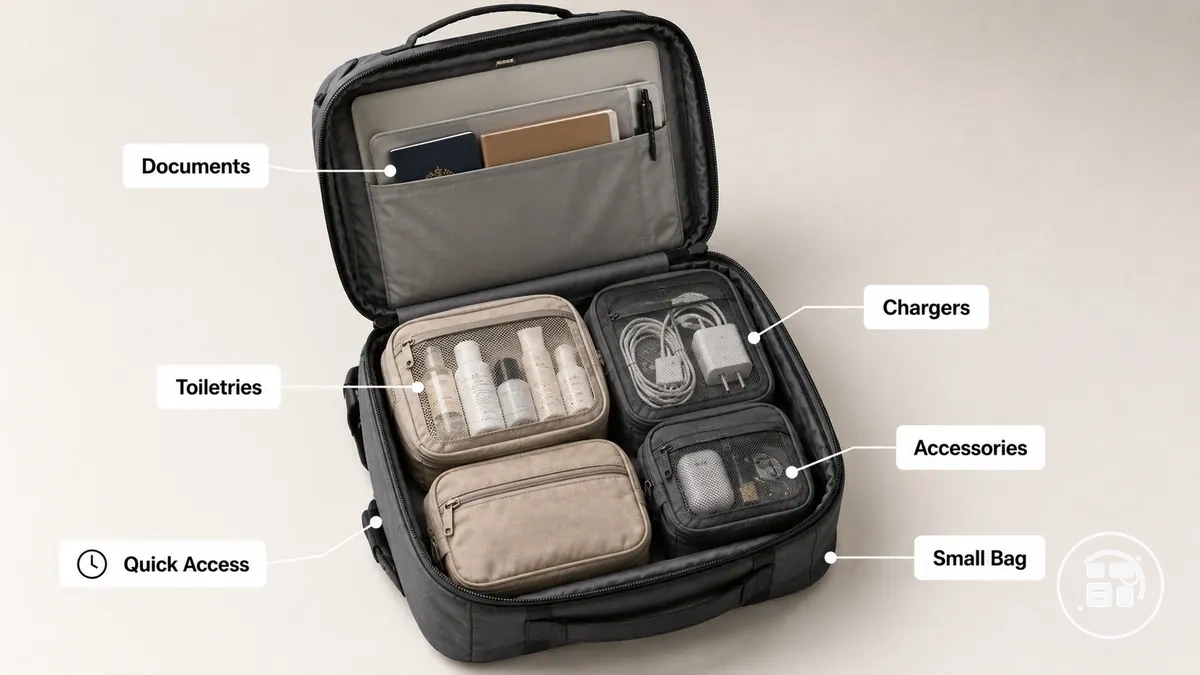
Space can become harder to manage when essentials share the same compartment. Grouping items by purpose can improve access and reduce time spent searching inside a backpack, tote, or duffel. If medication, documents, or liquids require separate access, an additional pouch or sleeve may provide safer separation. The item groups below focus on keeping essentials accessible in limited space.
- Clothing: a compact pouch or small organizer that keeps a change of clothes separate from other essentials.
- Toiletries: a toiletry pouch that separates liquids and supports easier access in a small bag.
- Documents: a document sleeve or compact pouch that keeps documents accessible when needed.
- Chargers: a cable pouch that groups chargers and reduces loose-item clutter.
- Small accessories: a compact pouch for items that benefit from quick access without using extra bag space.
Long-Trip Organizers for Capacity and Compression
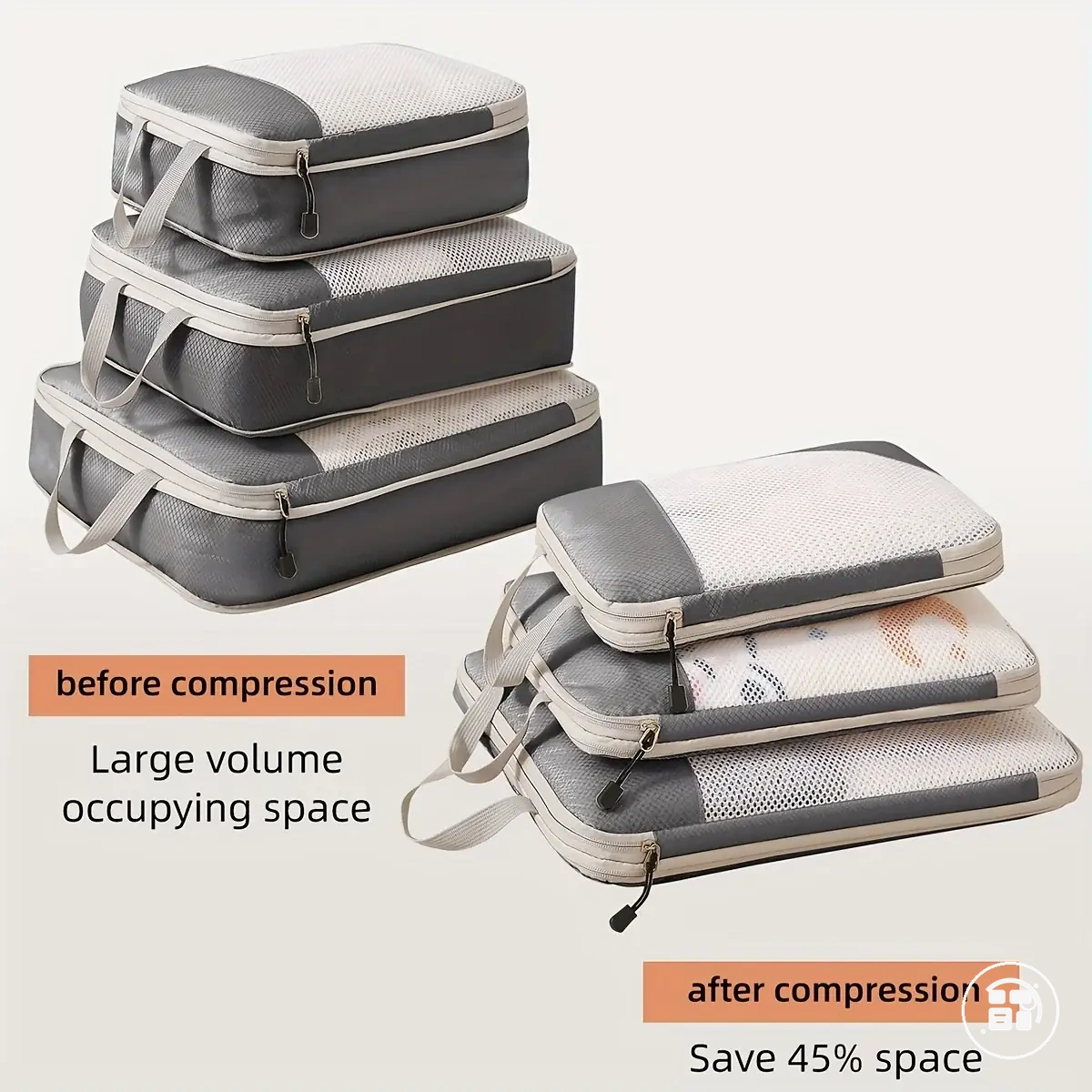
Long-trip organizers depend on balancing capacity, compression, and item separation as clothing volume and repeat-use items increase. Packing cubes, compression cubes, laundry separation systems, a toiletry organizer, and a larger pouch system can help organize extended travel when storage needs grow. The key decision is maintaining the right capacity-separation balance.
| Capacity-Focused Organizers | Compression-Focused Organizers |
|---|---|
| Support larger clothing volume and category separation | May reduce bulk and improve volume control |
| Can improve access to packed items during long trips | Luggage fit still depends on item volume and packing choices |
| May add bulk when organizer size exceeds actual needs | May increase overpacking risk if extra space encourages additional items |
Long trips can create packing friction when clean clothing, used items, toiletries, and accessories compete for the same space. Packing cubes can separate categories, while laundry separation can help isolate used items during repeat-use travel. A toiletry organizer or larger pouch system may improve access when items are unpacked and reused frequently. Compression cubes can help manage clothing volume, but compression has limits.
A common myth is that compression alone solves long-trip packing challenges. In practice, compression may reduce bulk, yet overpacking risk can still increase when more items are added. The trade-off is often between space gain and added bulk.
Large Packing Cubes for Extended Clothing Volume
Large packing cubes fit extended clothing volume when clothing type, luggage dimensions, and compression need support a larger organizer footprint. They can help group more clothing into a single section of a suitcase, but fit depends on how the cube interacts with available packing space. Luggage fit is the limiting condition.
Problems can appear when a large packing cube occupies space that could be used more flexibly. Bulging may occur when clothing volume exceeds the available suitcase shape or when compression need is high in a compact carry-on. In these situations, medium cubes may provide better stackability and reduce wasted space because clothing can be distributed across separate sections. The table below highlights when a large cube may fit and when multiple medium cubes may be the safer choice.
| Clothing load | Cube size signal | Fit risk | Safer choice |
|---|---|---|---|
| Bulky clothes | Large cube may support grouped storage | May create bulging when luggage dimensions are limited | Depends on suitcase depth and compression need |
| Mixed outfits | Large cube can hold varied clothing volume | May reduce organization flexibility | Medium cubes may separate categories more easily |
| Light fabrics | Large cube may leave unused areas | Wasted space may increase when the cube is not fully utilized | Medium cubes may fit more efficiently |
| Shared suitcase space | Large cube occupies a larger footprint | May limit packing arrangement options | Medium cubes often provide greater flexibility |
Separate Organizers for Clean, Used, and Repeated-Use Items
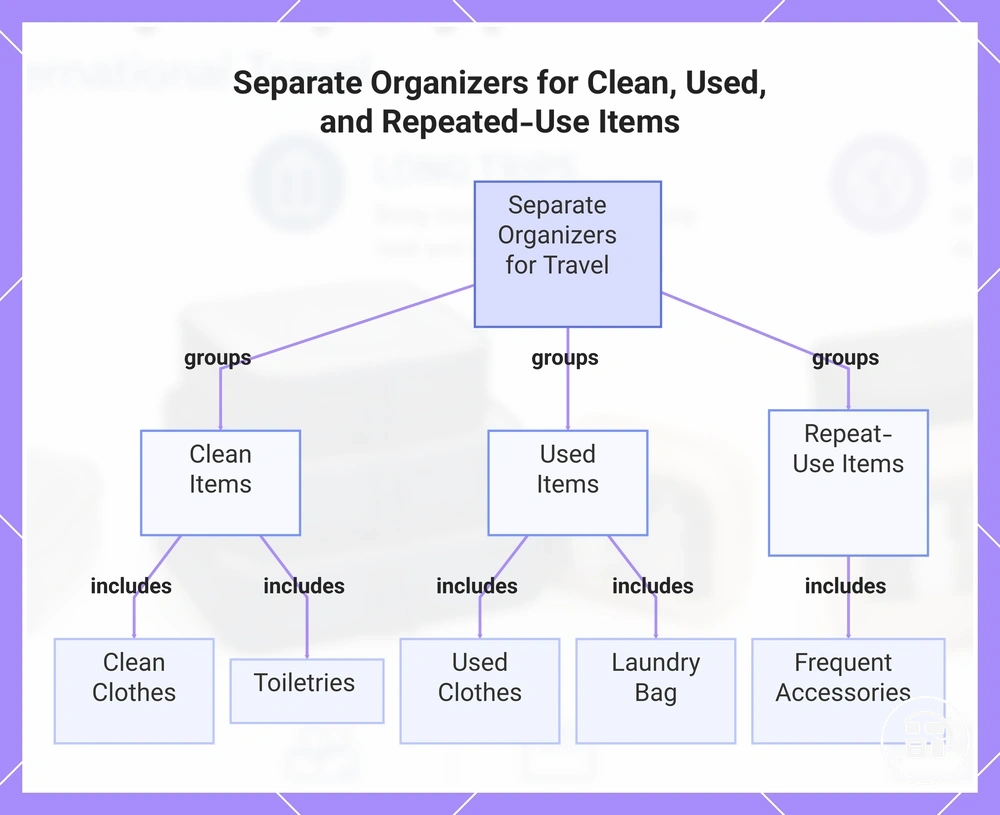
During long trips with multiple stops or limited laundry access, separate organizers can help keep clean items, used items, and repeat-use items easier to manage. Separate pouches may support hygiene, access, and item rotation when belongings move in and out of luggage throughout the trip. The main need is maintaining clear separation between item groups.
Repacking can become more difficult when clothing, toiletries, shoes, and frequently used accessories share the same storage space. Separate organizers can help reduce mixing, support quicker access, and make item rotation easier when travel conditions change. For broader usage context, see how to pack organizers for different trips. The groups below show where separation can support cleanliness, access, or repacking outcomes.
- Clean clothes: a dedicated organizer can keep clean items separate from used clothes and support easier repacking.
- Used clothes: a separate pouch or laundry bag can isolate used items when laundry access is delayed.
- Laundry: a dedicated laundry bag can simplify item rotation during multi-stop travel and reduce mixing with clean clothes.
- Toiletries: a separate pouch can help contain spill-prone items and support hygiene when accessed repeatedly.
- Shoes: a dedicated organizer can separate footwear from clothing and toiletries when luggage space allows.
- Repeat-use accessories: a small pouch can keep frequently accessed items easier to find without disrupting other packed groups.
This chart groups travel items into three categories—clean, used, and repeat-use—and shows how separate organizers support cleanliness, access, and repacking.
International Travel Organizers for Documents, Toiletries, and Access
International travel organizers depend on document access, toiletries management, carry-on storage, and item visibility during transit and destination movement. A document organizer, toiletry organizer, travel pouch, or accessible carry-on compartment can help reduce retrieval friction when documents, liquids, and frequently used items need repeated access. Compatibility is shaped by document access, security checks, destination movement, and other international constraints.
| International need | Organizer attribute | Where it matters | Compatibility risk |
|---|---|---|---|
| Documents | Visibility and organized compartments | Passport, visa, and paperwork access during transit | Slower retrieval when documents are stored with unrelated items |
| Toiletries | Separation and water resistance | Liquids handling during travel | Higher packing friction when spill-prone items share storage |
| Carry-on access | Accessible compartment layout | Airport movement and security checks | Frequent unpacking when essential items are difficult to reach |
| Hotel use | Compact organization and visibility | Temporary storage and repeated access | More time spent locating commonly used items |
Packing friction can increase when documents, toiletries, and repeat-use essentials are stored without clear separation. A document organizer may improve visibility for a passport or visa when document access is needed, while a toiletry organizer can help separate liquids and support lower spill risk. Compact pouches may keep frequently used items easier to reach, and organized carry-on storage can simplify movement between airports, hotels, and local transit. The main goal is smoother document and toiletry access.
A common myth is that any international organizer automatically solves travel-access challenges. In practice, international travel organizer compatibility depends on visibility, access, compartment structure, and how items are used throughout the trip. Organizer guidance does not replace official travel-document requirements or airline liquid-related guidance.
Document Organizers for Passport, Visa, and Travel Paperwork Access
Document organizers depend on document count, access frequency, and security preference during international travel. A document pouch, passport holder, or travel wallet may help keep a passport, visa, tickets, IDs, and travel paperwork accessible while reducing misplacement risk. The most suitable document organizer usually matches document volume and access frequency.
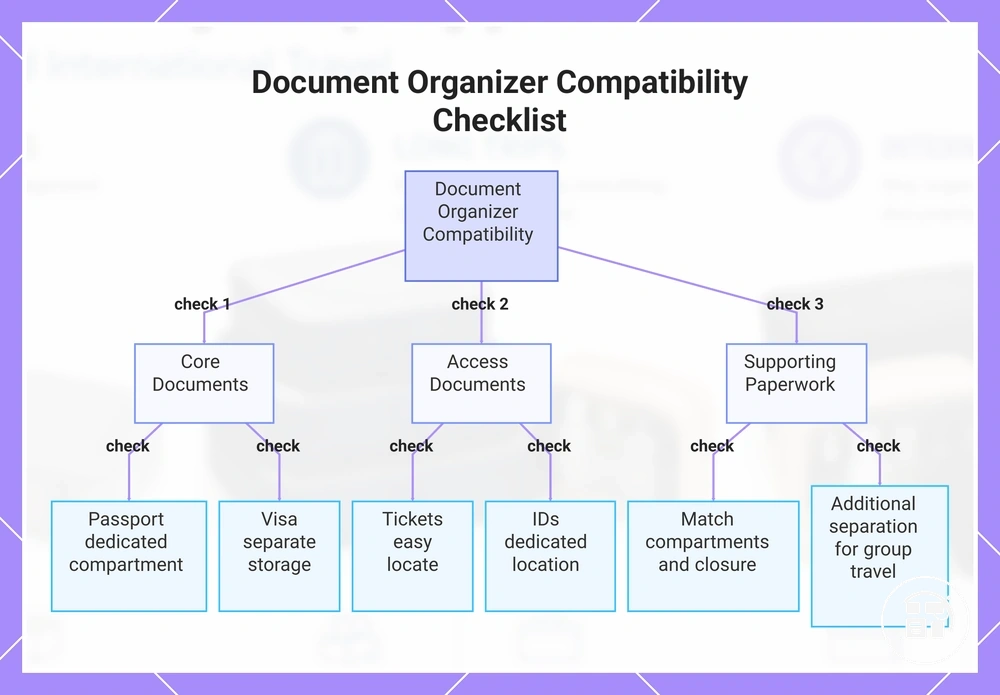
Document access can become slower when travel paperwork is spread across multiple pockets or bags. A document organizer with dedicated compartments and a secure closure can help separate document types and support faster retrieval in transit, at a hotel, or during travel checkpoints. When family or group travel increases document volume, additional compartments may help keep shared paperwork organized. Use the mini-checklist below to verify document organizer compatibility.
- Passport: verify that a dedicated compartment keeps the passport accessible when access frequency is high and may reduce misplacement risk.
- Visa: check whether separate storage helps keep visa-related documents distinct from other travel paperwork when retrieval is needed.
- Tickets: confirm that tickets remain easy to locate and are not mixed with unrelated items during transit.
- IDs: verify that IDs have a dedicated location when repeated access is expected.
- Travel paperwork: check whether the available compartments and closure design match document count and security preference.
- Printed confirmations: consider additional separation when group travel increases document volume and organization needs.
This chart outlines the mini-checklist to verify document organizer compatibility for passport, visa, tickets, IDs, travel paperwork, and printed confirmations.
Toiletry Organizers for Flight Limits and Hotel Use
Toiletry organizers depend on liquid volume, separation needs, hanging use, and leakage risk during travel. A compact pouch, toiletry bag, or hanging organizer may improve access to liquids while supporting spill containment and organization. The most suitable option usually matches flight-related liquid constraints and hotel-use access needs.
Toiletries can become harder to manage when liquids, grooming items, and bathroom essentials share the same space without separation. A toiletry organizer with compartments, pouch material chosen for leak control, and transparent-access features may improve visibility and support spill containment during travel. Hotel use may benefit from a hanging organizer that keeps items accessible, while a compact pouch may suit situations where flight limits and carry-on space are greater considerations. The contrast below highlights flight-versus-hotel compatibility.
| Toiletry need | Organizer feature | Travel condition | Risk reduced |
|---|---|---|---|
| Liquids | Compact pouch with transparent-access design | Flight-related packing and visibility needs | Slower item retrieval |
| Leak control | Pouch material and separate compartments | Transport between destinations | Spill spread between items |
| Bathroom access | Hanging organizer | Hotel use and repeated access | Cluttered storage areas |
| Mixed toiletries | Compartment separation | Flight and hotel transitions | Item mixing and reduced organization |
Flight-friendly compact pouch: prioritizes visibility, compact storage, and access to liquids when flight limits may influence packing choices.
Hotel-friendly hanging organizer: prioritizes bathroom access, item visibility, and organized storage during hotel use.
Carry-On and Suitcase Fit Across Different Trip Contexts
Travel organization accessories depend on luggage dimensions, organizer height, compression level, and access needs. A carry-on, checked suitcase, backpack, or mixed luggage setup can create different space and retrieval constraints, so organizer size and structure should match the available packing environment. Luggage dimensions are usually the first check when evaluating suitcase fit.
| Luggage type | Fit constraint | Organizer attribute to check | Mismatch signal |
|---|---|---|---|
| Carry-on | Limited internal space and tighter access needs | Organizer height, compression level, and stackability | Bulging, reduced access, or difficulty closing the bag |
| Checked suitcase | Larger storage area with multiple packing zones | Larger sets, stackability, and moderate rigidity | Unused space or difficult item retrieval |
| Backpack | Narrow compartments and space limits | Compact pouch size and flexible structure | Crowded compartments or slower retrieval |
| Mixed luggage setup | Items distributed across different bags | Consistent organizer size and transfer flexibility | Duplicate storage or misplaced items |
Fit problems often appear when organizer size and luggage space do not align. A rigid organizer may reduce flexibility in a backpack, while oversized cubes can create bulging inside a carry-on. In a checked suitcase, larger sets may work better when stackability supports access rather than blocking it. Organizer height, rigidity, compression, and stackability are key fit variables.
A short trip with a backpack may favor a compact pouch because retrieval speed can matter more than storage volume. A longer trip using a checked suitcase may support medium cubes or larger sets when luggage space allows organized separation. For more detailed criteria, see carry-on and checked luggage fit, which focuses on luggage-specific decision signals and fit conditions.
Organizer Set Balance for Short, Long, and International Trips
Organizer set balance depends on trip length, item categories, luggage type, and access priority. A travel organizer setup that matches packing volume can improve coverage without adding unnecessary bulk, while an oversized packing set may create unused space and extra complexity. The goal is balancing pouch variety, cube capacity, and specialized coverage within the same organizer set balance.
Problems often begin when organizer sets add pieces faster than actual packing needs increase. A compact pouch may cover essentials for short trips, while long trips may benefit from added cube capacity or compression options when clothing volume grows. International trips can justify a document organizer or expanded toiletry coverage when access becomes more important. For broader decision criteria, see choose organizers by travel style. The criteria table below helps separate useful coverage from unnecessary bulk.
| Trip context | Useful set components | Overbuying signal | Better-fit decision |
|---|---|---|---|
| Short trips | Compact pouch, small cube, limited toiletry coverage | Multiple unused organizers after packing | Choose fewer pieces with a focus on access priority |
| Long trips | Medium or larger cubes, compression options, separation pouches | Large organizer count with overlapping functions | Increase cube capacity only when item volume requires it |
| International trips | Document organizer, toiletry coverage, compact accessory pouches | Extra organizers that do not improve access | Add specialized coverage only when travel conditions justify it |
A common myth is that more pieces automatically create a better organizer set. In practice, extra pouches and cubes may increase complexity when they do not improve access, separation, or coverage. Useful variety depends on travel conditions, while excess pieces can become a form of overbuying.
A weekend backpack setup may need only a compact pouch and limited cube capacity. A longer suitcase-based trip may support additional organizers when clothing categories, documents, or toiletries require more separation. Decision signals should come from item volume, access needs, and coverage gaps rather than organizer count alone.
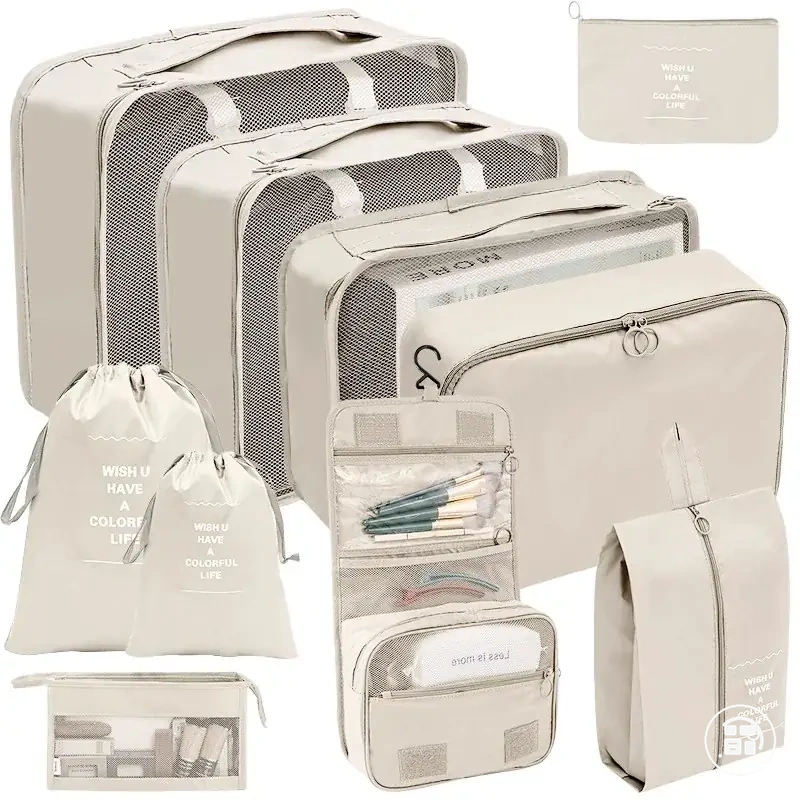
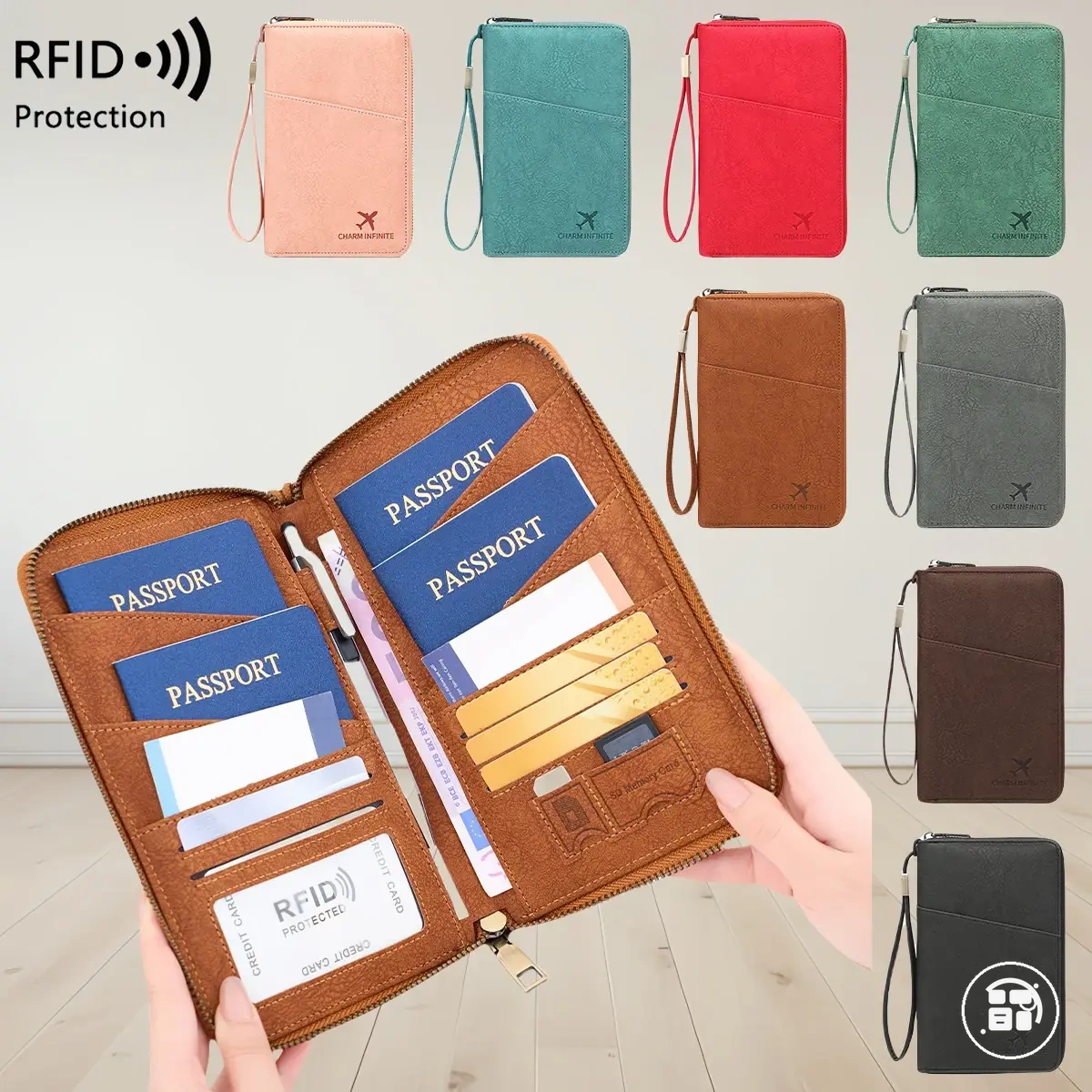
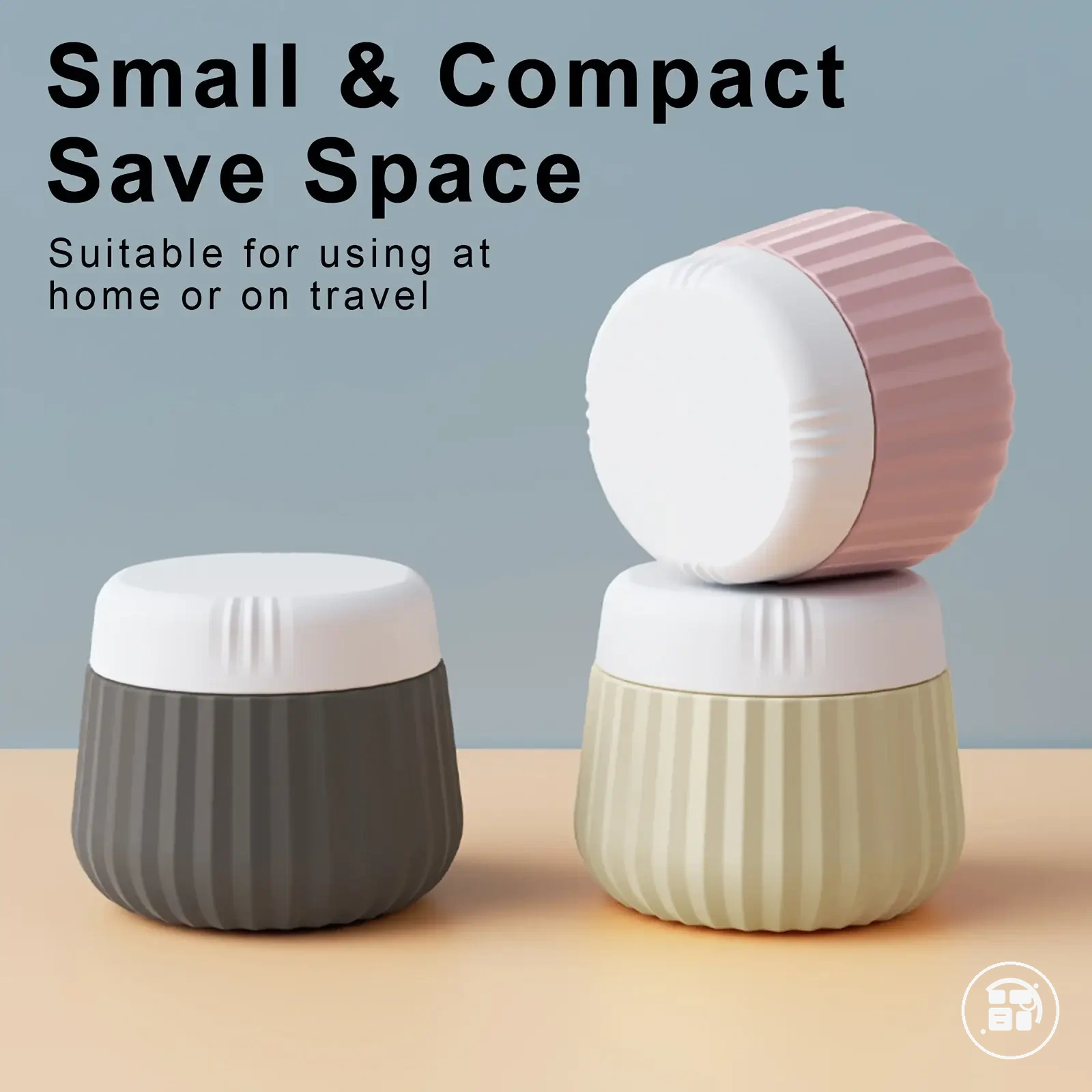
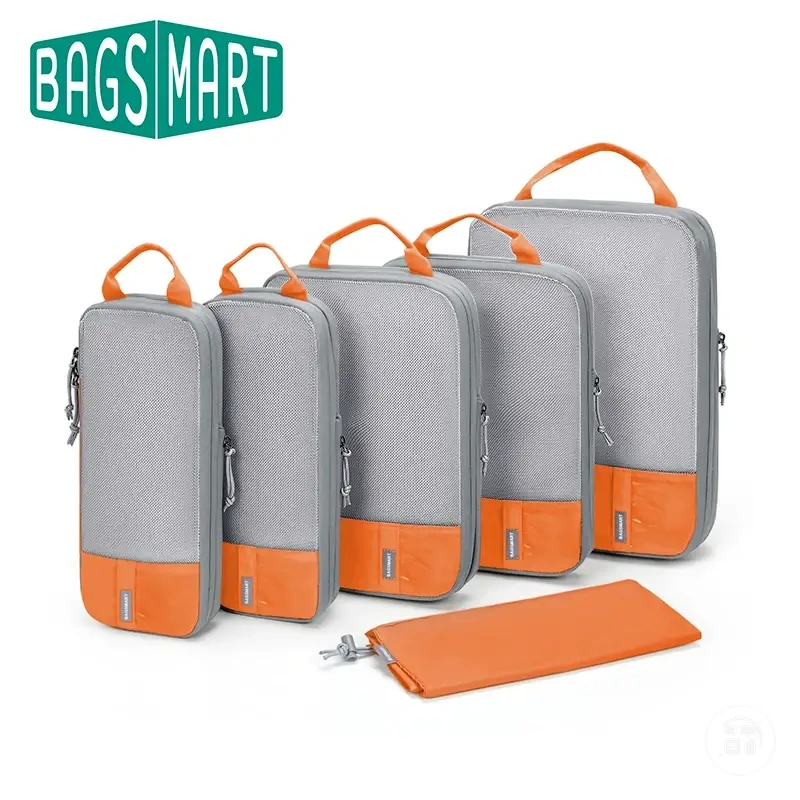
Here are product examples that may make comparison easier. Before buying, always review the compatibility criteria, essential features, and product details.
Choosing a Compatible Travel Organizer Setup Before Buying
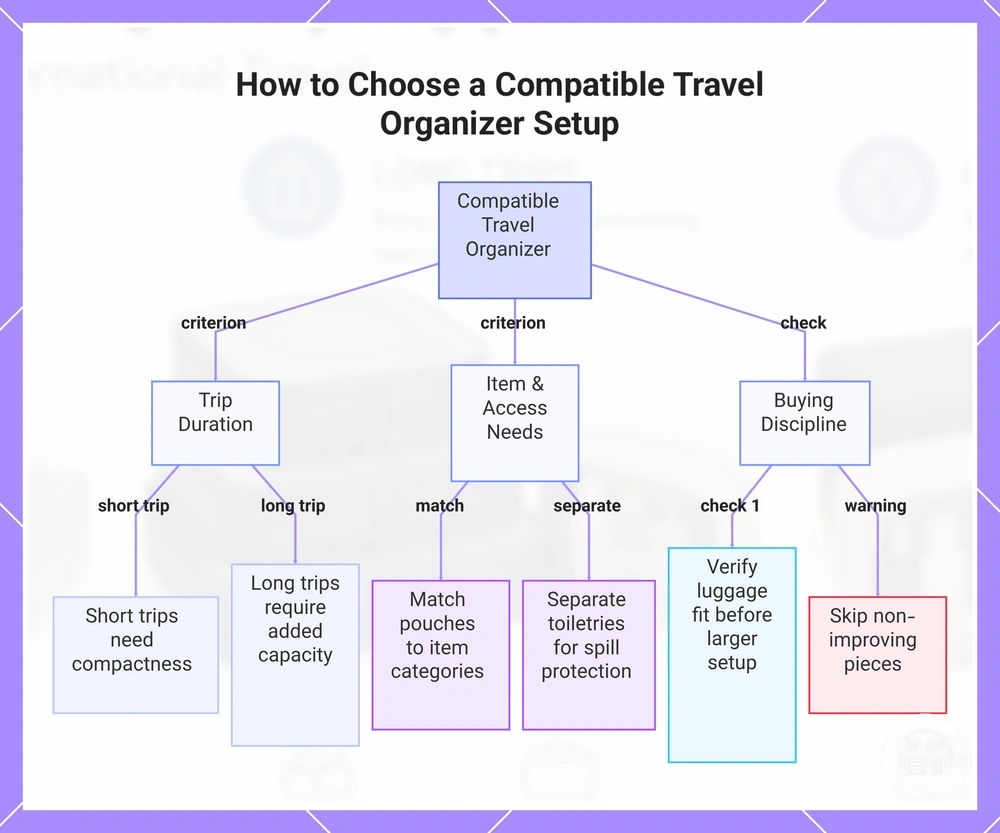
A compatible travel organizer setup should match trip duration, international needs, luggage fit, item categories, and reuse value before buying. Compactness, capacity, document access, toiletry separation, and compression only matter when they solve a real travel condition. The decision frame is whether to buy, skip, or choose a smaller setup.
Buying problems often start when organizer attributes do not match the actual trip context. A compact pouch may fit short trips when low volume and quick access matter, while added capacity may suit longer trips when clothing categories increase. International needs may justify document access or toiletry separation when these items need more controlled storage. Use the final checklist below to verify buying readiness.
- Trip duration: choose compactness for short trips and added capacity only when longer packing volume requires it.
- Luggage fit: check whether organizer height, rigidity, and compression match the bag before choosing a larger setup.
- Item categories: match pouches or cubes to clothing, toiletries, documents, chargers, and repeat-use items.
- Access needs: prioritize quick retrieval when items are used during transit, airport movement, or hotel use.
- Toiletry handling: choose toiletry separation when liquids or spill-prone items need their own storage.
- Document needs: add document access when passport, visa, tickets, IDs, or paperwork require repeated retrieval.
- Overbuying risk: skip pieces that do not improve fit, separation, access, or reuse value.
For short trips, a smaller organizer setup may be enough when item categories are limited and luggage space is tight. For long or international trips, added pieces may make sense only when they improve capacity, separation, or access. A separate buying checklist for trip needs can help turn these criteria into a final pre-buying check.
A common myth is that a larger packing system is automatically the safer choice. In practice, product examples should support the criteria already defined, not replace the decision logic. Organizer choices should remain criteria-matched rather than treated as product superiority claims.
Choose the smallest setup that still covers the trip’s real storage, access, and separation needs. If a piece does not support compactness, capacity, document access, toiletry separation, or luggage fit, it may be better to skip or downsize it.
Here are product examples that may make comparison easier. Before buying, always review the compatibility criteria, essential features, and product details.
This chart shows the main criteria to evaluate when selecting a travel organizer, including trip duration, item needs, and buying discipline.